




Raising awareness about head and neck cancer
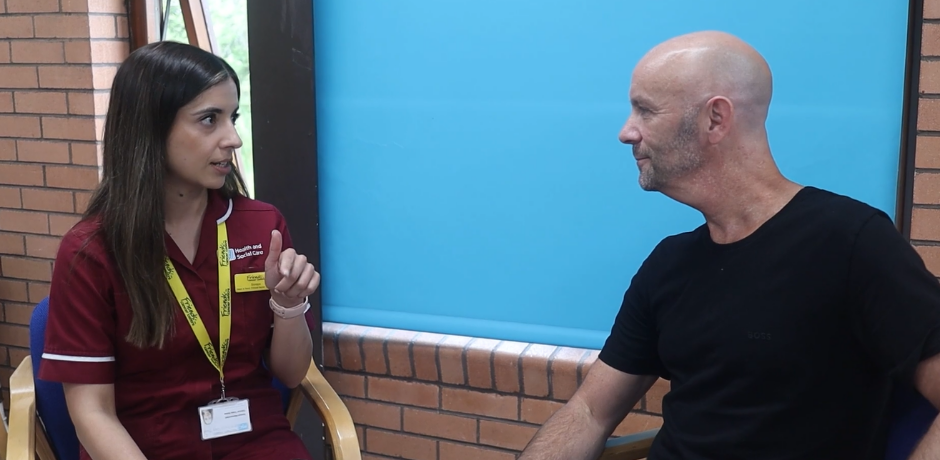
A collective call from a patient, clinical nurse specialist and specialty doctor
Awareness is the first step to prevention!
Soraya Manoucheri is the Northern Health and Social Care Trust’s first Head and Neck Clinical Nurse Specialist. Based at Antrim Area Hospital, her role is funded by the Friends of the Cancer Centre and helps to ensure that patients receive specialist care closer to home, throughout their diagnosis and treatment.
Ahead of World Head and Neck Cancer Awareness Day on Sunday 27 July 2025, Soraya is urging everyone to get familiar with the symptoms and risk factors so more of us know what steps we can take to protect ourselves and what signs to look out for.
Over 300 cases of head and neck cancer are diagnosed in Northern Ireland every year, with approximately 80 of these within the Northern Trust area.
Passionate about improving patient outcomes, Soraya works directly with patients every day who have been impacted by this complex groups of cancers, including mouth (tongue, palate, gums and lips), throat, nose, sinuses, salivary glands and middle ear, which contains the ear drum.
“I see the impact of a cancer diagnosis on a daily basis, and I really want to take this opportunity to encourage people to learn more about the symptoms and what can put us more at risk,” she said.
“One of the biggest risks for developing head and neck cancer is tobacco use while alcohol is another major contributor. We also need to think about infection, with the Human Papillomavirus or HPV, posing another risk, especially for cancers in the throat or tonsil area.
“Quitting smoking, reducing alcohol intake, ensuring children receive the HPV vaccine in school, and maintaining regular dental and medical check-ups can all help us to reduce the chance of developing head and neck cancer. Awareness is the first step to prevention!”
One of those who knows the impact of head and neck cancer all too well is Marc Carey.
After finding a small lump on the right hand-side of his neck, his initial reaction was to ignore it. But after seeing his GP and following a referral to a specialist, he was diagnosed with cancer in the base of his tongue and in his neck.
Looking back on his cancer journey, Marc, said: “I found the lump, and like a typical male I thought if I ignore it, it will go away. But after seeing my GP my case was red-flagged and following scans and further observations I was told I had cancer.
“This was obviously very scary and very concerning for me and my family. It was all brand new to me, but I got very good support from all the staff and Macmillan which was very useful, and helped to make the process very smooth and efficient.”
Now over a year on from his diagnosis, Marc says it’s vital that we take any changes in our body seriously: “My one message to anyone out there, particularly men, would be to go and get checked out. It takes 20 minutes out of your day and it certainly made a difference for me.”
Echoing this sentiment, Dr Alia Abdullah, an Ear, Nose and Throat Specialty Doctor with the Northern Trust, said people should get to know the symptoms: “Head and neck cancers whisper before they scream so that’s why it is important to listen to your body and speak up when something isn’t right.
“If you’re experiencing a persistent hoarseness or change in your voice, difficulty swallowing, or a sore throat that doesn’t go away, you should get this checked out. Other signs include a mouth sore or ulcer that doesn’t heal, persistent red and white patches in the mouth, a blocked or bleeding nose on one side or unexplained weight loss. If any of these are familiar sounding then it’s very important that you speak up and see your GP as a first step.”
Read more about head and neck cancer
25th July 2025


