




Working with you to transform general surgery – consultation feedback report
- Foreword
- Background
- Consultation process
- Summary of feedback received
- Themes emerging from the consultation feedback
- Equality Impact Assessment
- Rural Needs Impact Assessment
- Monitoring and evaluation including lessons learned
- Next steps
Foreword
We at the Northern Health and Social Care Trust are proud of our general surgery service and want all of our community to continue to benefit from safe, effective and high quality surgical care. Our primary focus throughout this review of general surgery is the safety and experience of our patients. We are committed to ensuring the best outcomes for our patients and we can only achieve this by planning services carefully; a failure to plan now for the future will result in services deteriorating to the point of collapse. We know we need to change the way our services are organised to meet increasing demands for hospital based services, new guidelines and standards, ensuring we have the right workforce in place with strategies to deliver a model of surgical care that meets the changing needs of our population.
We have a growing older population which brings both opportunities and challenges. While living longer is something to be celebrated and a higher proportion of older people are now able to live independent lives, they also need timely access to assessment and treatment rather than long waiting lists for planned surgery. We recognise the additional demands this will place on all of our services. Ignoring this demographic shift could undermine the potential benefits of living longer. We must proactively plan now for the long term sustainability of our services, making best use of the resources that we have to ensure we can sustain a resilient emergency service that is fit for purpose and protects elective surgery, thereby reducing long waiting lists
In order to gather feedback on our preferred option, we have been consulting with the general public and key stakeholders on our plans to transform general surgery across the Northern Trust. We recognise that concerns have been voiced by our service users and staff – we have listened to these and reflected on them as part of our deliberations on how to achieve a sustainable general surgery service which is able to recruit and retain skilled staff now and into the future.
This report describes the consultation process and provides a summary of the themes and feedback that we have received as well as offering our response as a Trust.
At the heart of our planning process are the people who use our services. We would like to take this opportunity to thank everyone who took the time to complete a written response or who came along to our public listening events in person during the consultation period. We have listened carefully and have considered all of the feedback in order to put forward our recommendation.
Jennifer Welsh
Chief Executive
Anne O’Reilly
Chair
For further information this report should be read alongside our consultation document Working with you to transform general surgery and the Considering our options paper.
Background
The Northern HSC Trust held a public consultation on proposals for a reconfiguration of its general surgery service between 23 August and 29 November 2024.
General Surgery
In Northern Trust we provide the following types of surgery under the heading of General Surgery which is a wide ranging surgical specialty focused on diseases of the alimentary (digestive) tract and abdominal cavity.
- Emergency general surgery is the treatment of patients presenting with acute abdominal problems, soft tissue infections requiring treatment, bleeding and trauma, and sees the admission of some of the most unwell patients to the acute hospital setting.
- Elective general surgery is surgery that is planned in advance.
Elective general surgery is categorised in two ways:
- Major colorectal surgery which includes procedures such as bowel resections, often for the treatment of cancer. It is considered to be high risk surgery and patients often require support in an intensive care unit after their procedure.
- High volume surgery which includes procedures such as cholecystectomy (gall bladder removal) and hernia repair. These procedures are shorter than major colorectal ones, and are considered lower risk.
Major Trauma
Given some concerns raised during the consultation, it is important to clarify the definition and treatment of major trauma.
Northern Ireland has a Regional Trauma Network whereby hospital services are organised and grouped with agreed protocols that coordinate pre-hospital, hospital and rehabilitation care and ensure that people with traumatic injuries are treated at the right time, in the right place and by the most experienced healthcare professionals. Causeway Hospital is and will remain part of the Regional Trauma Network and where appropriate trauma patients will continue to be brought to Causeway ED by NIAS.
Major trauma is defined as an injury or a combination of injuries that are life threatening and could be life changing because it may result in long-term disability. Major Trauma Centres are specialist hospitals responsible for the care of patients with major trauma across a region; in Northern Ireland the Regional Major Trauma Centre is the Royal Victoria Hospital. This means that patients suffering from major trauma may bypass both Causeway and Antrim and go directly to the Royal Victoria Hospital; or alternatively be stabilised in Causeway or Antrim before expedited transfer – the proposed reconfiguration of general surgery in the Northern Trust will not change these existing arrangements.
Proposed Option
The proposed option for future configuration of services was Option 7: centralise emergency general and major colorectal surgery in Antrim Area Hospital and high volume elective activity in Causeway Hospital.
The reasons for proposing this service reconfiguration are set out in detail in the consultation documents. In brief, they are:
- Sustainability: the Trust does not believe that the current configuration of general surgery is sustainable. Failing to plan and act in a proactive way will inevitably lead to a service collapse.
- Specialisation: there are significant benefits to be gained from having one site specialising in emergency and major colorectal surgery, and the other in high volume elective surgery. In particular this will enable us to improve the efficiency of our elective service and address our very long waiting lists for surgical procedures.
- Standards: in its current configuration the Trust does not meet the standards set out by the Department of Health for emergency general surgery.
- Safety: the Trust’s primary focus throughout is the safety of our patients, both in planning proactively to avoid service collapse and in carefully assessing the impact of the proposed change on our patients, services and partners.
The Trust heard from many service users and others during the 14-week consultation period. We have greatly appreciated the opportunity to engage with so many interested and informed stakeholders. Their feedback has been collated into this document, which sets out the responses received and issues raised, along with the Trust’s considered response.
Consultation process
On 23 August 2024 we commenced a public consultation on the future of general surgery in the Northern Trust area. The consultation closed on 29 November 2024. We extended the length of the consultation to 14 weeks to take into consideration the encompass Go Live period during the consultation timeframe.
While there had been extensive prior engagement with staff and partners to help shape and develop the drivers for change and the options, the consultation provided an opportunity for other interested parties and members of the public to provide feedback and to share their experiences, to help inform our decision making.
After considering a wide range of options we brought three forward to public consultation, with a preferred option of centralising emergency and major colorectal surgery in Antrim, and high volume elective surgery in Causeway.
We made all attempts to ensure the consultation document was easy to understand through providing an Easy Read format along with a ‘Frequently Asked Questions’ document. To support those consulted to make an informed view we provided additional key information. This included a paper ‘Considering the Options’ that detailed how we identified our options, with a preferred option of centralising emergency and major colorectal surgery in Antrim, and high volume elective surgery in Causeway. We also included an Equality Impact Assessment and Rural Needs Impact Assessment, which examined how the preferred option may have an impact on equality groups and those who live rurally.
We used several different methods of engagement, detailed below, to encourage interested groups and individuals to provide feedback.
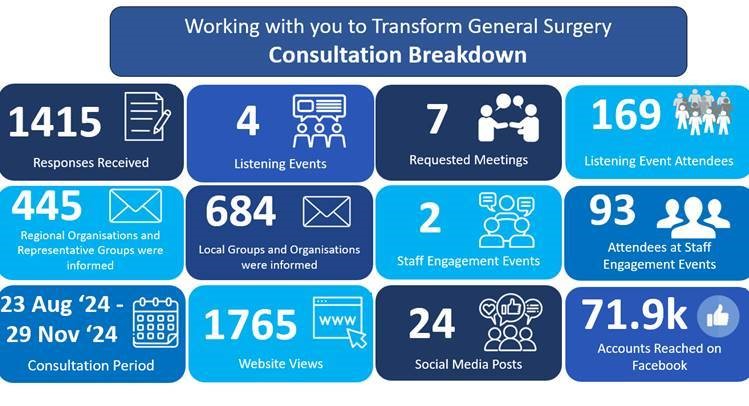
- 1415 responses received
- 4 listening events
- 7 requested meetings
- 169 listening event attendees
- 445 regional organisations and representative groups were informed
- 684 local groups and organisations were informed
- 2 staff engagement events
- 93 attendees at staff engagement events
- 23 August 2024 – 29 November 2024 consultation period
- 1765 website views
- 24 social media posts
- 71,900 accounts reached on Facebook
Requesting responses from individuals and representative organisations
To raise awareness of the consultation process we publicised the consultation documents and information about the listening events through our Regional Consultee list, made up of 445 organisations and representative groups as well as 684 local groups and organisations including all of the Trust’s service user and carer groups, along with the Trust’s Involvement Network. We sent information about the consultation and listening events to all local MLAs, MPs, Councils and GPs. The consultation was posted on the home page of the Trust’s website, along with our internal staff intranet site, and to expand the reach of the consultation we posted regularly on social media. A letter was also sent to consultees reminding them of the closing date for consultation. Documents were also available in hard copy or in different formats on request.
An on-line proforma, hosted on Citizen Space, was available to complete. We are mindful that to engage through Citizen Space individuals need to have access to a suitable device, broadband, and knowledge to complete an online proforma. We have therefore accepted responses in other formats including hard copies of written or typed responses sent in by post or email, and we welcomed responses provided over the telephone.
Listening events
To engage as widely as possible on the proposal we held three in-person listening events across the Northern Trust area, in Cookstown on Monday 30 September at 7:00pm, in Coleraine on Monday 7 October at 7:00pm and in Antrim on Wednesday 9 October at 7:00pm. A total of 140 individuals attended these events. Mindful that online engagement has the power to reach new audiences we also held a virtual listening event on Tuesday 1 October at 7:00pm. Our online listening event was attended by 29 participants.
All four listening events followed the same format, with a Trust presentation followed by a panel question and answer session. All listening events were hosted by independent facilitators to ensure transparency and encourage open discussion. The feedback we received at the listening events has been included in this report and considered by the key decision makers.
We would like to thank everyone who took the time to attend the listening events.
Meetings with staff
We recognise the importance of involving our staff in any change to services. Before launching the consultation we held around thirty meetings with staff across a range of specialities at both acute hospital sites to provide information on the drivers for change and to work with them on the development of the options. During the consultation process we held two formal online staff engagement events, on Thursday 19 September at 1.00pm and Wednesday 25 September at 5.00pm. The sessions were attended by a total of 93 staff members. Engagement also took place with Trade Union colleagues, including a pre-consultation session on 13 May when the case for change and associated timelines was presented.
Individual meetings
The Trust attended and participated in a number of additional meetings prior to the consultation period with the Department for Health (DOH) including the Strategic Planning and Performance Group (SPPG), the Regulation and Quality Improvement Authority (RQIA), Northern Ireland Ambulance Service (NIAS), and representatives from the Western Trust.
A number of individual meetings were requested during the consultation process. These are listed at Table 1 below. This provided the opportunity for the Trust to talk about its proposals and gather feedback from participants.
Table 1 List of Requested engagement meetings:
| 27 August 2024 | Alliance Party Representatives |
| 19 September 2024 | Engagement Advisory Board |
| 23 September 2024 | SOS Causeway Hospital Group |
| 24 September 2024 | Causeway Coast and Glens Council |
| 13 November 2024 | Mosside/Armoy WI Group |
| 27 November 2024 | DUP representatives |
| 29 November 2024 | SDLP representatives |
Promoting Equality and Rural Needs
We are committed to promoting equality of opportunity, good relations and human rights in all aspects of our work. In keeping with our legislative requirements, the Trust completed and consulted on an Equality Impact Assessment (EQIA) to assess the impact of the Trust’s proposal for future general surgery services, which is available on the Trust’s website.
We are also committed to understanding the impact the Trust’s proposal for future general surgery services may have on people in rural areas. We completed and consulted on a Rural Needs Impact Assessment (RNIA) on the options, which is available on the Trust’s website.
Summary of feedback received
The Trust received feedback in a number of ways during the consultation period. In total 1,415 responses were received, broken down as follows:
- 158 submissions via the online consultation form
- 10 letters
- 6 proformas submitted in writing
- 5 e-mails
- 1,236 signed copies of a pre-populated proforma consultation response
All of the pre-populated responses were received in a hand-delivered batch from the SOS Causeway Group to Trust Headquarters on 29 November 2024,
Amongst the batch there were 5 individual responses, the remainder of the responses were pre populated with identical responses including 6 unsigned copies. The unsigned copies have not been included in the numbers above.
The quantified responses are presented below. Each identical response has been treated and counted as an individual response all of which were in disagreement with the proposals set out in the consultation document.
Table 2 below details a breakdown of all respondents completing the consultation questionnaire.
Table 2 Analysis of respondents:
| Option | Total | Percentage |
| On behalf of my organisation/group | 8 | 0.57% |
| As an individual | 1218 | 86.94% |
| As a member of staff | 143 | 10.21% |
| As an elected public representative | 18 | 1.28% |
| Other | 3 | 0.21% |
| Not Answered | 4 | 0.29% |
Consultees were asked if they agreed with the reasons for change outlined in the document: 29 said yes, 1,347 said no, 11 were unsure, and 7 did not answer.
Consultees were asked if they agreed with our preferred option to centralise Emergency General Surgery and Major colorectal surgery on the Antrim site: 21 said yes, 1,362 said no, 8 were unsure, and 3 did not answer.
Consultees were asked if they agreed with the outcome of the Equality Impact Assessment: 19 said yes, 1,322 said no, 49 were unsure, and 4 did not answer.
Consultees were asked if they agreed with the outcome of the Rural Needs Impact Assessment: 22 said yes, 1,323 said no, 42 were unsure, and 7 did not answer.
The feedback we received from listening events with stakeholders and engagement with staff as well as other correspondence received is included in this report.
The overwhelming majority of those who responded to the consultation were not in support of the proposals. In considering the totality of the feedback received, we have identified a number of themes and will seek to address them in Section 4.
Themes emerging from the consultation feedback
Despite our continual efforts to present the need for transformation of the general surgery service both prior to and during our consultation, it is very clear that the overwhelming majority of respondents are not in support of the case for change. We fully acknowledge the strength of feeling and the clarity of the reasons given for not supporting the case for change. The consultation gave us a deeper understanding of where the challenges with delivering the transformation will be and in so doing has given us an opportunity to deliberately address those challenges here. This is in order that we might ensure the transformation meets its intended aims and contributes to improved accessibility and service delivery – we must ensure that we continue to deliver safe and sustainable services for our population both now and in the future.
We recognise our obligation to provide assurance and to give confidence to our service users, families and our staff about any proposed change and in that regard we have identified the primary concerns, or themes, from the consultation. This sections sets out what we have already embarked upon and what we are committed to do to address these concerns.
The need for transformation
A small number of respondents accepted the need for change and expressed their support for the preferred option put forward by the Trust. They recognised and welcomed that the Trust were proactively planning ahead and that it was important to have safe and sustainable services for the future.
Some respondents expressed their frustration that transformation was long overdue, referencing the Bengoa report (Professor R Bengoa, Systems not Structures: Changing Health and Social Care, Jan 2016.) and expressing concerns that the reality of the need for service transformation was not recognised by local politicians and local campaigns.
There was agreement that services and resources were spread too thinly. Respondents agreed with the need to consolidate resources as it was unsustainable and inefficient to have two sites trying to offer the same services.
There was recognition of long waiting lists, demographic population changes and difficulties in recruiting and retaining staff driving the need for change to meet future demands. Progress to reduce waiting lists for elective procedures was welcomed. It was acknowledged that elective surgery situated in one location should protect bed capacity and therefore improve waiting times for surgery and that service users should be willing to travel to achieve these outcomes.
Respondents referenced the full range of services available at Antrim Area Hospital and were in agreement that Antrim Area Hospital was better suited for emergency surgery. There was also agreement expressed to support the separation between emergency surgery and planned surgery and that this is well established in other Trusts and throughout the UK.
Of those respondents who were supportive of the case for change, some did state that changes were highly dependent on other factors such as available bed capacity at Antrim Area Hospital, staffing and the availability of the Northern Ireland Ambulance Service (NIAS) to undertake transfer of patients. These themes are considered later in the report.
Trust response
The Trust welcomes the support for its case for change from a number of respondents to the consultation. In particular it is important to recognise the need to consider issues around longer-term sustainability, and to act in a timely way to avoid service collapse.
There is also recognition of the significant opportunities presented by service redesign, with a dedicated elective unit providing a much more efficient way of dealing with high volume activity and enabling us to address some of our very long waiting lists.
Causeway Hospital
Sustainability of Causeway
It was clear from the feedback that Causeway Hospital is highly valued and considered to be providing a vital service for the communities on the North Coast and surrounding areas.
The proposed changes to emergency general surgery were viewed by some respondents as “stripping” Causeway Hospital of vital services. It was felt that this would then have a detrimental knock on effect on other services such as the Emergency Department, elective surgery, medical wards and the Intensive Care Unit.
There was a general perception expressed by many respondents that Causeway Hospital is being downgraded and that this will lead to its eventual closure.
Respondents queried why there was not more investment into Causeway particularly given the changing demographics and projected rise in people over 75 years of age. Reference was made to the annual report by Professor Sir Chris Whitty, Chief Medical Officer for England, about the need to focus the expansion of medical and NHS services in rural and coastal areas which are predominantly populated by an increasing elderly population.
Some respondents felt that Causeway Hospital was being sacrificed in favour of Antrim Area hospital and that the removal of local services presented an unacceptable risk to the local population.
Reassurance was sought from the public and staff that while some services are being changed, other services would be developed to replace them. Not understanding the future configuration of Causeway was leading to increased public concern about the status of the hospital.
More clarification was sought in relation to the number of beds being closed in Causeway due to the proposed change. Questions were asked about the impact of the proposals on anaesthetics and intensive care.
Reference was made to the need to maintain the five service “pillars” of an acute hospital for the hospital to remain viable and effective.
Respondents felt that the removal of emergency general surgery would risk the sustainability of other acute services.
Trust response
The Trust has repeatedly stated its commitment to Causeway as an acute hospital with a 24/7 Emergency Department. This was clearly set out in Causeway Hospital – A Strategic Vision, published in March 2024, and remains the Trust’s position. Nothing in this consultation changes that commitment.
General surgery will not be removed from Causeway Hospital. There will continue to be an extensive surgical presence at Causeway in our Surgical Ambulatory Unit and the majority of surgical patients presenting at Causeway ED will still be able to be assessed and treated at Causeway through this unit. We will retain one surgical inpatient ward at Causeway Hospital; other surgical beds are being reconfigured as we invest in same day emergency care services on the site.
Causeway will continue to provide high volume elective surgical procedures on site. The proposed reconfiguration will allow us to develop a dedicated elective unit which will increase efficiency, delivering a higher volume of elective procedures and helping to address our very long waiting lists. This proposed change is aligned with Department for Health Policy in improving elective capacity across the region. The Elective Care Framework sets out the commitment to establish elective care centres providing a dedicated resource for less complex planned surgery and other procedures, aimed at reducing waiting times and improving patient experience.
The anaesthetics team and Intensive Care Unit (ICU) will remain at Causeway Hospital, as will inpatient acute and general medicine services.
The proposed reconfiguration of services does not dilute our ambition for the future of Causeway.
Besides our commitment to acute inpatient services and a 24/7 Emergency Department, Causeway Hospital – A Strategic Vision outlines four areas where we believe services in Causeway can develop and attract investment so the site can continue to develop its offering to the local population and the wider region. These are:
- Same Day Emergency Care
Ambulatory or Same Day Emergency Care means getting patients who need senior medical assessment, diagnostics and/or treatment to that care without going through an Emergency Department or spending a night in hospital. We have already made significant investment into the expansion of same day emergency care services in surgery, frailty and medicine and are enhancing diagnostic services to support same day emergency care.
- Integrated Care
As we develop services in the hospital we will work with our partners in primary and community care, and the community, voluntary and independent sectors, to provide joined-up care to our population as part of the regional development of the Integrated Care System.
- Elective Care
Our ambition is to see Causeway operate as an elective and diagnostic hub for the north west, delivering services to patients from well outside its natural catchment area. Elective care will include planned surgery, endoscopy, diagnostics and other procedures delivering benefits to patients on long waiting lists for urgent procedures. This is supported by the investment of £3.07m in a much needed MRI scanner on the hospital site, expected to be operational by September 2025.
- Mental Health
We are very much aware of the increase in mental health conditions and dementia on our communities.
The development of Birch Hill, the new inpatient mental health unit in Antrim, gives us an opportunity to rethink and further develop how we provide mental health services in Causeway, in line with the Regional Mental Health Strategy.
We have established a Causeway Strategic Development Board to take this agenda forward.
We are familiar with the report published by Professor Sir Chris Whitty in 2023, demonstrating how the rural and coastal areas of England have a higher concentration of older people than major conurbations, while also having less easy access to health and social care. His view is not that all acute hospital services should be provided in rural and coastal areas, but that the government should plan for and direct resources to support a healthy, independent population of older people through policy areas such as housing and transport as well as healthcare. We believe that our Strategic Vision for Causeway Hospital is in line with this position, focused on sustaining and developing an integrated model of health and social care, centred around the needs of older people living in the Causeway area.
We note in a number of responses reference to the ‘five pillars’ of an acute hospital, namely acute medicine, acute surgery, A&E, intensive care and diagnostics. Having reviewed the literature cited to support this model we are unable to find an explicit reference to the ‘five pillars’. One article referenced is focused on the impact of closing Emergency Departments or acute hospitals. A second discusses the evidence to be considered when reconfiguring acute surgical services, and is in line with the standards set by the Department of Health’s Review of General Surgery. The third article clearly accepts that acute surgery will often be part of a network-based model and not present on every hospital site.
The Department of Health’s recent publication Hospitals – Creating a Network for Better Outcomes (Oct 2024) provides a list of core services for a General Hospital as follows:
- Acute and general medicine
- Radiology including CT scans
- Laboratory services
- An enhanced care area with a stabilisation and retrieval team
- Anaesthetic cover
Causeway Hospital has and will continue to have all these services and considerably more, underlining its status as a key part of the network of acute hospitals in the Northern Trust.
Surgical provision
Respondents who had experience of the surgical services in Causeway Hospital were complimentary both of named surgeons and in general of a positive patient experience with personal examples provided. This reinforced the opinion that services should remain at Causeway.
There was a recurring theme that the surgical services in Antrim were struggling yet it was the Causeway services that were being disrupted.
There was comment on the standards, particularly the requirement to have an NCEPOD (National Confidential Enquiry into Patient Outcome and Death) emergency theatre available 24/7. It was felt that the rigidity of this requirement was driving centralisation of services which could only be financially justified in large populations. This was seen as contrary to the future medical needs of the community citing Professor Sir Chris Whitty’s annual report.
It was felt that a surgical day hub at a distance from the main inpatient “hospital would not be cost effective with time lost by surgeons having to travel to the elective hub”.
More clarification was sought on what services would be provided in an elective hub and whether there would be guaranteed elective beds. Respondents questioned the loss of a surgical ward in Causeway and whether this would undermine the ambition to deliver high volume elective surgery. Further clarification was sought if there would be increased capacity for CT scans and ultrasound diagnostics to help triage and decide patient transfers to Antrim including out of hours.
Trust response
It is important to state that there is no plan to remove general surgery from Causeway Hospital. Causeway will still be able to assess and treat the majority of patients with surgical needs who present to the Emergency Department and the Ambulance Service will continue to bring patients with surgical issues to Causeway.
There will be a consultant surgeon on site Monday to Friday 9am-5pm dedicated to supporting Causeway Emergency Department, the Surgical Ambulatory Unit and the inpatient wards; this consultant will have no other clinical commitments such as theatre lists or outpatient clinics. This means that should surgical consultation be required either in the Emergency Department or on a ward, the consultant surgeon will be available to provide a timely response.
Causeway’s Surgical Ambulatory unit will increase its opening hours from five to seven days per week. There will be a senior surgeon on site 24/7 to respond to any patients requiring surgical assessment in Causeway Emergency Department or in any of the inpatient wards, with access to a consultant surgeon on call for advice out of hours.
A senior surgeon is defined as a Surgical Registrar or Speciality Doctor responsible for the surgical assessment, diagnosis and decision making for patient transfer or treatment on site. The senior surgeon is an independent decision maker and will consult with speciality colleagues as appropriate with 24/7 support from a Consultant Surgeon.
There will be daily access to theatre lists Monday to Friday. This will mean that patients will be able to get access to surgery in a timely way in Causeway Hospital. For example, many patients will be assessed in the Surgical Ambulatory Unit, discharged home, and then return to Causeway a few days later for surgery without having to remain in hospital overnight.
The Surgical Ambulatory Unit will have priority access to diagnostics, ensuring that clinical decisions are taken in a timely and fully informed way.
Only those patients who require urgent surgical intervention or admission to an inpatient bed will be transferred to Antrim Area Hospital.
The Department of Health’s Review of General Surgery set standards for emergency general surgery aimed at ensuring that all patients receive an appropriate standard of surgical care, recognising that this could in some instances drive service reconfiguration. Elective care is provided more efficiently when there is no competition from elective pressures.
The elective surgical beds in Causeway will be ring fenced for those waiting for planned surgery. This means that there is less risk of surgery being cancelled at short notice due to emergency admissions. Based on experience elsewhere the separation of elective care offers more patients quicker access to some of the most common procedures.
We are confident that this dedicated elective unit will increase the productivity of our theatre lists, helping to address some of the very long waiting lists for conditions which are not clinically urgent but have a significant impact on a patient’s quality of life.
There is growing evidence to demonstrate that elective hubs make a significant contribution to tackling elective waiting lists but are also driving a fundamental reform in the delivery of elective care.[2]
This proposal is not about enhancing one site to the detriment of another, it is aimed at making the most of all our resources and delivering a safe, sustainable model of general surgery with improved compliance against Departmental standards for the whole population of the Northern Trust.
Antrim Area Hospital
Current pressures and capacity at ED
There were a number of comments about the pressures at Antrim Area Hospital including the frequent messaging on social media about severe pressures at the emergency department.
Concerns were raised about the ability of Antrim Area Hospital to cope with any increase to workload within the current capacity given that the system is already under such pressure even with services running at Causeway.
Respondents wanted clarity that patients would not be transferred from Causeway Emergency Department to Antrim Emergency Department and that this would be monitored.
Respondents felt that the transfer of additional patients from Causeway to Antrim will likely place further burden on staff and resources resulting in longer waiting times, reduced quality of care and greater risk to patients.
Trust response
The Trust is fully aware of the pre-existing pressures at the Emergency Department on the Antrim site. With a very few exceptions, everyone who currently uses Causeway Emergency Department will be able to continue to do so in the proposed model. Causeway will still have a fully staffed Emergency Department, with a senior surgeon on site 24/7 to respond to any patients presenting in the Emergency Department. In most cases patients will be assessed and treated in Causeway, with only a minority requiring transfer to Antrim.
Those patients who do require transfer to Antrim will go directly to the Surgical Unit, and will not need to go through Antrim Emergency Department.
We have worked with the NI Ambulance Service to agree a ‘bypass protocol’ for a small number of conditions – this means that instead of taking a patient to Causeway Emergency Department the ambulance will bring them directly to Antrim. This is only necessary for patients who have suffered a defined traumatic injury (as per the NI Major Trauma Triage Tool) or have a gastrointestinal (GI) bleed. We estimate this will impact fewer than two patients per week.
We appreciate that if there are changes to Causeway Hospital there is a risk that some patients may decide to attend Antrim, based on a misperception that Causeway provides a lower level of service. If we implement the proposed model we will communicate clearly with our local population that Causeway Emergency Department is still very much ‘open for business’ and they can have the same level of confidence in the service there as they do today.
Bed capacity at Antrim Area Hospital
Whilst there was concern raised about the impact on the Emergency Department, there was also concern expressed about the bed capacity at Antrim Area Hospital and the ability to cope, citing examples of the current reliance on escalation beds and the lack of social care.
Respondents were of the opinion that if there were risks to the collapse of surgical rotas at Antrim then it would be sensible to centralise services in Causeway. There was a general feeling that Antrim is struggling under the current pressures and the addition of emergency surgery patients transferred from Causeway would have a negative effect on patients, their relatives and hospital staff as well as a burden on the ambulance service.
Further clarity was sought on the evidence of data to support how Antrim is equipped to deal with increases in emergency surgery. Several references were made to the changes in maternity services moving to Antrim and some of the capacity pressures. It was felt that there was a lack of statistics to support the proposals.
Questions were raised around the physical space to accommodate the change and sought clarity around the investment needed in Antrim for Emergency Department, theatres, beds, staff and car parking. Respondents wanted to understand the management plan for securing additional resources in Antrim and to build confidence around the modelling of mitigations and any impact on medicine bed pressures. The loss of 11 medical beds due to fire safety issues was quoted several times. It was felt that the risks needed to be outlined.
Trust response
The Trust is fully aware of the pressures on beds in Antrim Area Hospital.
The proposed model will bring some additional emergency surgical patients onto the Antrim site.
We have identified a range of measures which we believe will allow us to mitigate the impact on Antrim Area Hospital. These are:
- Additional surgical beds
- Increased capacity in the surgical Same Day Emergency Care (SDEC) service to provide rapid assessment and avoid admission to hospital
- Increased medical SDEC capacity
- Development of new SDEC pathways
- Increased endoscopy capacity for inpatients, to improve timely decision-making and reduce length of stay
- Increased community-facing staff to plan and support timely discharge from hospital
- The high volume elective activity currently being undertaken in Antrim will move to Causeway.
Taking a proactive decision to reconfigure in a planned way, rather than waiting for an inevitable service collapse, enables us to develop and implement these measures ahead of any change.
Alongside this increased capacity within Antrim Hospital, we are taking action to address the causes of delays in discharging patients from hospital. We are increasing the number of beds in our community hospitals, there are new care home beds coming to our area, we are reforming the way we provide home care, and we are delighted to have received funding to begin a Hospital at Home service in the Northern Trust for the first time, which will be in place later this year.
These measures will not resolve the underlying capacity issues in Antrim Hospital but will enable us to make the required changes while minimising the impact on the overall demand-capacity balance of the site. The Trust will continue to advocate for investment into Antrim Hospital in terms of inpatient beds, operating theatres, diagnostics and other badly needed infrastructure as well as continuing to influence regional direction in relation to tackling systemic social care capacity constraints.
We understand that some respondents felt any centralisation of emergency surgery should take place in Causeway rather than Antrim, in order to maintain access for patients from the northern sector of the Trust area. However, the proportional increase in demand for Causeway would be much higher than for Antrim, as would the demand on the NI Ambulance Service, with the result that this was not the preferred option in the Trust’s options appraisal.
In respect of the concerns raised regarding the loss of 11 medical beds due to fire safety issues, for clarity, this related to the need for the Trust to step down 11 additional beds in wards which were used for the admission of lower acuity patients across Antrim Hospital. This was necessary in order to comply with Northern Ireland Fire and Rescue Service (NIFRS) regulations. These beds were being used as part of a risk management approach to alleviating pressures and reducing overcrowding in our Emergency Department when the hospital was operating at or beyond full capacity. As noted elsewhere in our document, we have plans in place to expand service capacity in other ways as part of our strategy to alleviate hospital pressures on the Antrim site.
Patient safety
Concern for patient safety was raised across all the themes that emerged throughout the consultation. Respondents felt that the removal of emergency surgery from Causeway would have a negative impact on patient care. In particular concerns were raised about patient safety at weekends and out of hours when the elective surgical team isn’t on site.
Whilst there was recognition of ever growing waiting lists and the need for something to be done, it was felt that moving services to Antrim created potential risk to patients due to the capacity issues.
There was a lack of confidence that the proposal would bring about improvement for the Trust or for patients, stating that the Trust had failed to provide evidence that the centralisation of surgery would be safer.
Once again it was felt that the Trust needed to explain the risks – the availability of ambulances for transfers and longer journey times in an emergency situation raised additional concerns.
Respondents provided real life experience of receiving emergency surgery at Causeway and expressed fear for patient survival if this service is removed.
Some from the farming community, considered a high risk occupation, were vocal in raising their concerns for patient safety.
There were queries in relation to the structure of the surgical team and levels of seniority and decision making. There was criticism for two of the patient scenarios that were described in the consultation document with a feeling that someone who is critically ill or critically injured on the North Coast might not survive the journey to Antrim.
Specific patient safety questions were raised and clarity sought on plans for management of GI bleeds including in the out of hours period.
A cross cutting theme was meeting the needs of the growing older population and how the removal of emergency surgery and additional travel time would negatively impact them.
Trust response
It is important to reiterate that with a very few exceptions, everyone who currently uses Causeway Emergency Department will be able to continue to do so in the proposed model. Causeway will still have a fully staffed Emergency Department, with a senior surgeon on site 24/7 to respond to any patients presenting in the Emergency Department. This means that there will be no increased travel time to the Emergency Department for the vast majority of patients.
In most cases patients will be assessed and treated in Causeway, with only a minority requiring transfer to Antrim. Those who do transfer will be transported by the most appropriate means depending on their clinical condition – this may be by NI Ambulance Service or a private ambulance provider.
The Northern Trust has engaged with NIAS before, during and after the consultation process. We have agreed a bypass protocol and have validated expected numbers of patients that we believe will need to be transferred on a daily basis.
Some of the concerns expressed during the consultation related to major trauma, such as might occur in a road traffic collision or a farming accident. We recognise these concerns but are also confident that in these situations there are existing protocols across the Regional Trauma Network. Causeway ED remains part of the Regional Trauma Network and where appropriate patients will continue to be brought to Causeway ED by NIAS.
Patients suffering from major trauma currently bypass both Causeway and Antrim and go directly to the Royal Victoria Hospital, which is the Regional Major Trauma Centre. On occasion some patients will be stabilised in either ED before an expedited transfer to the Major Trauma Centre. Our proposals for general surgery will not change this in any way or create additional risk for this patient group.
We acknowledge that there will be occasions where patients in Causeway will develop surgical problems. There will be a senior surgeon on site 24/7 in Causeway with access to a consultant surgeon on call out of hours. On these occasions our surgical and anaesthetics teams will stabilise the patient and surgical transfer will be arranged.
A multi-disciplinary team made up of consultants from surgery, Emergency Department, medicine, gastroenterology and anaesthetics has been established to develop patient pathways and transfer protocols between Causeway and Antrim which take into account the acuity of the patient, the management of unstable, stable and volatile patients at risk of deterioration and the urgency of time to theatre.
Workforce and recruitment
Respondents expressed their concern that if services are removed from Causeway, it will be seen as a less favourable place to work.
Similar views were expressed around the attractiveness of the Causeway Emergency Department for medical staff and nurses if emergency surgery is removed.
Concerns were raised about loss of jobs for medical and ancillary staff and the distress this would bring to staff.
Clarity was sought on specific recruitment strategies and incentives used to recruit and retain staff and what measures will be put in place to support young surgeons. Views were expressed that Causeway may not be attractive to young surgeons if they are not exposed to a full range of surgical procedures.
There was commentary that the public had been told that the change was necessary to avoid the risk of surgical collapse due to possible future recruitment challenges, however respondents noted that Causeway had a full complement of surgical staff. Furthermore, it was felt that the Trust had not shown how they have attempted to replace retiring consultants.
It was described that if services were removed then this would create uncertainty and discourage consultants from taking up posts in Causeway and/or create difficulties in retaining staff. Specific reference was made to Gastroenterology (GI) and the threat to acute medicine.
There were questions around the dynamics of an elective hub and surgical ambulatory unit and how the Trust would manage the risk of staff becoming deskilled. Further clarification was sought on the rotation of staff between Antrim and Causeway. Reference was made to the recruitment difficulties experienced by South West Acute Hospital (SWAH) with a similar model.
There were thoughts expressed that Trust boundaries should be moved to balance the workload of the surgeons in Antrim with suggestions that Newtownabbey or North Lough Shore areas should be moved into Belfast Trust boundaries. Respondents felt that this shift would improve equity of workforce and workload across both Trusts.
Trust response
One of the most important drivers for the proposed reconfiguration of general surgery is the sustainability of our surgical workforce, particularly at consultant level. While it is true that we have been able to maintain a stable surgical workforce in Causeway to date, it is important that we look to the future and ensure we can recruit and retain the next generation of surgeons.
We are planning for long term sustainability now as we anticipate that 25% of our consultant workforce are likely to retire over the next 3-5 years. During this period we know that there will not be enough doctors completing general surgery training locally to fill the consultant vacancies. We also have to consider that the other Trusts in the region will also be recruiting surgeons over this period.
Sustaining 2 smaller rotas across 2 sites makes the service vulnerable to being able to retain and attract staff in the future and increases the risk of service collapse if there is any unplanned change in staffing. Having our emergency rota split across two sites means our consultants are working a 1:6 or 1:9 (1 in every 6 or 9 nights and weekends), compared to other Trusts which can offer a single rota at a much reduced frequency. Our proposed consolidation will move all our consultant surgeons onto a 1:15 rota, which makes it much more likely that we will be able to retain and attract consultants to work in the Northern Trust.
The reconfiguration also presents other advantages for the surgical workforce. All our surgeons will rotate between Antrim, where they will contribute to the emergency rota and undertake major colorectal surgery, and Causeway, where they will have dedicated high volume elective theatre lists. This separation of emergency and elective general surgery is a model that is favoured by many surgeons, particularly as it presents them with the opportunity to work in an efficient elective environment where there are no competing clinical priorities associated with emergency surgery.
This will also improve the training offered for new surgeons. In the current model our trainees find it difficult to gain exposure to high volume elective surgery. This model will provide rotational opportunities across both high volume elective as well as emergency and major colorectal surgery.
This fits well with our strategic direction for Causeway Hospital. We are setting out a strong, compelling future vision for the site to form the basis of an ambitious but deliverable workforce plan to develop, attract and retain the staff we need to build resilient, sustainable services. Planning proactively for the future helps to underline that message; allowing service collapse would send out a very negative message about Causeway, and make it much more difficult to attract and retain staff.
We recognise that the proposed service reform may impact on staff in terms of relocation to a new work site, however the Trust confirms that there will be no job losses. The Trust will put robust mitigating measures in place, adopting the principles of the Trust’s Management of Change Human Resource Framework. Staff’s individual and specific circumstances will be considered and, where adverse impact is identified, the Trust will take steps to mitigate its effects. The Trust will ensure that its engagement arrangements adhere to best practice principles governing consultation and are meaningful and inclusive of all staff affected and Trade Unions. Staff will be kept fully informed throughout the consultative process and in any future recommendation arising from this consultation process.
The Trust recognises that the Northern Trust serves the largest population of any of the Health and Social Care Trusts in the region, and that this brings challenges to the capacity of many of our services. Any decisions regarding geographical boundaries however are not within the remit of the Trust. Instead we will continue to focus our efforts and ambitions to deliver a model of high quality health and social care for all of our population.
Northern Ireland Ambulance Service
Respondents raised concerns about the arrangements for the transfer of patients between Causeway and Antrim Hospitals noting that the ambulance service is already under extreme pressure.
Frequently there were questions around the capacity of the ambulance service to meet the needs of the population given that the change would put further strain on resources.
Concerns were expressed around the impact of an additional 40-45 minutes to a patient’s journey time given the distance between Causeway and Antrim. There was further unease that additional journey times could be exacerbated by delays if an ambulance was not available or if a bed was not available at Antrim.
Respondents wanted clarification on the logistics for transferring patients, such as being accompanied by an anaesthetist for each transfer, protocols for road versus helicopter transport and the overall capacity of the ambulance service to manage emergency and non-emergency transfers.
Concern was raised in relation to palliative patients who present with surgical problems such as bowel obstruction, but are not deemed suitable for surgery, quoting ‘Often these patients are admitted under surgery, and want to be managed close to home where their families can easily visit, especially if they are in their last days or weeks of life’. It was queried if these patients would also be transferred to Antrim Hospital.
Respondents asked if there should be dedicated ambulances for Antrim and Causeway.
There were additional queries in relation to the MRI scanner planned for Causeway and what impact this will have on releasing capacity for the ambulance service. There was a view that an MRI journey resource did not equate to the same resource for transfer of an unwell patient.
Further clarification was sought on these assumptions – how much capacity release for the ambulance service would be suitable for the transfer of patients requiring emergency surgery? How many journeys for MRI scans are undertaken by NIAS versus private ambulances?
Trust response
We have met with representatives from NIAS as part of our planning both before and during the consultation period. We recognise the pressures on the ambulance service which are reflective of the pressures across our entire health and social care system. We have shared our proposals and planning assumptions with colleagues in NIAS and will continue to work closely with them.
Where there is limited capacity within the ambulance service to transfer patients, we have made provision for the use of private ambulances.
We expect that fewer than 2 patients per week will bypass Causeway by ambulance as part of our agreed bypass protocol.
We anticipate that 2-3 patients per day will require transfer from Causeway to Antrim Surgical Unit. Of these, we estimate that approximately one-third will require a NIAS paramedic crew with the rest being suitable for private ambulance transfer. In total this equates to fewer than one additional NIAS transfer per day.
The installation of an MRI scanner in Causeway in mid-2025 will remove the need to transfer patients by ambulance from Causeway to Antrim and back for MRI scans. Only a minority of this activity is provided by NIAS, but it will nevertheless release some transfer capacity back into the system.
All patients are considered on an individual basis, for those patients who are palliative or nearing end of life, it may not be considered appropriate to transfer to Antrim.
Travel and rurality
Strong concerns were expressed from respondents in relation to the extra time and costs associated with the additional travel distance to both Hospitals. In particular, the view that ‘Causeway Hospital was purposely built to serve the triangle and surrounding areas’. Causeway Hospital is located almost 40 miles away from Antrim Hospital. Concerns were expressed that ‘the journey from Coleraine to Antrim typically takes over an hour under optimal traffic conditions’.
There were concerns cited that the proposal was a ‘move towards more centralisation close to Belfast’. It was noted that the distance between Antrim and Belfast was less than 20 miles with emergency surgical services being offered at both acute hospitals. Respondents expressed concern that the population of the North Coast were being disadvantaged as they would have to travel approximately 40 miles to Antrim Area Hospital or to Altnagelvin Hospital to access emergency surgery.
Concerns were expressed that the average length of stay for a surgical admission is 3-5 days, ‘meaning relatives will be forced to travel twice a day to visit loved ones admitted to Antrim’. It was felt that increased travel times and distances will impact on people from socioeconomically deprived areas given the additional costs of travelling further distances and even families with access to private transport may struggle with the additional petrol and diesel costs. Respondents queried if there will be a process put in place to assist with the extra travel costs incurred.
There was concern that families living in rural areas without private transport may find it difficult to access services as public transport links are not good and there can be limited provision of community transport. It was felt that this ‘change unfairly penalises those living in rural areas by reducing their equitable access to essential healthcare services’.
There were suggestions that ‘systems need to be in place to ensure patients are able to attend for early morning appointments’ to take into account the ‘poor transport network from the North Coast to Antrim Hospital’.
Trust response
It is important to reiterate that with a very few exceptions, everyone who currently uses Causeway Emergency Department will be able to continue to do so in the proposed model. Causeway will still have a fully staffed Emergency Department, with a senior surgeon on site 24/7 to respond to any patients presenting in the Emergency Department. This means that there will be no increased travel time to Emergency Department for the vast majority of patients.
We acknowledge that for some patients the distance from their home to access elective surgery services will increase: some patients who would have had surgery in Antrim will go to Causeway, and vice versa. This is unavoidable if we are to address the issues around the safety and sustainability of the service, as set out in the consultation document. A DOH health survey carried out in 2017/18 indicated that 83% of people said they would be prepared to travel up to 1 hour, and 41% up to two hours for a routine procedure or operation. A much more important factor for patients is obtaining the right care by the right team in a timely way.
Additional travel will in the main be a one off occurrence for a surgical procedure and not for longer term follow up or tests. We will maximise the diagnostics and outpatient services available at our two hospitals so that patients can access these locally – this includes pre-assessment, outpatient follow up and tests. We will also offer virtual and/or telephone appointments where it is appropriate to do so, recognising that for some an in-person appointment is the best option.
We will be flexible to avoid early appointments for anyone who has a long distance to travel. We have partial booking processes already in place in the Trust which allow patients receiving an appointment to contact the booking office to confirm or rearrange at a more convenient time.
The Trust is mindful that visits from family and friends are an important part of a service user’s recovery process. It is recognised that there may be an impact on families and carers who have to travel further to visit and provide support to their family member. It is also recognised that there may be an impact on people who live in rural areas travelling for elective surgery.
The Trust recognises that people need definitive information from the start about the help they can get and we will ensure that available transport options are publicised. Trust staff will support people to find out if they are eligible for non-emergency transport services and promote how service users may be able to get a refund on their transport costs.
The Hospital Travel Costs Scheme is a scheme already available for people on low income or income based benefits who can claim travel expenses for hospital treatment. As part of our commitment to establish a Rural Transport task and finish group we have started work to scope out transport provision working transport providers, other departments and the voluntary and community sector to explore the availability and gaps
The Trust has invested in the AccessAble mobile application (app). This is an on-line app for people with reduced mobility which allows them to research and plan their hospital stay or visit.
The Trust will continue to support virtual visiting, where possible, through the use of IPad technology, to provide contact with families and friends as an alternative to incurring travel costs, recognising that this requires suitable and reliable internet/broadband connection.
The Inclusive Mobility and Transport Advisory Committee (IMTAC) participates in the Health and Transport Steering Group at Queen’s University Belfast. It is a committee of disabled people and older people as well as others including key transport professionals. The role of the Committee is to advise Government and others in Northern Ireland on issues that affect the mobility of deaf people, disabled people and older people. Northern Trust is represented on this group and has supported the gathering of survey information through its Personal and Public Involvement (PPI) network.
Options appraisal
There was general commentary on the process of the options appraisal and Option 7 as the preferred option.
A few respondents queried the composition of the panel, commenting that it was not an independent panel.
There were queries over the validity of the consultation process given that the Trust had already published a strategic vision for Causeway Hospital which included the Hospital becoming an elective hub.
It was felt that having a preferred option whilst still collating data was premature.
Trust response
As is normal process with a decision of this nature, the Trust brought together senior clinical and managerial staff from the key specialties and sites to agree options, establish weighted criteria and carry out a scoring of the options. We have also had the benefit of independent advice from Getting It Right First Time (GIRFT), a clinically-led NHS England programme set up to review services and support evidence-based change.
Our options appraisal was informed by data; our initial planning assumptions have been refined as we have gathered and analysed further data throughout the planning process.
Causeway Hospital – A Strategic Vision which was published in March 2024 sets out some high level ambitions for the Causeway Hospital, including its development as an elective hub, but does not depend on a specific configuration of surgical services. The current proposal is in line with that vision, and also with the Department of Health’s Review of General Surgery.
Equality Impact Assessment
The Trust is committed to ensuring that equality of opportunity is central to our service delivery. The Equality Impact Assessment (EQIA) stated that both clinically deliverable options would have an impact on some of our population who will have to travel further to access services and that the Trust will monitor for any adverse impact.
This was in line with feedback received from consultees who expressed concerns about the potential negative impacts on specific equality groups, particularly for older people, those with disabilities or with caring responsibilities.
A further concern was raised in respect of Trust staff relating to extra costs and travel time to and from work, particular concerns were raised around the impact on disabled staff.
Trust response
An Equality Impact Assessment (EQIA) was completed for this proposed service reform in line with the relevant law, section 75 of the Northern Ireland Act 1998. This says we must properly consider the need to promote equality of opportunity between:
- people of different religious belief, political opinion, racial group, age, marital status or sexual orientation
- men and women generally
- people with a disability and people without one, and
- people with dependents and people without dependents.
Using the Trust’s information systems, a representative year ending 31 March 2024 was analysed in terms of service usage. This dataset included temporary residents to the Causeway coast area who required to avail of general surgery services during their stay. This dataset indicated that older people were the majority of service users who required emergency surgery, elective colorectal surgery and high volume elective surgery and therefore are more likely to be impacted by the proposed changes to general surgery service provision.
Recognising this age profile in the context of an increasingly older population, the Trust has developed a programme of reform to enhance and refocus our services for older people. This includes measures to strengthen home care provision and intermediate care that will enable discharge after surgery, particularly in rural areas, where it can be difficult to recruit carers.
The Trust is committed to monitoring for any adverse impact and to on-going engagement with service users and carers. The Trust engaged with the Engagement Advisory Board, which is chaired by a service user and whose members are all service users and carers with lived experience of Northern Trust services, This Board ensures the Trust approaches engagement in a way that meets the needs and interests of all communities.
The Trust recognises that this service reform may impact on staff in terms of relocation to a new work site. Steps will be taken to ensure that the implementation process in no way conflicts with the requirements of existing equality and anti-discrimination legislation.
There is an overall low percentage of employees in the Northern Trust (1.80%) who have declared a disability. For the specific staff profiles provided affected either by option 5 (167 staff) or option 7 (154 staff), there are staff members who have indicated ‘yes’ to being a member of staff with a disability but the vast majority of impacted staff have answered ‘no’ followed by a similar number of ‘unassigned’. The numbers are too low to provide an individual breakdown as it is important that staff members cannot be identified through the level of detail provided.
The Trust is mindful that people may be reluctant to declare that they have a disability and is currently working with disabled people and representative groups to ensure staff that have, or declare, a disability are fully supported. For staff who declare themselves as having a disability, reasonable adjustments will be made in line with related employment policies and good practice guidelines. The Trust is committed to monitoring for any future adverse impact and will honour its obligations with regard to the Disability Discrimination Act 1995.
In keeping with the Equality Commission’s guidance, the Trust will put in place a process to monitor the impact of this proposal on the relevant groups. If, as a result of this monitoring, the Trust finds that the impact of this service reform results in a greater adverse impact than predicted, or if the opportunities arise which would allow for greater equality of opportunity to be promoted, the Trust will make sure that measures are taken to achieve better outcomes for the equality groups.
Rural Needs Impact Assessment
Positive feedback was received from a number of respondents in relation to the advantages of centralising services into one location including surgeons specialising in particular disciplines and the minimisation of travel time by staff between locations allowing for additional time delivering surgeries.
Data was highlighted as a potential area of concern with a perception that the datasets utilised for the RNIA were out of date.
Concern was expressed in relation to the increase in travel to and from both hospitals, with many responses concentrating on the potential negative impact on rural communities. Poor public transport infrastructure and links, especially in the North Antrim, Ballycastle, Cushendall and Glens area. The importance of transfer time to hospital, including by ambulance, was highlighted.
There was reference to the RNIA stating that mitigating measures should be put in place before any changes to services are made. The importance of the Rural Transport Task Group, the Rural Framework and the Rural Health Forum were highlighted.
Trust response
The Trust is committed to its statutory duty, arising under the Rural Needs Act (Northern Ireland) 2016, to have due regard to rural needs when developing, adopting, implementing or revising policies, strategies and plans and when designing and delivering public services. A full rural needs impact assessment (RNIA) was completed to reflect the potential impact of this proposal.
The default definition of rural (Population Settlements of less than 5,000) was not considered useful in differentiating impacts, as people living in both large and small settlements will be impacted by changes in the location of emergency surgery and high volume elective surgery. The definition applied in the RNIA is in excess of 20 and 30-minute drive times from a town centre or a settlement with a population of 10,000 or more (a large service centre). While the Trust has used the alternative definition of rural as defined by DAERA, the Trust has also analysed the travel times and distances to both Causeway and Antrim Area Hospital sites from settlements within the Trust’s geographical area using tables available on Northern Ireland Statistics Research Agency (NISRA) coupled with a distance time calculator available on the intranet.
The datasets used relates to information that is the latest available, for example, 2017 for multiple deprivation measures and information from the most recent Census in 2021.
The RNIA details travel distances and time to both Antrim Area and Causeway hospitals. Analysis of travel distances and time for all settlements and in NHSCT area with 1,000 or more residents indicates that 15 locations with resident numbers totalling 83,642 (26%) are in excess of 30 minutes travel time to Antrim Area Hospital. In addition, 155,813 residents live in hamlets or open countryside across the Trust area. The 26 % does not include people residing in the hinterlands of the 15 settlements identified.
Analysis of travel distances and time for all settlements in NHSCT area with 1,000 or more residents indicates that 30 locations with resident numbers totalling 258,427 (80%) are in excess of 30 minutes travel time to Causeway Hospital. In addition, 155,813 residents live in hamlets or open countryside across the Trust area. The 80% does not include people residing in the hinterlands of the 30 locations identified.
The overarching rationale for reconfiguring surgery services is to ensure that emergency and elective surgical services are sustainable and enable the provision of high quality care to service users. The reform of surgery services will result in improvements in waiting times and more certainty around dates for elective surgery. The Trust will continue to consider the needs of those who live in rural communities and will review the implementation of any change to service. A key element of the review will be feedback on the service user experience and the issue of additional travel for service users and their families.
In recognition of the range of challenges for those who live in rural areas, including the North Antrim area covering Ballycastle, Cushendall and the Glens, the Trust has developed a Rural Framework to identify and raise awareness of key rural issues and inequalities compared to urban counterparts. The Framework seeks to map local strengths including mainstreamed and successful pilot projects whilst encouraging, supporting and strengthening relationships with the rural community and engaging stakeholders to maximise rural wellbeing. The Framework will also help strengthen the Trust’s focus to achieve better outcomes for those who live in the countryside and will drive the work of the Rural Health Forum. With our commitment in our rural needs assessment to establish a Rural Transport Group, we will use this forum to talk to transport providers in a joined up way and explore gaps in provision.
Monitoring and evaluation including lessons learned
Towards the end of January 2025 the RQIA published its report into the pathways resulting from the temporary suspension of Emergency General Surgery (EGS) at South West Acute Hospital (SWAH). The review provided an assessment of the provision put in place following the decision to suspend EGS at SWAH.
While this review was published outside our consultation period, the Northern Trust feels that it is important to acknowledge the report and to take on board any learning from the recommendations in the report. We have used this learning to help us assess our position and to provide added assurance in terms of our planning for the future of General Surgery in the Northern Trust.
Specifically, our proposed surgical model provides a consultant surgeon on site Monday to Friday 9am-5pm who is dedicated to supporting Causeway Emergency Department, the Surgical Ambulatory Unit and the inpatient wards with no other clinical commitments such as theatre lists or outpatient clinics.
The Causeway Surgical Ambulatory unit will open seven days per week with a senior surgeon on site 24/7 to respond to any patients requiring surgical assessment in Causeway Emergency Department or in any of the inpatient wards, with access to a consultant surgeon on call for advice out of hours.
Patients who have been diagnosed for admission under surgery will be transferred from Causeway directly to the surgical unit in Antrim. There will not be ED to ED transfers.
We recognise that there will be additional demand on the Antrim site. We have made plans to increase surgical bed capacity and have identified a range of other measures to mitigate the overall impact on Antrim Hospital.
We have agreed a bypass protocol with NIAS, whereby patients falling within the set agreed criteria with the ambulance service will bypass Causeway ED and be taken to Antrim ED, although the majority of patients with a suspected surgical condition will continue to be brought to Causeway ED.
We recognise that there will be small number of palliative patients with a surgical pathology who will present to Causeway. The clinically developed transfer protocol takes account of this cohort of patients.
As part of our implementation planning we are committed from the outset to include plans for monitoring and evaluation which will include key performance indicators, clinical audit, clinical pathways and patient outcomes and experience.
We will carry out an interim evaluation of the change 6 months after implementation and then a further review after 12 months to assess the effectiveness of the change.
Next steps
Trust Board has considered the feedback received during the consultation process. A recommendation will be put forward to the Health Minister for a decision.
All those who participated in the consultation will receive a copy of the consultation feedback report, which includes a detailed response from the Trust. The Feedback Report, including the outcome of the consultation, will be available on the Trust’s website.
We want to thank everyone who took the time to be part of this consultation.
Alternative formats
This document can be made available, upon request, in other formats including Braille, large print, audio or in another language for anyone not fluent in English. For alternative formats please contact:
Equality Unit
Route Complex
8e Coleraine Road
Ballymoney, BT53 6BP
Tel: 028 2766 1377
Textphone: 028 2766 1377
E-mail: equality.unit@northerntrust.hscni.net


