




‘The patient and their family should be at the heart of everything that we do’
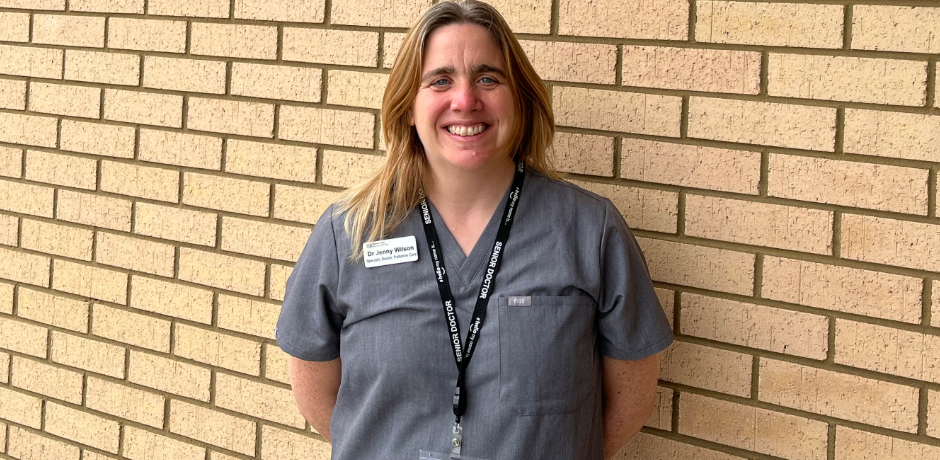
A week in the life of a specialty doctor in palliative care
My name is Jenny Wilson and I am a doctor working in palliative care in the Northern Trust.
This is a description of my typical week, to give you an idea of what we do in palliative care.
On Mondays I work in Causeway Hospital in Coleraine. I work with four specialist nurses and together we are the Hospital Specialist Palliative Care Team or HSPCT. Patients are referred to us from the inpatient wards and the emergency department. All the patients referred to us should have a palliative diagnosis – a diagnosis of a condition that is not curable. This could be an incurable cancer, lung diseases such as chronic obstructive pulmonary disease (COPD), heart failure, neurological conditions such as motor neuron disease or dementia or many other conditions. Some of the people referred to us are in their last days of life, but others may have weeks, months or even years to live, and need help with managing their symptoms. We talk to the patient about what they understand about what is wrong with them and we ask them about symptoms such as pain, shortness of breath or nausea and vomiting. We will then prescribe medication that can help. Sometimes these medications are taken orally and sometimes they are injectable medications, or given via a syringe driver. Syringe drivers are little pumps that allow medication to be delivered continuously under the skin. They are used when the medication cannot be given by mouth, either because someone can’t take it by mouth because they can’t swallow or are vomiting, or because the medication is not available in an oral form.
Holistic support
As well as managing physical symptoms, we also talk to people about psychological issues (mood, anxiety, worries about the future), social issues (where they want to be looked after, what help they are likely to need, what family they have and how the family are coping) and spiritual issues (this isn’t just what faith or religion they have, but what gives their life hope or meaning). We will usually see our patients regularly to see what difference the medications we have prescribed have made.
On Tuesdays I work in the Macmillan Unit in Antrim Area Hospital. This is a specialist palliative care inpatient unit, which is really another name for a hospice. There are six hospices in Northern Ireland – the Macmillan Unit, the Northern Ireland Hospice in North Belfast, Marie Curie Hospice in East Belfast, Foyle Hospice in Derry, Evora Hospice in Newry and a unit in Omagh Hospital.
My Tuesday starts with a handover from one of the nurses about how the patients have been overnight. There are 12 patients in the unit, and usually two or three doctors to go round and see them, so we split up. I go and see my patients, talking to each of them about how they are doing and how we get are getting on with managing their symptoms. We will adjust their medications and find out if there are other ways we can help them. Sometimes they are more unwell than they were before, and then the challenge is to figure out how best to help them. Sometimes this means trying to identify if there is an issue such as infection that we can fix – so we might examine the patient and then do some tests such as blood tests or x-rays. Sometimes we think they are less well because their underlying palliative condition has got worse, and we can’t fix that. Then we talk to them and their families about making sure they are comfortable, and avoiding unnecessary invasive tests. It is very important that families understand when their relative is less well, so that they can spend as much time with them as they need. We allow family members to stay with their relative, and we have a pull down bed so that they can sleep in the same room. All our rooms have an ensuite and a little patio area.
It is important in hospice care that we look after each other as a team, because we have a very emotional job. Lots of our patients die, and we also have to have big, important conversations with our families about how things have not turned out as they hoped. So we as a team try to look after each other. We make sure we take coffee and lunch breaks together, which allow time for a debrief or just some light relief!
Hospital admissions
In the afternoon I will often see a new patient who has been admitted. Sometimes these are people who have come in from home because they have symptoms that are too difficult to manage in their own home. Sometimes these are patients who have been admitted to the main hospital, and there is nothing more to be done to fix their condition and they are expected to die. Other times they went in to hospital with something else that has been sorted out, but they still have a symptom such as pain, that we can help with.
It is a common misconception that hospices are just for dying people, and that anyone who is dying can go to a hospice. Hospices are all about living the best life that you can, and trying to help with all the issues that stop a good quality of life, such as pain or emotional distress. We will often admit people of a couple of weeks and then discharge them home when their symptoms are better, so they can enjoy being in their own home with their families.
Equally, most people who are dying do not end up in a hospice. Many choose to stay at home, but also there are a limited number of beds, so only the people who most need hospice care are able to get a place. Lots of people can be managed in their own home or in a nursing home, but also about 50% of people die in hospital. This is because when somebody becomes less well it is hard to know if there is something that a hospital will be able to fix, so they have to go to be investigated.
Team working is very important in palliative care, and each member of the team plays a vital role in caring for the patients. Nurses spend a lot of time administering the complex medications that have been prescribed for the patients. They will monitor people for symptoms and give them extra medication that is prescribed if needed (we call this breakthoughs or PRNs – this stands for Pro re Nata – latin for ‘as needed’). Nurses will also monitor patients and let the doctors know if there is any deterioration. They offer emotional support for the patients. Nursing assistants do much of the hands-on care, such as helping with washing, dressing and feeding.
Teamwork
There are other important members of the team. Every hospice has at least one chaplain. They will talk to the patients about what is important to them, including their faith and beliefs, and what gives their life meaning. They can also help with some fears around what happens after death. Physiotherapists will work to try to maximise the amount somebody is able to do, even if this is very limited, such as helping them with how best to walk to the bathroom, or even just to be able to sit in a chair. Occupational therapists provide equipment that can help people, and they also help with techniques to manage fatigue and breathlessness. Social workers provide emotional support to patients and their families and will also work with them to make memories.
It is really important that the team work together and communicate well, so there is a weekly multi-disciplinary meeting which the whole team attends. This allows for everyone to talk about each patient and what their goals are. Of course, informally different members of the team will update each other throughout every day. The patient and their family should be at the heart of everything that we do.
On Wednesdays I meet with a team of community nurses. They are employed by the Northern Ireland Hospice, but will go into people’s homes, helping them and their families with any symptoms they may have. At our meeting they will talk about their patients and I will give advice on how I think they can best be helped. Sometimes if they are finding symptom management particularly difficult, I will visit the person in their own home. It is important for me to work out what is causing the symptoms so that I know how best to help – this can be by getting the patient to tell me in detail what their symptoms are like (I ask a lot of questions!), examining them, and also looking at all the tests they have done. I try to avoid ordering new tests, unless it is essential – tests can be quite burdensome, so it important they are only done if they make a real difference to how the person is treated.
The rest of the week I am back in Causeway Hospital, doing what I do on a Monday.
My job is incredibly interesting and satisfying. Every patient is different, and I get to walk a little bit of their journey with them, learning a bit about them and helping them. Unfortunately really sad things to happen to people, and I can’t stop those things happening, but often I can help to make it a bit easier.
10th September 2025


