




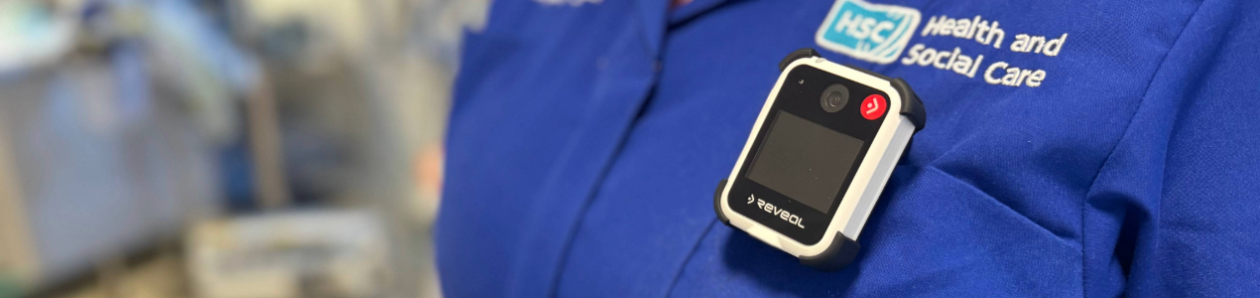
Piloting the use of body-worn camera devices within the emergency department – consultation document
Foreword
 Nurses and other Emergency Department (ED) staff often experience verbal and physical abuse as part of their everyday. These incidents significantly affect staff’s physical and psychological wellbeing, recruitment and retention, and can impact the quality of patient care provided.
The safety and wellbeing of our staff and patients is our ultimate priority. To address this growing problem, we would like to pilot the use of body worn cameras to protect staff and safeguard our patients. There is an acknowledgement that in a number of extremely complex conditions some behaviours can be beyond the control of an individual. Therefore, regrettably, it is not possible to eliminate all aggression and violence within health and social care. However, deliberate acts of violent and aggressive behaviour, be that against our staff or other patients or visitors, has absolutely no place in our hospitals.
We hope you will take the time to join us in this work and help to shape the way we support our staff and patients. Thank you for taking an interest and we look forward to hearing your feedback to this consultation.
Suzanne Pullins
Executive Director of Nursing, Midwifery and AHPs and Divisional Director Paediatrics, Women’s Services and Corporate Support
About the Trust
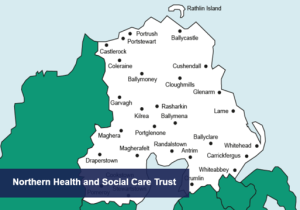 The Northern Health and Social Care Trust provides a range of health and social care services to a population of approximately 479,000 people across a geographical area of 1,733 square miles (2,773 square km), making it the largest geographical Trust in Northern Ireland. The Trust covers four local council areas – Antrim and Newtownabbey, Causeway Coast and Glens, Mid and East Antrim and Mid Ulster.
The Trust has the largest older population and the largest population of children when compared to other Trusts in Northern Ireland.
The Trust employs approximately 15,000 staff across a full range of medical, health and social care disciplines. Services are delivered from over 150 facilities including two major general hospital sites, a mental health hospital, local community hospitals, health centres, social services, and a significant network of community services as well as provision of care in the home.
The Trust’s vision is ‘to provide compassionate care with our community in our community’. In delivery, planning and reforming services, all staff are guided by the Health and Social Care Values for All – Working Together, Excellence, Openness and Honesty, and Compassion.
Introduction
The Trust has two Emergency Departments (EDs), situated on two sites – Antrim Area Hospital and Causeway Area Hospital. It also has a minor injuries unit on the Mid-Ulster Hospital site.
The Emergency Department (ED) in Antrim Area Hospital has the highest activity of the two sites. Between April 2023 and March 2024, there were 101,692 attendances at Antrim Area Hospital Emergency Department, which was 64% of the total Emergency Department attendances within the Trust. This number does not include those individuals who accompanied individuals attending for treatment. It also does not acknowledge the increasing demand for services, the increased severity of patients’ conditions and the urgency with which they need to be seen.
Despite healthcare staff working hard to provide the best possible care to patients, there has been a marked rise in acts of violence and aggression against staff over the last number of years. This is not unique to the Northern Trust and has been recognised across the region and United Kingdom.
In December 2023, the Department of Health in Northern Ireland (DoH) reported that over the last five years, there have been over 50,000 attacks on healthcare staff across Northern Ireland. In response to rising trends, the Department of Health developed a regional violence and aggression framework ‘Management of Violence and Aggression (MOVA) underpinned by health and safety legislation; entitled “It’s not part of the job” it sets out a commitment to ensuring the prevention, reduction and management of violence and aggression towards staff.
The purpose of this consultation paper is to give you, the public, service users and carers, the opportunity to:
- understand what the Trust is proposing to support our staff and promote health and safety;
- make comments and/or raise any questions you may have about this proposal.
Why we feel it is necessary to make this proposal
We support our health and social care staff colleagues in condemning any incident of violence or aggression towards hospital staff, or any other emergency worker, and will continue to work closely with our partners to identify further ways that can prevent such offences.
The Trust has a duty to ensure the safety of its staff and to provide a safe and secure working environment.
The Emergency Department environment is highly pressured, busy and at times is unpredictable. Incidents of violence and aggression only make staff jobs more difficult.



Workforce
The regional Management of Violence and Aggression (MOVA) framework adopted by the Trust recognises that staff have the right to feel safe from the threat of violence and aggression. Whilst it is acknowledged that in the provision of healthcare services there is an increased risk of violence and aggression, this does not mean that it is acceptable.
It is recognised that the impact of violence and aggression towards staff, is far reaching for an organisation, in that it can lead to reduced performance, both individually and at team level, low morale, poor employee relationships, high levels of absence, difficulty in recruiting and retaining staff and negative publicity. When incidents do occur, it is vital that all incidents of violence and aggression are dealt with appropriately and staff are supported in line with Trust policy.
Safety
The Trust is committed to staff safety and reducing the volume and severity of incidents of violence and aggression towards staff, through the provision of safe ways of working and effective training. This pilot is one of many interventions which are part of a toolkit to manage risk associated with violence and aggression.
Other interventions adopted by the Trust include, but are not limited to, the use of communication, risk assessment, provision of de-escalation training, prevention planning, service user involvement and learning from incidents.
Patients (and their families / friends) have a responsibility to behave in an acceptable manner, which does not include any behaviour(s) considered to be violent or aggressive. They need to understand and respect that there is an expected minimum standard of behaviour towards staff. Any behaviour that puts staff, service users, other persons or Trust property and assets at risk is not acceptable. This includes behaviours that are motivated by prejudiced attitudes, stereotypes or discrimination against a person on a protected equality ground for example racism or homophobia.
The list below outlines the increase in violence and aggression in the Northern Trust:
2022: 1,968
2023: 2,505
2024: 2570
3 year average: 2348
Antrim Emergency Department by sub-category
2022
Physical: 22
Verbal: 19
Other: 2
Total: 43
Equates to: 15% of Antrim Area Hospital
Attended by PSNI: 10
2023
Physical: 25
Verbal: 30
Other: 1
Total: 56
Attended by PSNI: 19
2024
Physical: 22
Verbal: 13
Other: 4
Total: 39
Attended by PSNI: 12
The Trust recognises the actual number of incidents may not decrease if body-worn camera devices are introduced. We are mindful that the use of this technology may inflate reporting of incidents that may not previously have been reported by busy staff or by staff who have a higher threshold perception of violence and aggression and/or see it as part of working within the setting. Regardless of volume it is hoped the severity of incidents will lessen.
The information below provides some real examples of hospital violence and aggression incidents towards our staff.
Physical & verbal aggression
- Patient clenching their fists when approached by staff.
- Patient verbally and physically aggressive towards clinical and security staff. Punched window several times and the cardiac monitor numerous times until screen smashed. Also broke oxygen point.
- Patient bit ED Registrar on finger and broke the skin.
- Patient physically and verbally abusive to staff. Nursing staff and carer punched, grabbed and spat at.
- Patient become very aggressive and hit health care assistant in chest and kicked and punched their abdomen.
- Patient verbally abusive to nurse and hit nurse on face with ECG lines leaving mark along their jaw line and breaking the ECG clips.
- Patient with mental health issues ran out of cubicle and into another area of the ward. When doctor approached patient they pointed a sharp object at them, which appeared to be a knife.
- Patient with alcohol and drugs on board became very aggressive and abusive in waiting area making patients and staff feel vulnerable.
- Patient aggressive and threatening patient in next bed. Also staff who intervened
Sexual/inappropriate behaviour
- Patient slapping and grabbing other patients and staff on the bottom and trying to kiss patients and staff.
- Patient exposed himself in front of staff, visitors and patients whilst urinating on the floor.
A message from our Director of Medicine and Emergency Medicine
 I am immensely proud of all our staff within the Medicine and Emergency Medicine Division who work so hard each day. They do an amazing job and strive to provide the highest standard of care to our patients. In recent years, all areas of healthcare are experiencing unique challenges the patients attending our emergency departments who require urgent intervention continues to rise. This leads to increased admissions, prolonged waits and added pressures on our frontline staff and the system as a whole.
We have a duty to support our staff and any opportunities that might improve outcomes for both staff and patients must be seized upon and developed. While I wholeheartedly recognise the vast majority of patients and families who access our emergency departments and receive care are appreciative, it is not acceptable that some choose to use aggression both verbal and physical. This can have adverse effects for our staff and others patients and cannot continue to escalate.
This proposal is an opportunity to pilot an intervention in our emergency department. The pilot has potential to deter individuals from acting inappropriately or being aggressive with the intent of reducing the severity should such events occur.
Audrey Harris
Divisional Director of Medicine and Emergency Medicine
A message from our emergency department nurses
 Staff in the emergency department are committed to providing safe and effective care sometimes in a very busy and overcrowded department. We as a department recognise that in keeping with societal changes the need for body-worn cameras is imminent to ensure safety of our staff and patients.
In wearing body-worn cameras our staff will be able to feel safe in their working environment and more equipped to de-escalate aggressive behaviour.
We as a department envisage through the use of body-worn cameras a positive impact for both staff and patients.
Sister Bronagh Gilmore
Ward Manager, Emergency Department
Proposed intervention
Body-worn camera devices are a wearable audio and video recording system, used to record events in which the wearer is involved.
Initially, the pilot will only involve 12 body-worn cameras worn by nursing staff in the Antrim Area Hospital (AAH) Emergency Department. Staff will be selected based on their area of work within the Emergency Department including four areas – ambulance triage, ambulatory emergency care (AEC), majors and the observation unit.
Staff will be selected by the Sister and Assistance Clinical Service Manager (ACSM). It is important to note that staff participation will remain voluntary throughout the pilot.
Those wearing body-worn camera devices will activate recording should any incident, in which a person is abused, threatened or assaulted in circumstances arising out of the course of their employment. This will be when it is perceived a risk will occur or when it is actually experienced.
The wearer of the device will voice to those around and alert them should recording be activated and again when recording is deactivated. Footage captured would be stored and managed on the aligned video management software and retained in accordance with Trust retention and disposal schedules. Use of the devices would be subject to rigorous staff training.
There will be a strict protocol of usage and storage of information. There will be signage as part of broader ongoing communication, including media and awareness-raising.
Within Northern Ireland, public sector organisations such as the Police Service of Northern Ireland (PSNI), Translink, the South Eastern Health and Social Care Trust (SEHSCT), Northern Ireland Ambulance Service (NIAS) and the Southern Health and Social Care Trust (SHSCT) have all successfully implemented body-worn camera devices with a view to reducing violence against staff, as have other NHS organisations across the United Kingdom. While it is noted that the Northern Trust will be the first Emergency Department in the region to pilot this intervention, there are other Emergency Departments within the United Kingdom who use the technology successfully with positive results and we have involved them as part of our pre-consultation engagement.
Legitimate interests and expected benefits
Data from body-worn cameras will be processed to achieve the following legitimate interests:
- To protect and enhance the experience of patients, staff and others who access the Emergency Department by helping provide a safer and calmer environment
- To enhance the security and the protection of Trust property and assets
- To influence behaviour by acting as a deterrent to acts of violence and aggression and aid to de-escalate of situations should they arise
- To enhance staff education and learning on management and prevention of aggression
- To record an independent account of what happened should adverse events arise and have footage captured with evidential value to any review or investigative process
- To support relevant authorities in the apprehension and prosecution of offenders by enhancing the type and quality of discoverable evidence should criminal or civil action be brought
We expect the benefits will include the following:
- Support for staff and increased awareness to provision of support
- Increased staff psychological safety at work and better staff morale by making real and perceived improvements to healthcare environments
- Directly or indirectly reducing the incidence and severity of violence and aggression towards staff
- Help to deliver improved patient care through calmer environments
- Improved education of staff on management and prevention of violence and aggression
- Delivery of cost savings, reducing the actual and associated costs of violence and aggression
How we developed our proposal
We have engaged inclusively and constructively with our internal stakeholders to consider the use of body-worn camera devices. Our staff were involved in a range of meetings, briefings and workshops. The staff who work within the Emergency Department, have helped to consider the concerns, fears and misconceptions relating to the use of body-worn devices. Staff, particularly those who work in the Emergency Department in close contact with services users, are in a great position to know what will work and to suggest the way forward.
We also held a number of meetings with external stakeholders including other Trusts and the Northern Ireland Ambulance Service. The proposal was also discussed with our Engagement Advisory Board (an advisory body made up of service users and carers who support the Trust to engage in a meaningful way) and the feedback they provided has helped us to shape this consultation document.
The purpose of this consultation is to engage in a conversation with key stakeholders to fully consider all of the relevant perspectives and potential impacts of our proposal. This will inform further work on assessing and finalising processes and in considering the impacts of the proposal.
Impact on staff
The Trust remains committed to delivering safe, effective and compassionate services, and considers that the proposed measure is necessary, proportionate and justified and would achieve the legitimate aim.
We value and respect our staff and will keep them informed at every stage.
As part of our initial preparations, the project group conducted a stakeholder analysis and engagement exercise, including the development of a communication strategy and will make sure Trust staff are kept fully informed of any proposed action and developments.
As part of the pre-consultation engagement, members of the project group held a number of discussions with Emergency Department staff to listen to and discuss any concerns, fears or misconceptions they might have.
During the course of this consultation, staff will have regular communication meetings with their managers to discuss plans, influence the planning process and to provide feedback. The Trust will work in partnership with Trade Unions to assess the impact on staff and to put robust mitigating measures in place.
Promoting equality and good information governance
It is important that we understand how our proposal might affect the population we care for. To help us to do this we have completed, and are also consulting on, an Equality Impact Assessment (EQIA). This has helped us to identify groups and communities in our population who might be most impacted our proposing. We want to hear from people in these groups to help us understand how the proposal could impact them and how any negative impacts could be reduced.
We have also completed a Data Protection Privacy Impact Assessment (DPIA) which is a process designed to analyse, identify and minimise the data protection risks of a project. A DPIA demonstrates how the Trust complies with all of its data protection obligations.
We are committed to monitoring the long-term impact of the use of body-worn camera devices. If implemented, following due consideration and consultation, we would use a range of standards, measures and indicators to offer assurance that the intervention is operating effectively, safely, and in the best interests of patients and staff. In undertaking monitoring, the Trust will give full consideration to the Equality Commission for Northern Ireland’s Section 75 Monitoring Guidance and devise measures to ensure that ongoing impacts are regularly assessed against the specific categories.
Tell us what you think
Please take the time to read this document and the additional supporting information online.
We want to consult as widely as possible on our proposal and the findings of our Equality Impact Assessment (EQIA) and Data Protection Privacy Impact Assessment (DPIA) over a 14 week period commencing 23 January 2025.
We are keen to engage with local people in a flexible way so please contact us to talk about how you would like to provide feedback.
During the consultation period we will hold an online listening event and an in person listening event. These events will be publicized and will provide the opportunity to ask further questions and give feedback. If you would like to attend please contact involvingyou@northerntrust.hscni.net or telephone 028 2766 1377.
To facilitate your feedback, a consultation proforma is available online. To request a copy of the proforma for you to fill in at home or to arrange to complete it with a member of staff, email InvolvingYou@northerntrust.hscni.net or telephone 028 2766 1377. We welcome your feedback in any format by 1 May 2025.
If you have any queries or comments regarding this consultation document, EQIA or RNIA and there availability in alternative formats (including Braille, disk and audio cassette, and in minority languages to meet the needs of those who are not fluent in English) then please contact:
Equality Unit
Route Complex
8e Coleraine Road
Ballymoney
Co Antrim
BT53 6BP
Tel: 028 2766 1377
E-mail: InvolvingYou@northerntrust.hscni.net
In compliance with the legislation, when making any final decision the Trust will take into account the feedback received from this consultation process. A consultation feedback report will be published on the Trust website.


