
Knee osteoarthritis is the most common cause of knee pain. It is usually diagnosed during a physical examination and, in most cases, scans or X-rays are not needed.
Causes and symptoms
Osteoarthritis is a condition where the cartilage that cushions your joints gradually becomes thinner over time. This can lead to:
- Knee pain, often at the front or sides of the knee
- Stiffness and swelling
- Difficulty moving the joint
- Pain when walking, especially on hills, slopes or stairs
- Symptoms in one or both knees
- A feeling that the knee may give way
- Occasional locking, clicking or creaking sounds
- Being overweight and previous knee injuries can increase your risk of developing osteoarthritis.
Managing your symptoms
Staying active is one of the best ways to manage knee osteoarthritis.
The most effective self-management strategies are:
Exercise
Regular exercise helps strengthen the muscles around your knee, which can reduce pain, improve movement and support the joint.
Weight management
If you are overweight, losing weight can reduce the strain on your knees, ease pain and make everyday activities easier
Exercises
Experiencing some discomfort can be normal when exercising with arthritis. This should not be excessive, allowing you to breathe normally and shouldn’t affect how you walk later or tomorrow.
Aerobic exercise (eg. walking, cycling, rowing and water-based exercise), yoga and Tai Chi are all safe and effective for managing pain and improving function. Build up slowly with the eventual aim of more than 150minutes weekly at a pace you can maintain a conversation.
As a starting point to dedicated strengthening, try the following exercises x3days/week. Once you feel this is quite easy, try and increase how many repetitions you can do gradually over time.
Exercise and activity
Some discomfort during exercise is normal when you have arthritis. However, the pain should be manageable, should not affect your breathing, and should not cause you to limp during or after exercise.
Activities such as walking, cycling, swimming, water-based exercise, yoga and Tai Chi can help reduce pain and improve mobility.
Start slowly and build up your activity levels over time. Aim for at least 150 minutes of moderate physical activity each week, at a pace that allows you to hold a conversation.
Strengthening exercises
Strengthening the muscles around your knee can improve support and reduce symptoms. As a starting point, try the exercises below three times a week.
When the exercises become easier, gradually increase the number of repetitions to continue building strength and confidence.
Static Quads
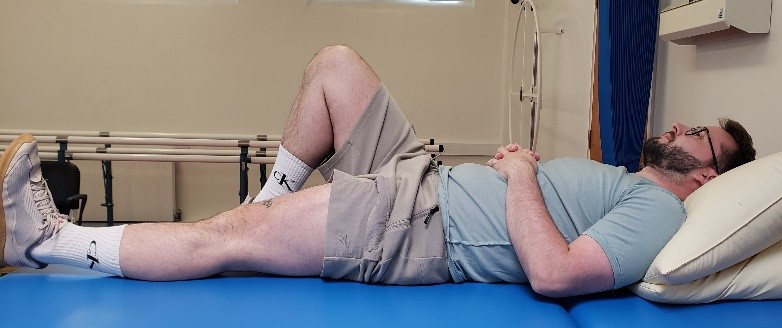
In sitting or lying with your leg straight. Push your heel away and bring your toes towards your shin. Contract the muscles on the front of your thigh, firmly. Hold this for 5-10secs. Repeat 10 times. Either recover for 1min or repeat on the opposite knee. Complete 3 rounds (sets) in a session.
Knee Extension
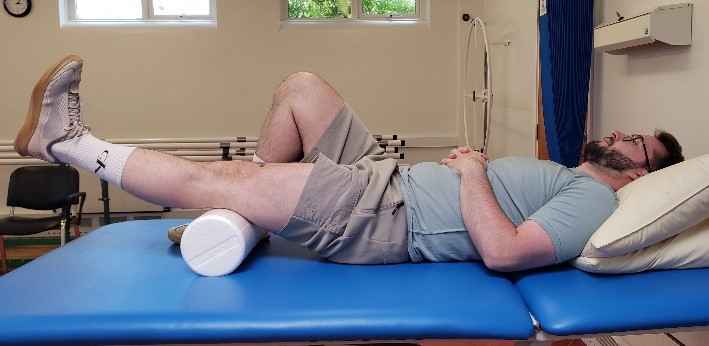
In lying with a soft object underneath your knee. Push your heel away and bring your toes towards your shin. Extend your knee straight whilst pushing the back of your knee down. Hold for 5-10secs. Repeat 10 times. Either recover for 1min or repeat on the opposite knee. Complete 3 rounds (sets) in a session.
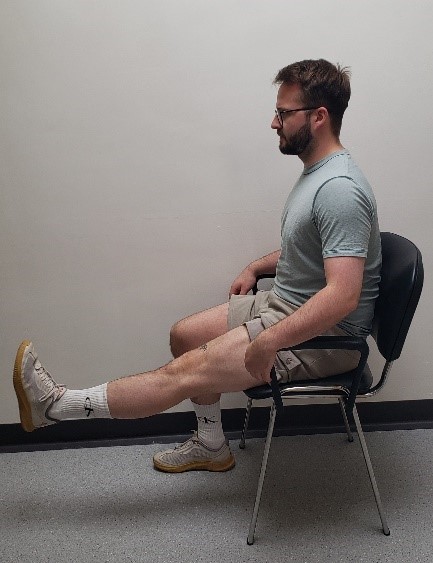
Alternatively, you can sit in chair with the back of your knee at the edge of the seat and follow the instructions above.
To advance this exercise you may want to add a small ankle weight.
Straight leg raise
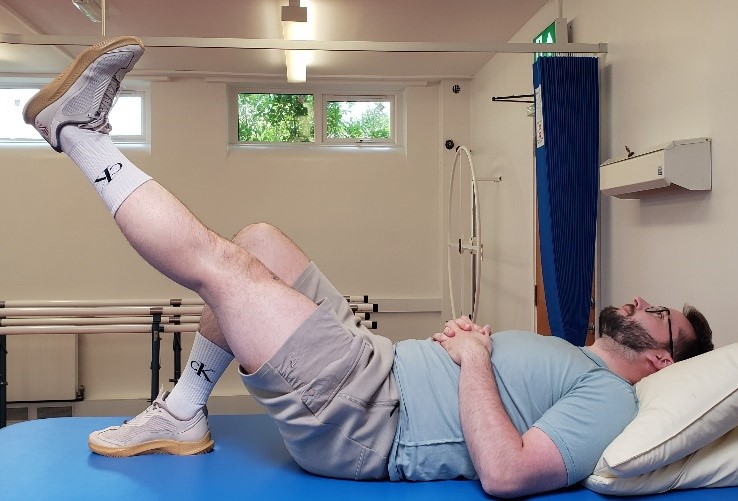
In lying, with one leg straight and the other bent. Push your heel away and bring your toes towards your shin on the straight leg. Then slowly lift the leg to approximately 45 degrees, pause and lower. Repeat 10times. Either recover for 1min or repeat on the opposite knee. Complete three rounds (sets) in a session.
Static hamstring
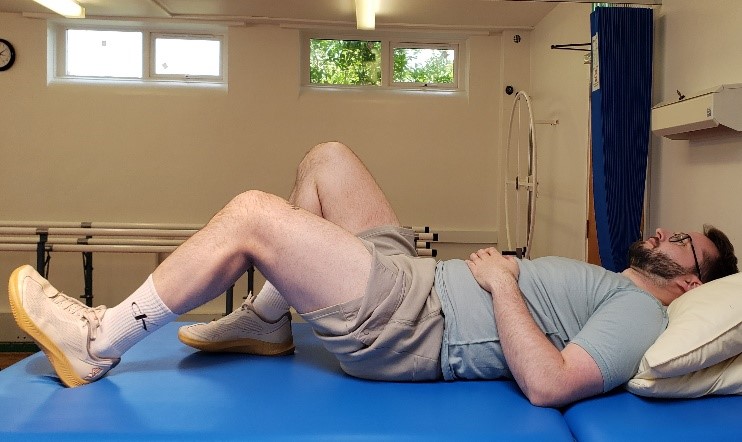
Sitting or lying. Bend one knee to approximately 90 degrees. Lift your toes so only the heel is touching. Dig your heel into the ground as if you were trying to bend the knee. Hold this pressure for 5 to 10 seconds. Repeat 10 times. Either recover for 1min or repeat on the opposite knee. Complete 3 rounds (sets) in a session.
Sit-to-stand or Squat
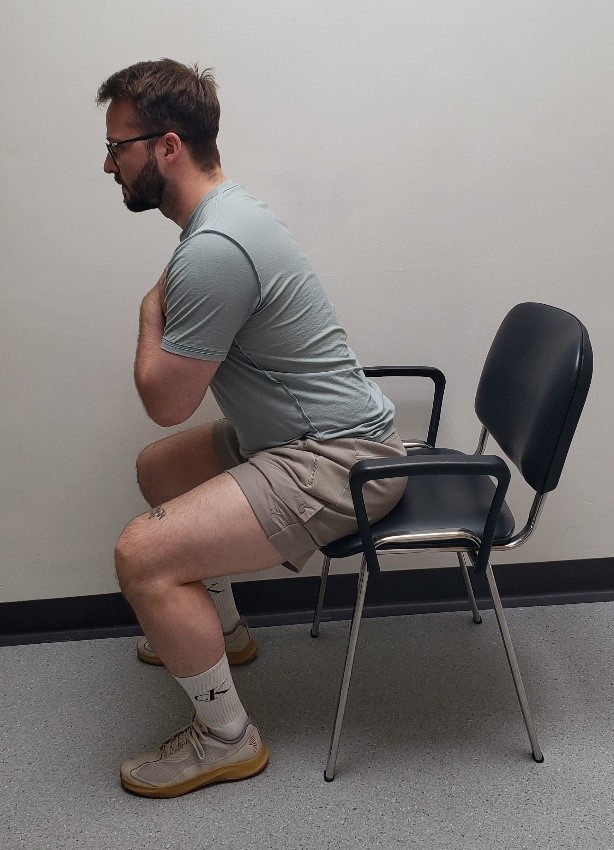
Using a seat initially. Begin by bringing your bottom forward in the seat. Keeping your feet and knees hip width apart, slide your feet underneath as far as you can whilst still keeping your heels on the ground. Tilt your upper body forward. Use your arms if required and push through your legs to stand up tall. Slowly lower yourself back into the seat. Repeat 5-10 times initially. Recover for 1 to 2mins. Complete 3 rounds (sets) in a session.
Once you find this easy, you can repeat this movement without the chair. You may want to use a countertop for some balance support and only go to a depth you are comfortable with.
Step-up

Start with one foot on a step. Shift your weight forward onto the foot. Tilt your upper body forward slightly. Push through your front leg to stand tall on the step. Allow the knee to bend and slowly lower. Either repeat, keeping this foot on the box or alternate legs. Repeat 5 to 10 times initially. Recover for 1 to 2 minutes. Complete 3 rounds (sets) in a session. Initially, support your hands on a countertop or bannister and gradually reduce use of hands over time.
Heel raise

Begin standing with hands supported on a countertop or back of chair. Feet hip width apart. Raise your heels off the floor as high as you are able. Repeat 10 to 15 times initially. Recover for 1-2mins. Complete 3 rounds (sets) in a session. Reduce use of hands gradually over time.
What’s next?
Your GP may recommend medication to help manage your pain, such as anti-inflammatory gels, creams or tablets. Most people do not need further tests, such as X-rays or blood tests, although these may sometimes be arranged to rule out other causes of knee pain.
If you have followed the self-management advice on this page and would like more personalised support, you can self-refer to physiotherapy or ask your GP about a referral.
Surgery is not needed for most people with knee osteoarthritis. However, if your symptoms are severe or significantly affecting your daily activities, your GP or physiotherapist can discuss whether further assessment is appropriate.
If you have been living with knee pain for some time and have already seen a healthcare professional, it can be helpful to consider the wider factors that can influence your pain experience.
Find out more about managing persistent pain.
Useful resources
Northern Ireland | Versus Arthritis
Let’s Move with Leon | Versus Arthritis