
September 17, 2026
Could you recognise the signs of blood cancer?
September is Blood Cancer Awareness Month, and the Northern Health and Social Care Trust is encouraging people to become more familiar with the signs and symptoms of blood cancer and seek medical advice if they have concerns.
Blood cancer is a term used to describe cancers that affect the blood, bone marrow and lymphatic system. There are more than 100 different types of blood cancer, including leukaemia, lymphoma and myeloma.
Symptoms can vary depending on the type of blood cancer and may present in different ways.
Common symptoms include unusual bruising or bleeding, feeling extremely tired, recurring infections, unexplained weight loss, drenching night sweats, lumps or swelling, persistent aches and pains, shortness of breath, stomach discomfort or bloating and skin changes such as paleness, unexplained rashes or itching.
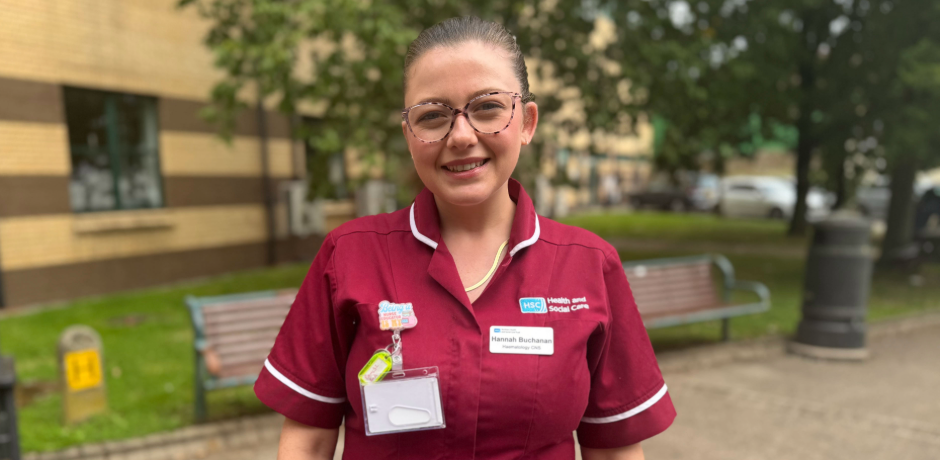
For Hannah Buchanan, Haematology Clinical Nurse Specialist based at Antrim Area Hospital, increasing awareness of blood cancer and its potential symptoms is vital:
“The different types of blood cancer can affect people of all ages and can present in many different ways. Some symptoms can be vague and easily mistaken for other illnesses, which is why awareness is so important,” she said.
Hannah also emphasised the importance of seeking medical advice when something doesn’t feel quite right:
“We want people to be aware of the signs and symptoms and to contact their GP if they have any concerns. Knowing what to look out for and seeking advice early can make a real difference,” she added.
By raising awareness of the signs and symptoms of blood cancer, the Trust hopes to encourage more conversations about the disease and help people feel confident seeking medical advice if they experience any of the common symptoms.
For more information and guidance on the different types of blood cancer, visit Blood cancer | Macmillan Cancer Support