
September 30, 2026
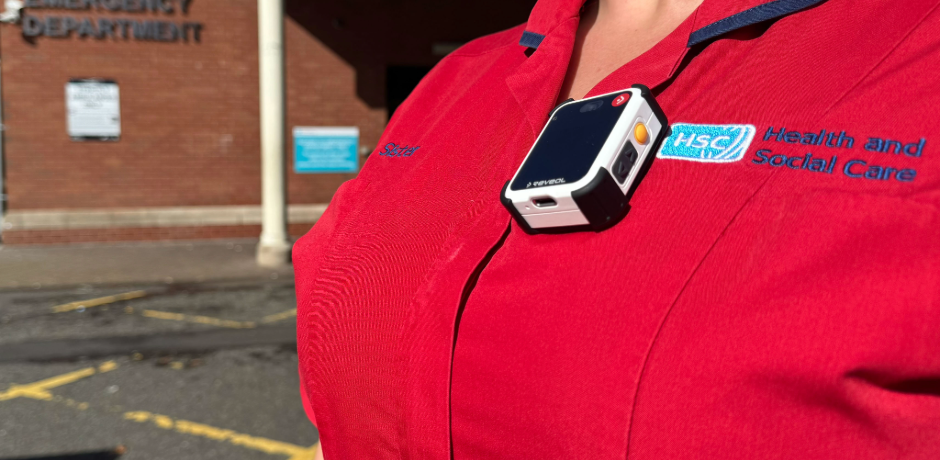
Staff working in Causeway Hospital’s Emergency Department will start using body-worn cameras from 1 October 2026
The cameras are primarily worn by nursing staff working in patient-facing roles within the Emergency Department. While eligible nursing staff are encouraged to wear a body-worn camera during their shift, wearing a camera is not mandatory.
It follows a successful pilot scheme undertaken in Antrim Area Hospital’s Emergency Department (ED) last year.
Following an evaluation of the scheme, in March this year the Board of the Northern Health and Social Care Trust approved the permanent use of cameras in Antrim, and agreed that the scheme should also be rolled out to Causeway Hospital ED.
The cameras form part of a wider programme of measures aimed at supporting staff safety and managing incidents of violence and aggression alongside existing training and support arrangements.
The Trust’s Assistant Director of Nursing and Project Lead, Dr Naomi Baldwin, said: “We have been really encouraged by the positive response from both service users and staff to the introduction of body-worn cameras in our Emergency Department at Antrim, and I am pleased that we are now extending the scheme to Causeway to support even more of our frontline colleagues.”
An evaluation of the original 12-week pilot scheme found that the cameras were a valuable tool in “supporting and influencing safer staff/patient interactions”, and that staff had reported “notable positive behaviour change” in some patients when staff wearing a camera were present and staff wearing the cameras reported improved confidence when managing incidents of violence and aggression.
Emeria Doherty works in the Emergency Department at Antrim Area Hospital and shared her experience of the pilot scheme: “We know that coming to hospital can be stressful, and our job often involves de-escalating situations through support and dialogue. If we’re unable to de-escalate a situation, we let people know that we’re switching the camera on. We have found that this can often turn the situation around, with people changing their behaviour.”
Ms Doherty added: “We have had staff who have had to finish shifts early, or have been unable to come to work, because of the impact of violence and aggression. We don’t want that, so we are very happy to wear these body-worn cameras for our safety and for the safety of our patients.”
Business Change Manager and Project Co-Lead, Edward Smyth, said: “The introduction of body-worn cameras in Causeway Emergency Department builds on the learning from the successful Antrim pilot and engagement with staff and the public. Our focus has been on supporting staff, respecting patients and promoting safer interactions.”
Staff in Causeway Emergency Department have been preparing for implementation through training and familiarisation with the devices ahead of go-live.
Body-worn cameras are audio and visual recording devices designed to support de-escalation, staff safety and the recording of incidents where violence, aggression or safety concerns arise. The cameras are intended primarily as a deterrent and de-escalation tool and will only be activated where necessary in response to escalating violence, aggression or safety concerns. Activation of the devices, access to recorded footage and data retention arrangements are governed by strict policies and subject to ongoing monitoring and audit.
Before switching on the device, the member of staff must inform the patient or service user and let them know that they are being recorded. They must also inform them when recording has stopped.
The Trust has carefully considered issues relating to privacy, dignity, equality, human rights and data protection and will operate the scheme in accordance with Trust guidance and relevant legislation.
Chair of the Trust Board, Anne O’Reilly, said she hoped the extension of the scheme would send an important signal that staff and patient safety, and the health and wellbeing of staff, was of utmost priority to the Board and senior management.
“As a Board, the issue of violence and aggression against staff is something we take very seriously. We know that the vast majority of people are respectful of our staff and only a very small number engage in unacceptable behaviour – but even one is one too many,” said Ms O’Reilly.
“Sadly, we know that violence and aggression towards staff is a reality and something that we have seen increasing over the last number of years. It’s not part of the job and our staff deserve better. “We have seen how much public support there is for our staff since the introduction of the pilot last September. “Having permanently introduced the cameras in Antrim ED, and now with the extension of the scheme to Causeway, it is our hope, as a Board, that this will reassure staff that they are valued and boost their confidence and overall sense of wellbeing.” said Ms O’Reilly.
As part of the Causeway rollout, patients, service users, relatives and visitors will have an opportunity to provide feedback on the use of body-worn cameras through a public survey which will be available within the Emergency Department (via QR/Poster) for a 12-week period following implementation. Feedback will help inform the ongoing operation and development of the scheme.