
Laid before the Northern Ireland Assembly under Article 90 (5) of the Health and Personal Social Services (NI) Order 1972 (as amended by the Audit and Accountability Order 2003) by the Department of Health on 3 July 2026
Contents
- Report of the Trustees for the year ended 31 March 2026
- Certificate of the Comptroller and Auditor General
- Statement of Financial Activities for the year ended 31 March 2026
- Balance Sheet as at 31 March 2026
- Statement of Cashflows as at 31 March 2026
- Notes to the Accounts
Annual Trustees Report of the Charitable Trust Funds held by the Northern Health and Social Care Trust for the year ended 31 March 2026
Introduction
This is the annual report for the Charitable Trust Funds (CTFs) held by the Northern Health and Social Care Trust (Trust) for the year from 1 April 2025 to 31 March 2026.
Under Article 91 of the Health and Personal Social Services (NI) Order 1972 (as amended by Article 6 of the Audit and Accountability (Northern Ireland) Order 2003), the Trust is required to prepare annual accounts in respect of endowments and other property held on trust by it, in a form determined by the Department of Health (DoH). This format is in accordance with the requirements of the Charities Statement of Recommended Practice (SORP) (FRS 102).
Reference and administrative details
Contact us
Northern Health and Social Care Trust (NHSCT)
Trust Headquarters
Antrim Area Hospital
Bush Road
Antrim
BT41 2RL
- Telephone: 028 9442 4000
- Web: www.northerntrust.hscni.net
Comments
If you have any comments about this report, please telephone 028 2563 5333.
Trustee arrangements
Under the Health and Personal Social Services (NI) Order 1972, as amended by Article 16 of the Health and Personal Social Services (NI) Order 1991, the Board members of the Trust were the Trustees of the CTFs during 2025/26. This constituted the following:
Non-Executive members
- Anne O’Reilly, Chair of Charitable Trust Funds Advisory Committee
- Carol Diffin
- Kathy Mackenzie
- George Platt (term ending 31 January 2026)
- Scott Armstrong
- Paul Douglas
- Janet Gray
- Paul Turley (joined 1 April 2025)
- Mike Keating MBE (joined 1 February 2026)
Executive Team members
- Jennifer Welsh – Chief Executive (Left 30 September 2025)
- Suzanne Pullins – Interim Chief Executive (Started 1 October 2025)
- Owen Harkin – Executive Director of Finance (and Deputy Chief Executive)
- Stevie Lennon – Interim Executive Director of Finance (Started 18 August 2025)
- David Watkins – Executive Director of Medicine (Ended 19 September 2025)
- George Gardiner – Executive Director of Medicine (Started 1 November 2025)
- Maura Dargan – Executive Director of Social Work (and Divisional Director of Children and Young People’s Division)
- Suzanne Pullins – Executive Director of Nursing, Midwifery and Allied Health Professionals (and Interim Divisional Director of Paediatrics, Women’s Services and Corporate Support) (Ended 30 September 2025)
- Gill Murphy – Interim Executive Director of Nursing, Midwifery and Allied Health Professionals (and Interim Divisional Director of Paediatrics, Women’s Services and Corporate Support) (Started 23 October 2025)
The Trustees have delegated responsibility for the ongoing management of CTFs to the CTF Advisory Committee (CTFAC). See additional information on page 4.
The following Directors also attend the Trust Executive Team Meetings:
- Gillian Traub – Director of Operations
- Jacqui Reid – Director of Human Resources, Organisation Development and Corporate Communications
Additionally, there are Divisional Directors who are responsible for the following operational areas and are members of the CTFAC:
Divisional directors
- Lynne McCartney – Interim Divisional Director of Surgical and Clinical Services
- Neil Martin – Divisional Director of Strategic Planning, Performance and ICT
- Petra Corr – Divisional Director of Mental Health, Learning Disability and Psychological Services (previously Mental Health, Learning Disability and Community Wellbeing)
- Audrey Harris – Divisional Director of Medicine and Emergency Medicine
- Diane Spence – Divisional Director of Community Care
- Paddy Graffin – Divisional Director of Infrastructure
The Northern Health and Social Care CTF is on the deemed list of charities as it is registered with His Majesty’s Revenue and Customs for charitable tax purposes, registration number XT5430. The Trust has been in discussion with the Charity Commission for Northern Ireland (CCNI) regarding registering as a charity. The Trust is waiting to be called forward for registration by CCNI and this is expected to occur during 2026/27.
The Trustees employed the following professionals during the year:
Auditors
Comptroller and Auditor General (C&AG)
106 University Street
Belfast
BT7 1EU
Bankers
Bank of Ireland
155 Church Street
Ballymena
BT43 6DG
Solicitors
Directorate of Legal Services
Business Services Organisation2 Franklin Street
Belfast
BT2 8DQ
Investment managers
NI Central Investment Fund for Charities (NICIFC)
The Lighthouse Building
4th Floor, 1 Cromac Place
Gasworks Business Park
Ormeau Road,
Belfast
BT7 2JB
Structure, governance and management
The CTFs held by the Trust are governed by the Health and Personal Social Services (NI) Order 1972. The Trust Board acts as “corporate trustee” for the CTFs. Trust Board members are recruited by the DoH in accordance with its recruitment procedures and are appointed by the Minister for Health.
The CTFAC is the committee responsible for providing assurance to the Trust Board on all aspects of the stewardship and management of funds donated or bequeathed to the Trust.
The membership of the CTFAC comprises:
- Two Non-Executive Directors, one of whom shall act as the Committee’s Chairperson (Anne O’Reilly, Chair and George Platt);
- The Executive Director of Finance and Estates (Owen Harkin, Stevie Lennon);
- The Executive Director of Nursing, Midwifery and Allied Health Professionals (Suzanne Pullins, Gill Murphy);
- The Director of Operations (Gillian Traub);
- The Executive Director of Medicine (Dave Watkins, George Gardiner); and
- Divisional Directors representing the Operational Management Team Divisions (Lynne McCartney, Diane Spence, Neil Martin, Petra Corr and Audrey Harris and Paddy Graffin).
A quorum of the CTFAC is one Non–Executive Director plus at least two of the directorate representatives. The Committee may seek or agree to the attendance of other parties if deemed necessary. Three members had full attendance at all meetings during the year, with the remaining members missing one or more meetings, or nominating a senior colleague to provide Directorate updates in their absence.
During 2025/26, the Committee held three meetings to oversee the administration of the CTFs, their investment and disbursement.
The roles and responsibilities of the CTFAC in relation to the management and governance of the CTFs were set out within a Terms of Reference as follows:
The role of the Committee is to oversee the administration, including banking arrangements, of CTFs, their investment and disbursement. The responsibility for expending the CTFs remains with the individual Fund Managers.
The normal purposes to which funds may be applied include all relevant expenditure likely to assist in the provision of health and social services in accordance with current legislation relating to CTFs as well as Standing Financial Instructions and associated operational procedures of the Trust.
The Committee will:
- Satisfy itself that CTFs are managed in line with guidance in the Trust’s Standing Financial Instructions, Departmental guidance and legislation;
- Ratify the creation of a new fund, where funds and/or other assets are received from donors in circumstances where the wishes of the donor cannot be accommodated within the scope of an existing fund;
- Make recommendations on the potential for rationalisation of funds within statutory guidelines and take appropriate action;
- Ensure that assets in the ownership of, or used by, a CTF will be maintained with the Trust’s general estate and inventory of assets;
- Ensure that a strategic approach is adopted with regard to CTF expenditure and that Directorates produce and implement annual expenditure plans relating to all funds at their disposal;
- Use their best endeavours to ensure that funds are not unduly or unnecessarily accumulated;
- Ensure that expenditure from CTFs is subject to appropriate value for money considerations including proper procurement procedures where applicable;
- Ensure that Annual Accounts are prepared in accordance with DoH’s guidelines and submitted to the Trust Board within agreed timescales;
- Ensure that a Trustees Report is produced as part of the annual accounts process for CTFs; and
- On behalf of the Trust Board, and on the advice of the Senior Management Team, the Committee will authorise appropriate policies and procedures in relation to CTFs.
The Trust holds three types of CTFs, namely Restricted, Unrestricted and Endowment and under each of these main headings there were a total of 80 named CTFs at 31 March 2026. 14 CTFs were closed in year with balances reduced to zero.
Where there is a legal restriction on the purpose for which a fund may be used, the fund is classified either as an endowment fund, where the donor has expressly provided that only the income of the fund may be expended, or as a restricted fund, where the donor has provided for the donation to be spent in furtherance of a specified charitable purpose. Unrestricted CTFs allow Trustees greater freedom in their application in line with the objectives of the CTFs. Prior to registration with the CCNI each of these designations and the governing paperwork held by the Trust will be examined.
The use of each CTF is strictly controlled to ensure that the aims of the individual CTFs are met and any donor’s wishes delivered. The Trustees’ delegated authority levels for authorising expenditure relating to the CTFs are as follows:
| Expenditure amount | Approval by |
|---|---|
| Up to and including £500
Over £500 and up to and including £2,500
Over £2,500 and up to and including £5,000
Over £5,000 |
Fund Manager
+ Assistant Director
+ Trust Director
+ Chief Executive (or Deputy Chief Executive) |
The Director of Finance is responsible for the day-to-day management and administration of the CTFs and reports to the CTFAC. The Director of Finance has responsibility to ensure that CTFs are managed appropriately with regard to their purpose and requirements, that full accounting records are maintained and that devolved decision making or delegated arrangements are in accordance with the policies and procedures agreed by the CTFAC.
There are no key management personnel employed by the CTFs and there are no employees. All management and administration duties are performed by employees of the Trust and an administration fee to cover the direct costs of managing is charged to the CTFs.
Objectives and activities
The objectives of the CTFs held by the Trust in 2025/26 were to ensure that charitable donations received by the Trust were appropriately managed, invested, expended and controlled in a manner that was consistent with the purposes for which the funds were given, and in accordance with the Trust’s Standing Financial Instructions and Departmental guidance and legislation.
CTFs are used to support expenditure in the following areas to benefit Patients, Residents or Clients using the Trust’s services, in line with donor’s wishes:
- Provision of Comforts;
- Purchase of Equipment and Services; and
- Research into any aspect of the work of the Trust.
Achievements and performance
During 2025/26 the Trust progressed a number of key work streams: incurred £464k expenditure of the £3m donation from the Department of Health; continued projects under Stage 2 and Stage 3 grant schemes from NHS Charities Together; continued publicity around CTF funded projects and continued progress in the review of CTFs as part of work to enable CCNI registration.
During the 2025/26 year a total amount of £1,469k (excluding £8k notional audit fee and £30k investment management costs) was expended on charitable activities, in accordance with the Trust’s policies and procedures and the objectives of the CTFs.
CTFs were utilised to deliver a wide range of activities to provide comforts and benefits to the users of the Trust’s services.
Some of the schemes have been summarised below and would not have been possible without the generosity of the donors to the CTFs:
A blast from the past as Gloucester Park Day Centre celebrates 50 years
Gloucester Park Day Centre in Larne has celebrated its 50th anniversary with a series of 70s themed parties.
Team North colleagues got in to the spirit of things by putting on their flower power jumpsuits and tie-dye shirts, with guests enjoying nostalgic themed refreshments made especially for the occasion by the centre’s catering staff. For service users, it was a day to remember as they joined in the fun on the dance floor where there was no shortage of classic tunes.
The celebrations also featured a photograph display of staff and service users through the years, giving everyone an opportunity to look back on the centre’s lasting impact.
Reflecting on the huge effort made by everyone involved, Manager Debbie Gillespie said: “I would like to take this opportunity to sincerely thank all the service users and staff who have contributed to making Gloucester Park what it is today.
“Over the years their dedication, support and shared experiences have shaped the centre into a place of warmth, care and community. As we celebrate 50 years, we recognise that it is the people, both past and present, who have made the journey special.”
“We look forward to continuing this legacy and ensuring that Gloucester Park remains an enriching space for many years to come.”
The celebrations at Gloucester Park Day Centre were supported through the Northern Trust’s Charitable Trust Funds which are used to deliver a wide range of activities, resources and equipment to enhance the experiences of patients, residents and clients which otherwise would not be possible.
Donations come from individuals, community groups, families, service users, sports clubs, schools and businesses, varying from £10 to thousands of pounds.
Football coaching for mental health inpatients
Holywell Hospital patients are benefitting from the 12-week football coaching programme with former Irish League players, following support from Charitable Trust Funds.
The coaching sessions have been designed to provide patients with meaningful time away from the ward where they can engage in physical exercise, foster social connections and build resilience.
Ashleigh Moss, Head of Mental Health Inpatient Services at Holywell Hospital, said: “Research has indicated that playing football can improve mental health as it increases the supply of serotonin, the hormones that make people feel happy. We know that playing football can also help reduce anxiety and stress and help with social isolation among other things.
“That is why it’s important that we can provide activities like this for those who use our services and it simply wouldn’t be possible without the support we received from Charitable Trust Funds.
“We would like to sincerely thank all those who contribute to Charitable Trust Funds – your support is invaluable and makes a huge difference.”
The coaching sessions are being delivered by retired Irish League footballers, Jeff Hughes, David McDaid and Johnny McMurray, who are all fully qualified coaches.
Arts Care
Provision of funding to create and install Artwork in Childrens Ward at Mid Ulster Hospital. This art was designed so that the environment positively stimulates children by providing child friendly images, lessening the anxiety associated with Hospital attendances.
The installation targeted three areas of the Childrens Unit where they undergo procedures that although vital to their treatment can cause increased levels of distress.
The completed work has drawn positive feedback from both staff and families.
Play and leisure
Purchase of a self-weighted rowing machine and an accessible arm /pedal exercise bike for service users in Ellis Court, Carrickfergus.
This specialised equipment helps the users overcome barriers to physical activity, which can lead to increased confidence, improved motor skills and better overall health.
Grant
During 2025/26, the Trust continued to progress two projects, awarded funds by NHS Charities Together:
Stage 2: Strategic Integrated Community and Social Care Pathway Grants
This stage is to support health and care partnerships and the Trust was awarded £230,340 for a 2 year project (which commenced in May 2022) entitled Community Resilience for Mental Well Being. This stage has concluded with the award being spent in full.
Stage 3: Recovery and Post Pandemic Grants
This stage is to support the mental health and recovery of NHS staff, volunteers and families and the Trust was awarded £264,000 for a 2 year project (which commenced in September 2022) entitled Building Emotional Resilience for Staff. To date, all but £66k has been spent and the Trust has been granted an extension to 31 August 2026 to spend this balance.
Due to outcome conditions attached to these grants, grant income is only recognised in the period when the instalment conditions have been met.
Investment
The NICIFC continues to hold funds invested on behalf of the Trust’s CTFs. Performance of investments, including funds managed through NICIFC, is routinely reviewed by the CTFAC throughout the year. The net market value of funds invested with the NICIFC at 31 March 2026 was £8,311k. This is 99% of the total value of CTFs.
The value of funds held with the NICIFC has increased by £886k in 2025/26 (2024/25 decrease of £184k). The NICIFC share price at 31 March 2025 had decreased to 1525.79.p but increased by 184.48p to 1710.27p at 31 March 2026, which resulted in an unrealised gain of £886k during 2025/26.
An analysis of the closing values of the NICIFC fund at 30 September 2025, and the position as at 31 March 2026 is set out in the graph below:-
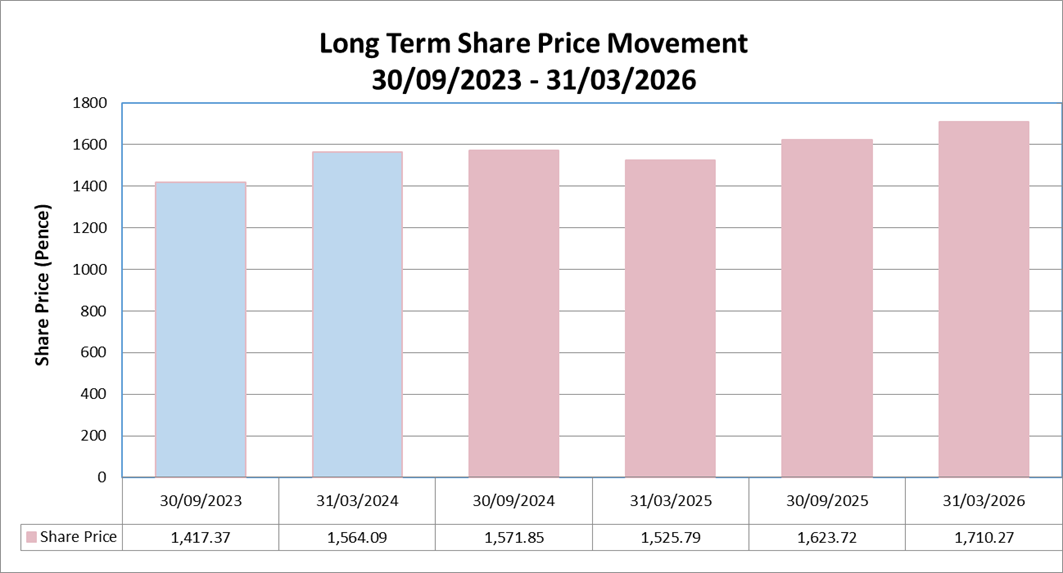
Net dividends have been received in two issues, the first in June 2025 at 21p per share and the second in December 2025 at 27p per share, this totalled £233k net of investment management fees of £30k.
The balance of the CTFs is held in interest bearing deposits, cash in hand and a bond of £100k.
Financial review
Introduction
The financial statements have been prepared in accordance with the Charities Statement of Recommended Practice (SORP) (FRS 102) applicable to charities preparing their accounts in accordance with FRS102 in the UK and Republic of Ireland and with relevant guidance issued by the Department of Health.
Review of the year 2025/26
Income
The CTFs received income from a number of sources during 2025/26 including donations and legacies from individuals, often as a token of their thanks for the care and support they, or their family members, received from the Trust, as well as interest and dividends on deposits and investments.
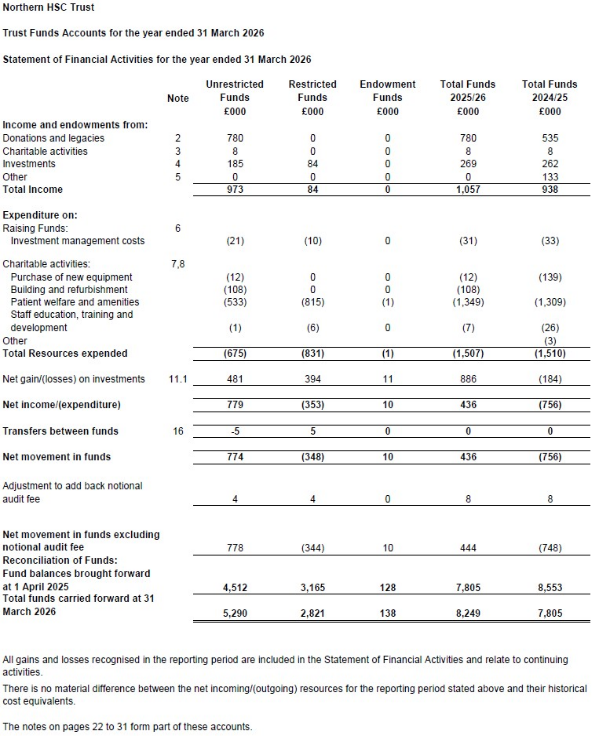
During the year income totalled £1,057k and represented an increase when compared to the prior year (£938k).
Donations and legacies of £780k were received with an additional £8k generated from charitable activities, which is an overall increase of £245k when compared to 2024/25 (£535k). Investment income increased by £8k to £270k compared to £262k in 2024/25.
Dividends of £233k (net off management investment fees) were received from the Department for Communities (DfC) in respect of monies invested in the NICIFC, with a further £6k being received from interest on CTF deposits.
A total of £0 (nil) (£133k 2024/25) was received through grants from NHS Charities Together, across both schemes.
Expenditure
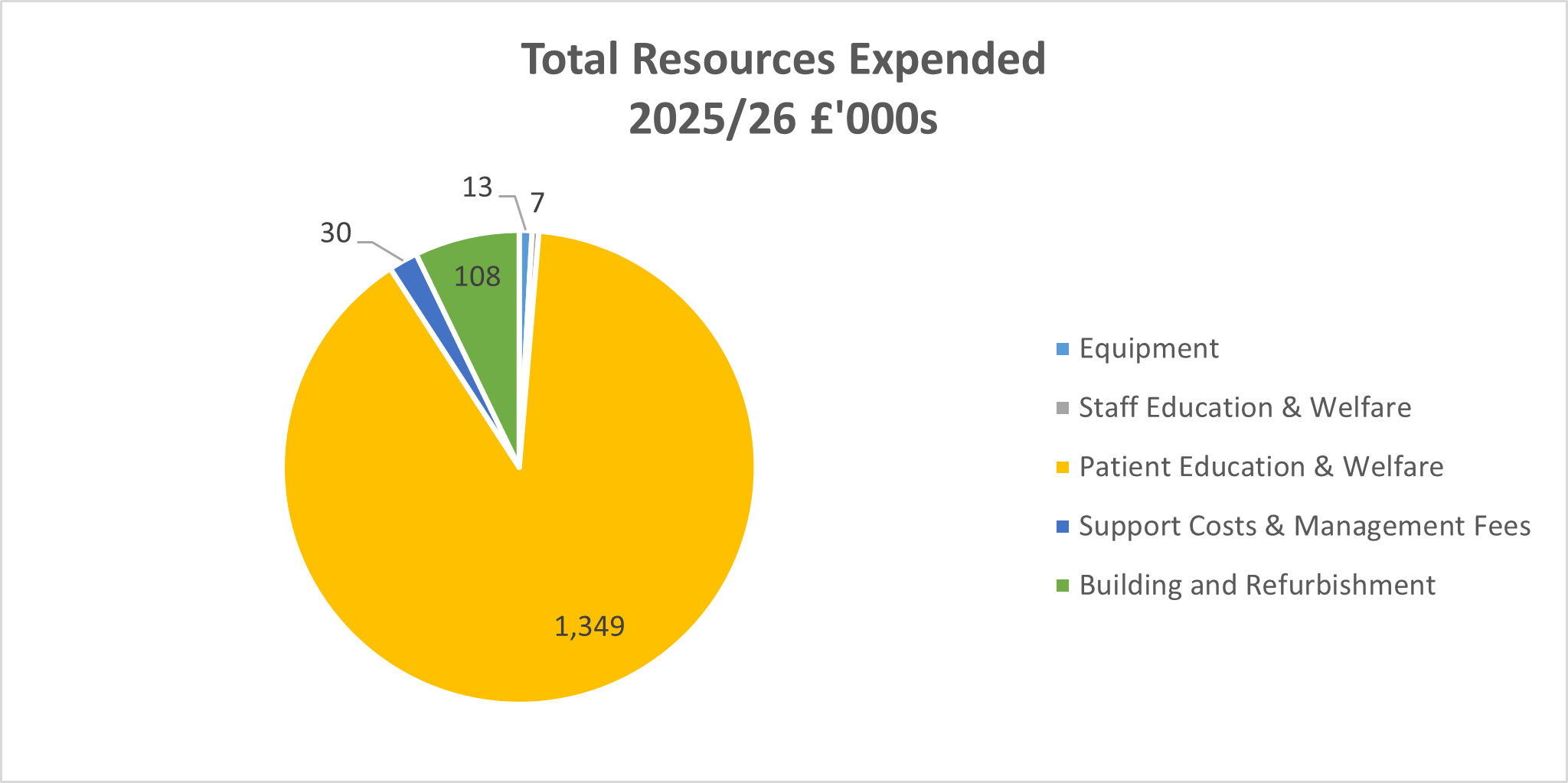
Total resources expended for the year amounted to £1,507k, a decrease from £1,510k in 2024/25.
The direct costs for governance and support costs relating to the financial administration of the CTFs amounted to £61k (which represents a levy of 0.73% of total fund balances). This comprised £573k for the administration costs of managing the fund and represents a decrease from £57k in 2024/25 primarily due to fewer activities incurred during 2025/26 relating to the High Court application in respect of registration for CCNI.
There was a gain on the value of the investments held in the NICIFC of £886k at 31 March 2026 (2024/25 loss of £184k). In addition, there were investment management costs of £30k charged by the Investment Management Company based on the value of the portfolio held by NICIFC.
The chart below shows the high level summary of expenditure categories for the year totalling £1,507k.
Financial position at year end
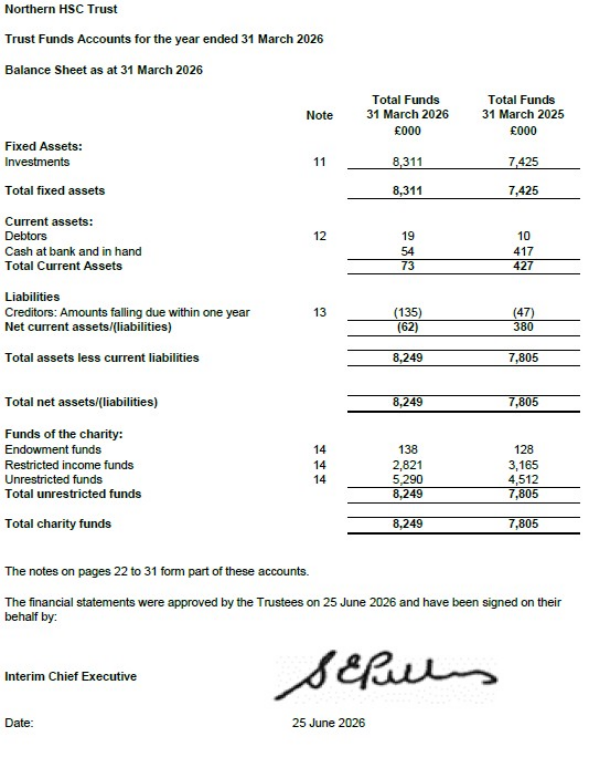
Total fund balances were £8,249k at 31 March 2026, consisting of £138k of endowment CTFs, £2,821k of restricted CTFs and £5,290k of unrestricted CTFs. This is a total increase of £444k from the previous year.
Financial controls
The Trustees are aware of their financial responsibilities for the money that is held on trust. The Chair of the CTFAC reports to the Trust Board on a regular basis and Fund Managers are circulated with details of their fund balances throughout the year.
Statement of risk
The management of risk in relation to CTFs is closely aligned with the Trust’s risk management strategy and procedures.
The major risks to which CTFs are exposed have been reviewed by the Board of the Trust and systems have been established to mitigate these risks. The major risks identified are falls in income due to the fluctuation of legacy and donations received and an adverse change in stock market conditions. These risks are mitigated by the reserves policy, by regular reviews of income and expenditure forecasts, by the quarterly investment performance reviews by the CTFAC and by advice from the external investment manager. This may result in the portfolio being changed if the Trustees consider the investments held are exposed to unnecessary risks.
Reserves Policy
The CTFs do not currently enter into future commitments and so have not created any reserves for this. Activities are only authorised when funding is available.
Investment Policy
The Trust has invested CTFs in the NICIFC. The Fund was set up in 1965 through the Charities Act (Northern Ireland) 1964, with the aim of providing charities with the opportunity to invest all or part of their assets in a centrally pooled investment fund, administered by DfC. The Fund is managed by recognised Fund Managers, with its investment policy and performance reviewed on a quarterly basis by a locally based advisory committee, appointed by DfC.
The NICIFC operates as a discretionary managed fund, with participating Charities allocated a proportionate number of shares based on the size of their investment and the most recent valuation (share price). The Fund invests in fixed-interest securities, UK and foreign equities and selected unitised funds. The allocation between these asset classes is reviewed and adjusted periodically, in line with the Fund’s investment policy.
The balance of Trust CTF monies are held in bank accounts under the HSC banking services contract.
Plans for future periods
A key focus for 2026/27 will be the continued progression of plans to amalgamate funds as part of work to enable CCNI registration.
The Trust remains indebted to the patients, clients, their families and carers, well-wishers and friends who have donated so generously to support the work of the Trust through the CTFs. We wish to assure all donors that their donations have been carefully directed towards schemes which have a direct benefit on the care and support which we provide to the people who use the Trust’s many services.
- Suzanne Pullins (Interim Chief Executive), 25 June 2026
The Certificate and Report of the Comptroller and Auditor General to the Northern Ireland Assembly
Opinion on financial statements
I certify that I have audited the financial statements of the Northern Health and Social Care Trust’s Charitable Trust Funds (NHSCT CTF) for the year ended 31 March 2026 under the Health and Personal Social Services (Northern Ireland) Order 1972, as amended. The financial statements comprise: the Statement of Financial Activities, the Balance Sheet, the Statement of Cash Flows, and the related notes including significant accounting policies. The financial reporting framework that has been applied in their preparation is United Kingdom accounting standards including FRS 102, the Financial Reporting Standard applicable in the UK and Republic of Ireland (United Kingdom Generally Accepted Accounting Practice).
I have also audited the information in the Trustees’ Report that is described in that report as having been audited.
In my opinion the financial statements:
- give a true and fair view of the state of NHSCT CTF’s affairs as at 31 March 2026 and of its incoming and expenditure of resources for the year then ended; and
- have been properly prepared in accordance with the Health and Personal Social Services (Northern Ireland) Order 1972, as amended and Department of Health directions issued thereunder.
Opinion on regularity
In my opinion, in all material respects the financial transactions recorded in the financial statements conform to the authorities which govern them.
Basis for opinions
I conducted my audit in accordance with International Standards on Auditing (ISAs) (UK), applicable law and Practice Note 10 ‘Audit of Financial Statements and Regularity of Public Sector Bodies in the United Kingdom’. My responsibilities under those standards are further described in the Auditor’s responsibilities for the audit of the financial statements section of my certificate.
My staff and I are independent of NHSCT CTF in accordance with the ethical requirements that are relevant to my audit of the financial statements in the UK, including the Financial Reporting Council’s Ethical Standard, and have fulfilled our other ethical responsibilities in accordance with these requirements.
I believe that the audit evidence obtained is sufficient and appropriate to provide a basis for my opinions.
Conclusions relating to going concern
In auditing the financial statements, I have concluded that NHSCT CTF’s use of the going concern basis of accounting in the preparation of the financial statements is appropriate.
Based on the work I have performed on NHSCT CTF, I have not disclosed in the financial statements, or identified any material uncertainties, relating to events or conditions that, individually or collectively, may cast significant doubt on NHSCT CTF’s ability to continue as a going concern for a period of at least twelve months from when the financial statements are authorised for issue.
My responsibilities and the responsibilities of the Board and the Accounting Officer with respect to going concern are described in the relevant sections of this certificate.
Other Information
The other information comprises the information included in the Annual Report other than the financial statements and my audit certificate and report. The Board and the Accounting Officer are responsible for the other information included in the Annual Report. My opinion on the financial statements does not cover the other information and I do not express any form of assurance conclusion thereon.
My responsibility is to read the other information and, in doing so, consider whether the other information is materially inconsistent with the financial statements, or my knowledge obtained in the audit or otherwise appears to be materially misstated. If I identify such material inconsistencies or apparent material misstatements, I am required to determine whether this gives rise to a material misstatement in the financial statements themselves. If, based on the work I have performed, I conclude that there is a material misstatement of this other information, I am required to report that fact.
I have nothing to report in this regard.
Opinion on other matters
In my opinion based on the work undertaken in the course of the audit, the information given in NHSCT CTF’s Annual Report for the financial year for which the financial statements are prepared is consistent with the financial statements.
Matters on which I report by exception
In the light of the knowledge and understanding of NHSCT CTF and its environment obtained in the course of the audit, I have not identified material misstatements in the Trustees’ Annual Report.
I have nothing to report in respect of the following matters which I report to you if, in my opinion:
- adequate accounting records have not been kept; or
- the financial statements are not in agreement with the accounting records; or
- I have not received all of the information and explanations I require for my audit.
Responsibilities of the Trust and Accounting Officer for the financial statements
As explained more fully in the Statement of Accounting Officer Responsibilities, the Trust and the Accounting Officer are responsible for the preparation of the financial statements and for:
- maintaining proper accounting records;
- the preparation of the financial statements in accordance with the applicable financial reporting framework and for being satisfied that they give a true and fair view;
- ensuring such internal controls are in place as deemed necessary to enable the preparation of financial statements to be free from material misstatement, whether due to fraud of error; and
- assessing NHSCT CTF’s ability to continue as a going concern, disclosing, as applicable, matters related to going concern and using the going concern basis of accounting unless the Trust and Accounting Officer anticipates that the services provided by NHSCT CTF will not continue to be provided in the future.
Auditor’s responsibilities for the audit of the financial statements
My responsibility is to examine, certify and report on the financial statements in accordance with the Health and Personal Social Services (Northern Ireland) Order 1972, as amended.
My objectives are to obtain reasonable assurance about whether the financial statements as a whole are free from material misstatement, whether due to fraud or error and to issue a certificate that includes my opinion. Reasonable assurance is a high level of assurance but is not a guarantee that an audit conducted in accordance with ISAs (UK) will always detect a material misstatement when it exists. Misstatements can arise from fraud or error and are considered material if, individually or in the aggregate, they could reasonably be expected to influence the economic decisions of users taken on the basis of these financial statements.
I design procedures in line with my responsibilities, outlined above, to detect material misstatements in respect of non-compliance with laws and regulation, including fraud.
My procedures included:
- obtaining an understanding of the legal and regulatory framework applicable to NHSCT CTF through discussion with management and application of extensive public sector accountability knowledge. The key laws and regulations I considered included the Health and Personal Social Services (Northern Ireland) Order 1972, as amended;
- making enquires of management and those charged with governance on NHSCT CTF’s compliance with laws and regulations;
- making enquiries of internal audit, management and those charged with governance as to susceptibility to irregularity and fraud, their assessment of the risk of material misstatement due to fraud and irregularity, and their knowledge of actual, suspected and alleged fraud and irregularity;
- completing risk assessment procedures to assess the susceptibility of the NHSCT CTF’s financial statements to material misstatement, including how fraud might occur. This included, but was not limited to, an engagement director led engagement team discussion on fraud to identify particular areas, transaction streams and business practices that may be susceptible to material misstatement due to fraud. As part of this discussion, I identified potential for fraud in the following areas: expenditure recognition and posting of unusual journals;
- engagement director oversight to ensure the engagement team collectively had the appropriate competence, capabilities and skills to identify or recognise non-compliance with the applicable legal and regulatory framework throughout the audit;
- documenting and evaluating the design and implementation of internal controls in place to mitigate risk of material misstatement due to fraud and non-compliance with laws and regulations;
- designing audit procedures to address specific laws and regulations which the engagement team considered to have a direct material effect on the financial statements in terms of misstatement and irregularity, including fraud. These audit procedures included, but were not limited to, reading board and committee minutes, and agreeing financial statement disclosures to underlying supporting documentation and approvals as appropriate; and
- addressing the risk of fraud as a result of management override of controls by:
- performing analytical procedures to identify unusual or unexpected relationships or movements;
- testing journal entries to identify potential anomalies, and inappropriate or unauthorised adjustments;
- assessing whether judgements and other assumptions made in determining accounting estimates were indicative of potential bias; and
- investigating significant or unusual transactions made outside of the normal course of business.
A further description of my responsibilities for the audit of the financial statements is located on the Financial Reporting Council’s website www.frc.org.uk/auditorsresponsibilities. This description forms part of my certificate.
In addition, I am required to obtain evidence sufficient to give reasonable assurance that the financial statements conform to the authorities which govern them.
Report
I have no observations to make on these financial statements.
Dorinnia Carville
Comptroller and Auditor General
Northern Ireland Audit Office
106 University Street
Belfast
BT7 1EU
30 June 2026
Charitable Trust Fund Accounts for the Year 2025/2026
Financial Statement
Balance Sheet
Statement of Cash Flows
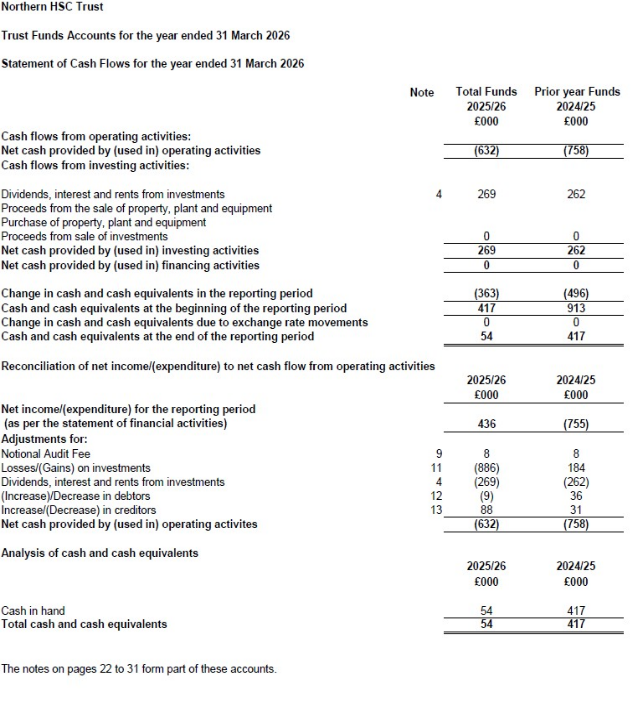
Notes to the accounts
-
Accounting Policies
(a) Basis of preparation
The financial statements have been prepared under the historic cost convention, with the exception of investments which are included at market value. The financial statements have been prepared in accordance with the Charities Statement of Recommended Practice (SORP) (FRS 102) with additional disclosures as required by FRS 102 and with relevant guidance issued by the DoH.
Assets and liabilities are initially recognised at historical cost or transaction value unless otherwise stated in the relevant accounting policy note(s).
The financial statements have been presented in sterling which is also the functional currency of the Trust’s CTFs.
The CTFs meet the definition of a public benefit entity under FRS 102.
The financial statements have been prepared on a going concern basis.
(b) Structure of funds
Where there is a legal restriction on the purpose for which a fund may be used, the fund is classified either as an endowment fund, where the donor has expressly provided that only the income of the fund may be expended, or as a restricted fund, where the donor has provided for the donation to be spent in furtherance of a specified charitable purpose.
The major funds held in each of these categories are disclosed in Note 14.
(c) Incoming resources
All incoming resources are included in full in the statement of financial activities as soon as the following three factors can be met:
i. entitlement – arises when a particular resource is receivable or the charity’s right becomes legally enforceable;
ii. probability – where there is a reasonable certainty that the incoming resource will be received; and
iii. measurement – when the monetary value of the incoming resources can be measured with sufficient reliability.
(c)
- Income from donations and legacies (note 2)
This includes all income received by the CTFs that is a gift or bequest made on a voluntary basis, for any purpose.
Legacies are recognised when it is probable that they will be received.
- Income from charitable activities (note 3)
This includes income earned both from the supply of goods or services under contractual arrangements and from performance-related grants which have conditions specifying the provision of particular goods or services by the charitable funds.
- Investment income (note 4)
This is income earned from holding assets for investment purposes and includes dividends and interest.
- Other income (note 5)
This includes income from groups that have undertaken fundraising activities, income from charity vouchers and any other miscellaneous income.
(d) Resources expended and irrecoverable VAT
All expenditure is accounted for on an accruals basis and has been classified under headings that aggregate all costs related to the category. All expenditure is recognised once there is a legal or constructive obligation committing the charity to the expenditure. Irrecoverable VAT is charged against the category of resources expended for which it was incurred.
- Expenditure on raising funds (note 6)
This includes all expenditure incurred by the CTFs on the management of investment funds.
- Allocation of governance and support costs (note 7)
Governance and support costs are those functions that assist the work of the charity but do not directly undertake charitable activities. Governance and support costs include the Management Fee paid to the Trust for provision of clerical and administration support. These costs have been allocated to closing fund balances.
- Expenditure on charitable activities (note 8)
This includes all expenditure by the CTFs in undertaking activities that further its charitable aims for the benefit of its beneficiaries as shown in Note 8. These costs were not wholly attributable and are apportioned between the categories of charitable expenditure.
(e) Fixed asset investments (note 11)
Investments are stated at market value as at the Balance Sheet date. The Statement of Financial Activities includes the net gains and losses arising on revaluations and disposals throughout the year.
(f) Realised gains and losses (note 11)
All gains and losses are taken to the Statement of Financial Activities as they arise. Realised gains and losses on investments are calculated as the difference between sales proceeds and opening market value (purchase date if later). Unrealised gains and losses are those gains or losses arising from increases or decreases in the value of investments that have not been sold (hence unrealised) at the reporting period end. These are calculated as the difference between the carrying value at the year end and opening market value (or purchase date if late). Unrealised gains and losses are allocated across the appropriate funds (i.e. those CTFs for which investments are held) according to the closing value of CTFs at the year end.
(g) Fixed assets – tangible and intangible
The CTFs do not hold any fixed or intangible fixed assets.
(h) Gifts in kind
There were no Gifts in Kind in 2025/26 (2024/25: £0).
(i)
- Debtors (note 12)
Debtors are recognised at the settlement amount due after any trade discount offered. Prepayments are valued at the amount prepaid net of any trade discounts due.
- Creditors (note 13)
Creditors are recognised where the CTFs have a present obligation resulting from a past event that will probably result in the transfer of monies to a third party and the amount due to settle the obligation can be measured or estimated reliably. Creditors are normally recognised at their settlement amount after allowing for any trade discounts due.
(j) Financial instruments
The CTFs only have financial assets and liabilities that qualify as basic financial instruments (cash and cash equivalents). Basic financial instruments are initially recognised at transaction value and subsequently measured at their settlement value.
(k) Going concern
There are no material uncertainties about the CTFs ability to continue as a going concern.
(l) Key judgements and assumptions
The CTFAC make estimates and assumptions concerning the future. The resulting accounting estimate will, by definition, seldom equal the related actual results. The most significant areas of uncertainty that affects the carrying value of assets held by the CTFs are the level of investment return and the performance of investment markets, which are kept under close review by the CTFAC.
Notes to the Accounts 2 to 5
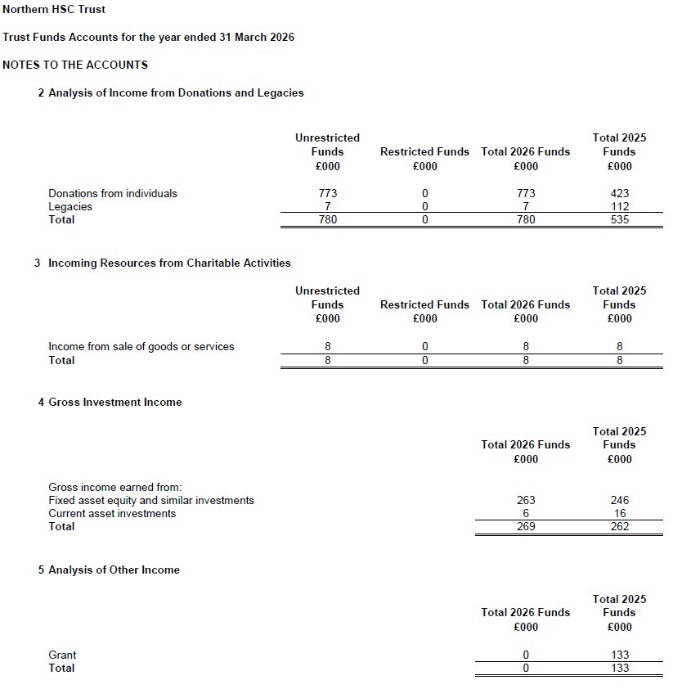
Notes to the Accounts 6 to 10
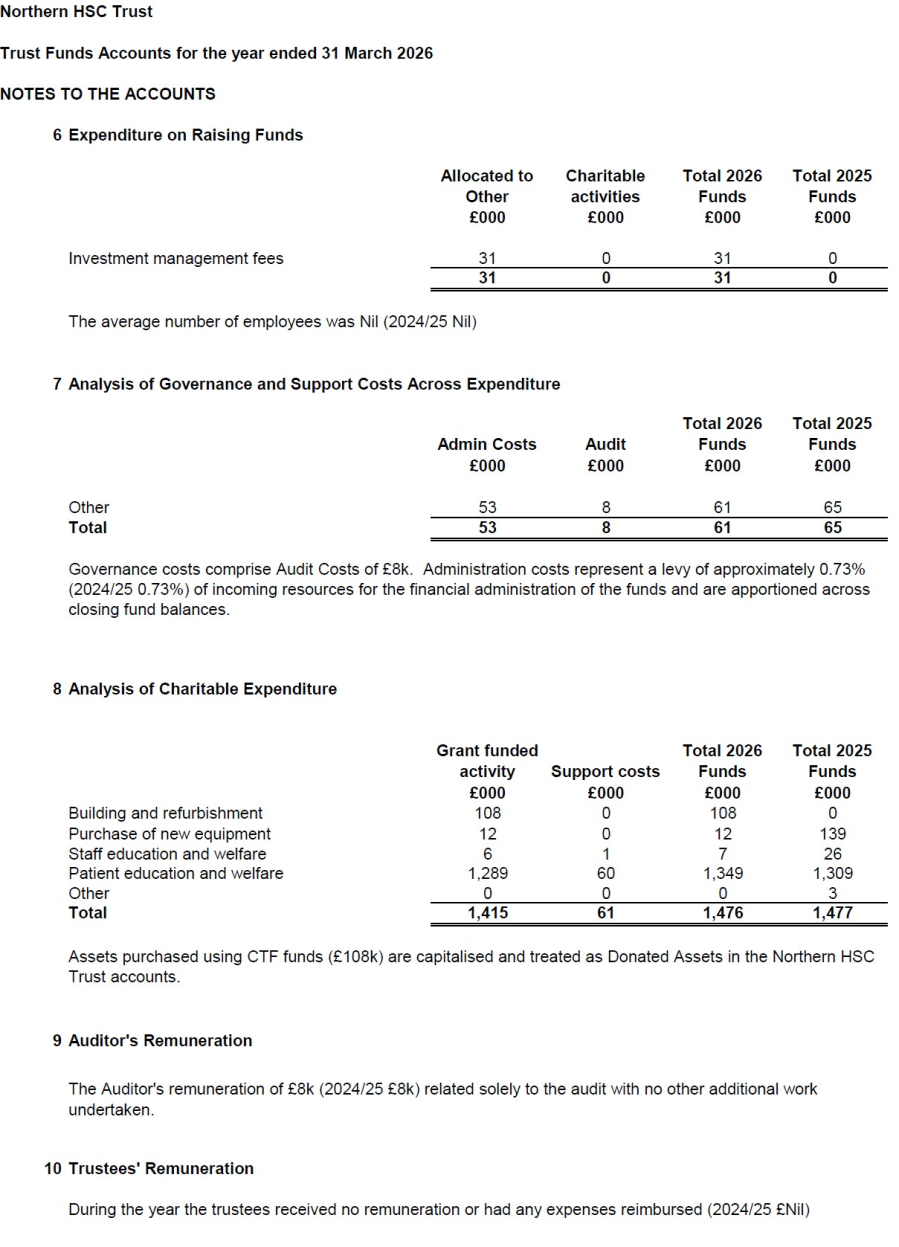
Notes to the Accounts 11 to 11.2
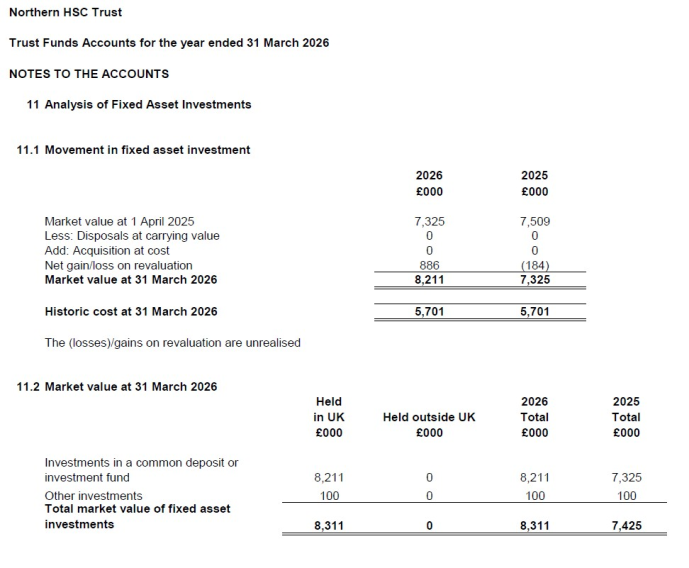
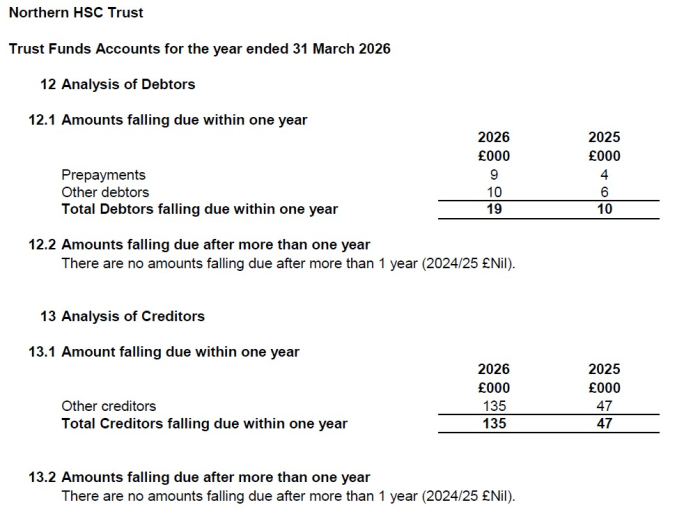
Notes to the Accounts 12 to 13.2
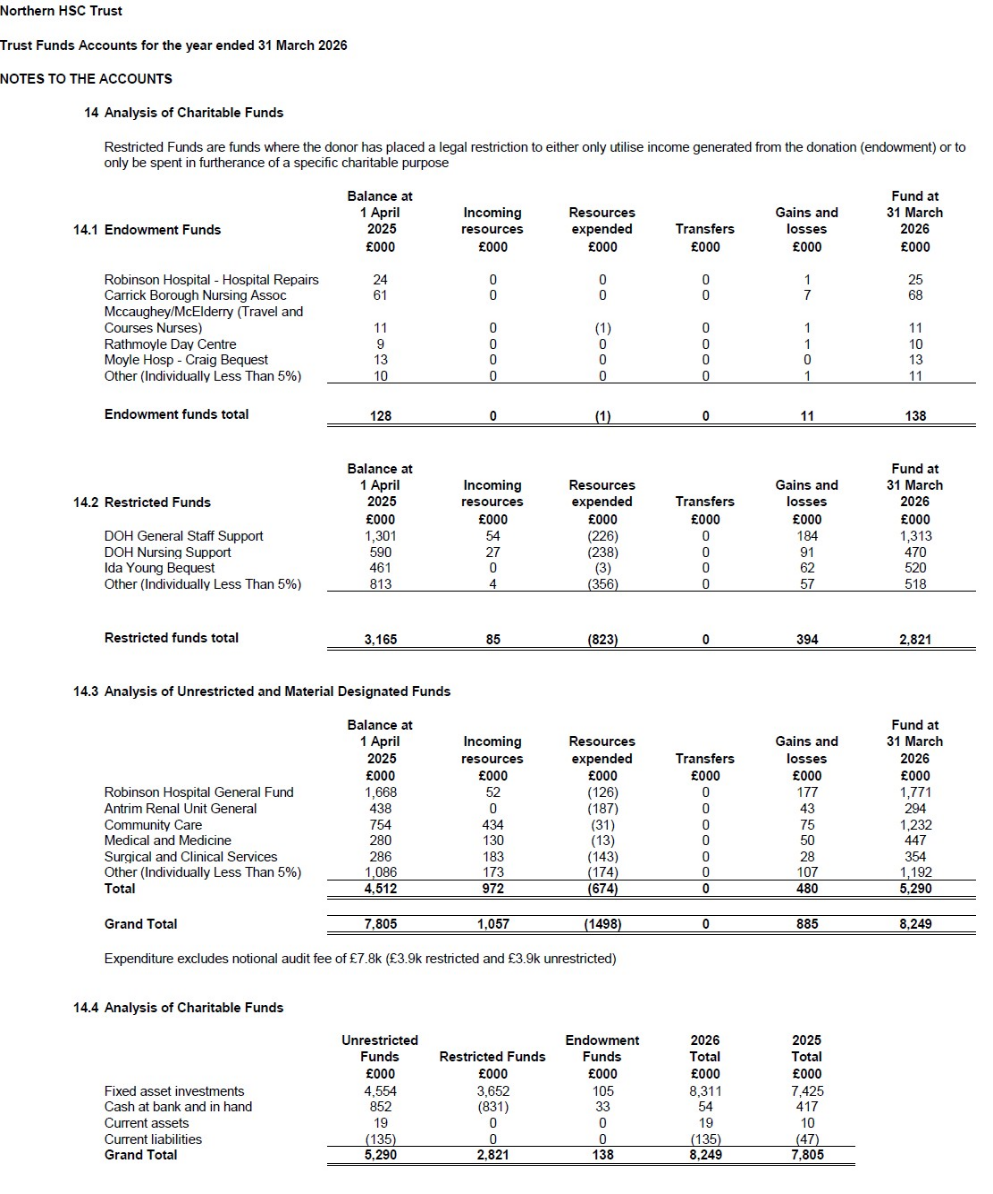
Notes to the Accounts 14 to 14.4
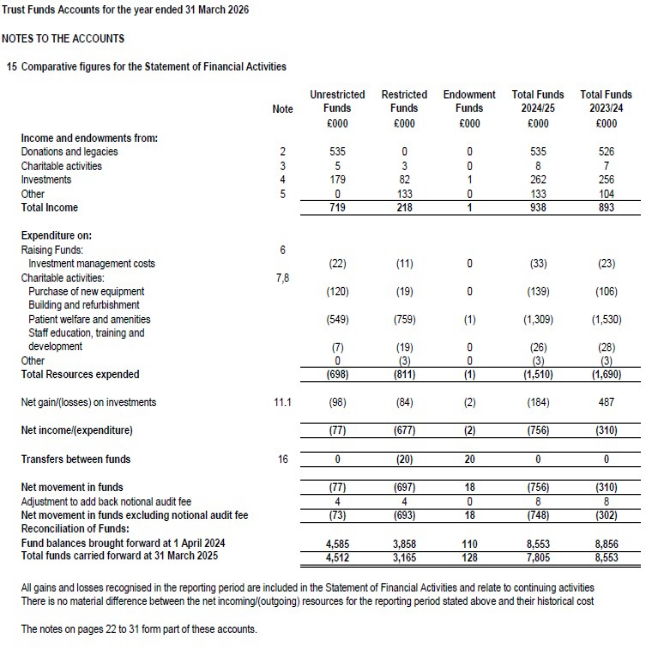
Notes to the Accounts 15
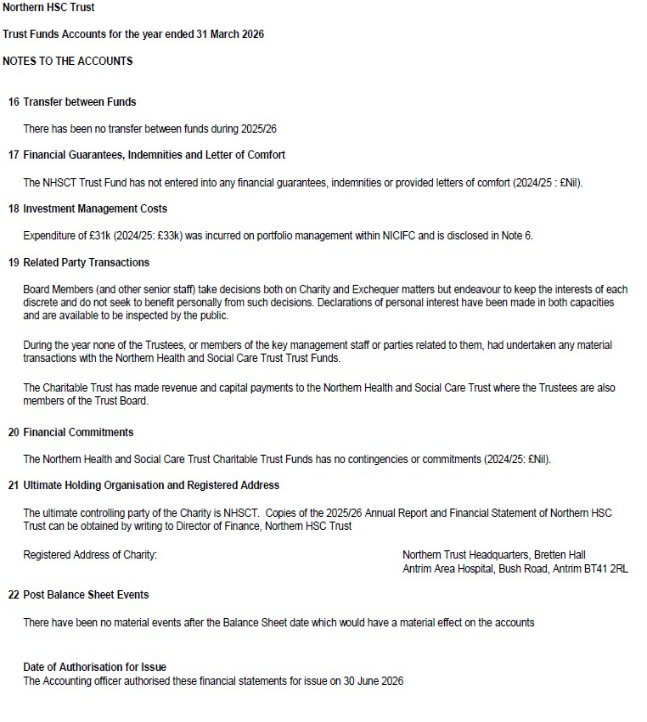
Notes to the Accounts 16 to 22
Other formats
CTF Annual Report for year ending 31 March 2026 (PDF, 1.3MB)