
Sleep is vital for children and young people’s health, wellbeing, learning and development.
Many children and young people with autism may experience sleep difficulties. These can include:
- Trouble settling to sleep
- Waking during the night
- Sleeping for shorter periods than others in the household
These challenges can affect both the young person and the wider family.
Every child is different, and so is their sleep pattern. However, creating a consistent and supportive sleep routine can make a positive difference—helping your child (and your household) feel more rested and better able to manage daily life.
Sleep advice and tips
This video offers helpful advice and practical tips to support better sleep for children and young people.
How much sleep does my child need?
The amount of sleep a child need depends on the individual and certain factors such as the age of the child. Here are some general guidelines:
1 to 3 years old
- Hours of sleep required: 12 to 14 hours
- Bed time: 7pm to 9pm
- Wake up time: 6am to 8am
- Most children at this age will have a nap during the day lasting 1 to 3½ hours.
3 to 6 years old
- Hours of sleep required: 10 to 12 hours
- Bed time: 7pm to 9pm
- Wake up time: 6am to 8am
- Naps are becoming shorter at 3 years old and stopping by 4 years old.
7 to 12 years old
- Hours of sleep required: 10 to 11 hours
- Bed time: 7:30pm to 10pm
- Wake up time: 7am to 8am (for school)
- There is variation in bedtimes at this age. This is due to social, school and family activities. The average length of sleep for this age group is 9 hours.
12 to 18 years old
- Hours of sleep required: 8 to 9 hours
- Bed time: 10pm or later
- Wake up time: 7am to 8am (for school)
- Bedtime is getting later. Social pressures often conspire against teenagers getting the appropriate amount of sleep.
Bedtime routine
Visual bedtime routines are very useful no matter what age the child is, from 2 years old to 18 years old. However, the visual bedtime routine will change in style depending on the age of your child/young person. When using a visual routine you should consider your young person’s language and understanding level. A visual routine can be prompted using objects, pictures, symbols or words depending on what is most appropriate for your young person.
The main routine should stay the same i.e., pyjamas on, brush teeth, bedtime story, etc, but some of activities may vary e.g. board game one night, listen to music another night.
General advice on using a bedtime routine:
- Everyone in the house should be consistent at following the routine.
- Choose a bedtime and stick to it – work the routine around the chosen bedtime.
- If your child/young person takes over an hour to fall asleep, you may want to consider changing the bed time to half an hour later.
- Keep a regular bedtime for your young person and wake them at a regular hour each morning, so that their body clock is strengthened.
Here are some examples of visual bedtime routines for different ages and stages.
Object level
Show the child an object to represent the next stage of the bedtime routine. The object should be the same each night.

A towel for getting a bath

A toothbrush for brushing teeth

A cup for drink before bed

Books for bedtime story

A blanket for sleep time
Photograph level
Put up photographs of the objects in order for the bedtime routine. Take photos of your child’s bed, toothbrush, pyjamas etc. to personalise the photos to your child.

Clean teeth

Bath

Pyjamas

Read a book
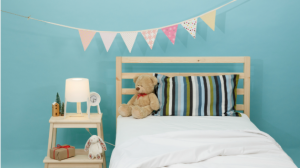
Bed time
Symbol level
Use drawings or symbols to represent the activities to be completed in the bedtime routine. You may want to cut each symbol out and stick it (blue tack/Velcro) onto a strip of card so that once the activity is completed, it can be taken off the routine so it is clear which task the child/young person is on.

Play with toys

Get a bath

Have a snack

Go to the toilet
Written level
The bedtime routine can be written only i.e. no pictures or symbols. Written level would be appropriate for adolescents. You may want to laminate the visual routine and have a place for the child/young person to tick off each activity as it is completed. For young people, you may also want to put a time beside each activity.
An example of what the bedtime routine would look like:
- 9:00pm – Turn off gaming console
- 9:15pm – Get a shower and wash hair
- 9:45pm – Have a snack – toast and milk
- 10:00pm – Relax – listen to music on iPod
- 10;30pm – Prepare for bed – pyjamas on, brush teeth, go to toilet
- 11:00pm – Bed time – lights out
Relaxation
Consider if the activities before bed are relaxing or stimulating (i.e. alerting, highly enjoyable). Sometimes, children may find the bath stimulating rather than relaxing – every child is different.
If your young person finds the bath stimulating (i.e. highly enjoyable), you may wish to consider rearranging this activity for earlier in the day. Alternatively, you could consider a gentle hand or foot massage before bed.
Have ‘quiet time’ before bed with relaxing toys or stories. Computer games or TV are not recommended.
Sensory
Think about your child/young person’s room in relation to sensory information. It is worth considering:

Light: reduce the amount of light in the room by using dark curtains, remove night lights and turn off lights outside the door.

Sound: Close the bedroom door, move bed position in room to a quieter area e.g. if noise is coming from one wall in room, reduce the volume on the TV in another room.
Visual distractions: Keep the room as distraction free as possible – take down posters from the walls, turn off TVs and computers or remove completely from the room, put mobile phones out of reach e.g. in closed drawer.
Smells: Consider the smell of the detergent used to wash pyjamas and bed clothes, think about smells coming from the kitchen or strongly scented candles/air fresheners being used in the house.
Touch: Consider the materials of pyjamas and bed clothes, labels on pyjamas, does your child/young person prefer short or long pyjamas or a long t-shirt. Consider lying in your child/young person’s bed for a couple of hours to see if it is comfy – the mattress may be too hard or too soft.
Diet
Limit your young person’s intake of high sugar food and drinks and caffeine intake after dinner time. If you are including snacks in the bedtime routine, you may want to put down exactly what the snack is to avoid your child/young person choosing a high sugar snack e.g. write down ‘Snack – toast and milk’. Make sure that your young person does not go to bed hungry.
Exercise
Encourage your child/young person to exercise during the day. Children and adults who exercise find it easier to fall asleep at night and have deeper sleep.
However make sure exercise is done earlier in the day as stimulating exercise close to bedtime can make it more difficult to fall asleep. Be sure that all exercise, hard or tiring activities end 2 or 3 hours before bed.