
This report has been prepared using a template circulated by the Equality Commission.
It presents our progress in fulfilling our statutory equality and good relations duties, and implementing Equality Scheme commitments and Disability Action Plans. This report reflects progress made between April 2025 and March 2026.
Contents
- Part A – Section 75 of the Northern Ireland Act 1998 and Equality Scheme
- Part B – Section 49A of the Disability Discrimination Act 1995 (as amended) and Disability Action Plans
Introduction
This is the Trust’s 19th Annual Progress Report on Section 75 of the Northern Ireland Act 1998 and Section 49A of the Disability Discrimination Order (DDO) for submission to the Equality Commission of Northern Ireland (ECNI). In preparing this Annual Progress Report, the Trust has used the template provided by the Equality Commission for Northern Ireland. The Report provides assurance to Trust Board on how the Trust has fulfilled its legislative obligations and gone beyond compliance to achieve best practice in promoting equality of opportunity and good relations.
Part A of this Report provides an overview of the work undertaken in compliance with Equality Scheme obligations. It is important to note that this Report does not detail the full breadth of activity undertaken by the Trust to promote equality of opportunity, strengthen good relations and address health, wellbeing and health inequalities.
The Health and Social Care (HSC) Trusts have continued to work collaboratively to progress the five year Section 75 Equality Action Plan and Disability Action Plan. Appendix 1 and Appendix 2 provide updates on the actions completed in the second year, commencing in 25-26, of the new plans.
The Trust has created Equality News, an accessible and user-friendly newsletter for stakeholders and staff, designed to showcase the wide range of initiatives undertaken across the Trust to promote equality of opportunity, foster good relations, and fulfil its disability duties during 2025/2026.
Trust Governance and Assurance Framework
In terms of policy development, the Trust has a range of measures in place to ensure that policy authors, leaders and decision makers are aware of their obligations under Section 75 and wider equality responsibilities when it comes to policy development.
- In compliance with Section 75, a screening process is in place to identify policies which may have a significant/major impact on the nine equality categories.
- The requirement for the screening of policies is set out in the Policy Development, Review and Approval Process, which is accessible to all staff in the policy area on Staffnet. This guidance document also signposts policy authors to the Equality Unit Business Area of Staffnet and to the Equality Unit for support with Equality screening.
- The mandatory policy template requires policy authors to document within the policy that it has been reviewed in light of Section 75 and the outcome of this screening. Mandatory content within policies is considered by policy committees and approving groups as part of the approval process.
- All new and reviewed policies must have an associated Equality Screening document completed, which must be signed by the policy author and Divisional Director or Committee Chair, who have approved the policy before it is uploaded to the policy library.
- Equality Screening documents for all policies are held electronically and securely by the Equality Team and the Policy Team. Historical documents are available for reference through these teams.
Part A – Section 75 of the Northern Ireland Act 1998 and Equality Scheme
Section 1: Equality and good relations outcomes, impacts and good practice
1. In 2025-26, please provide examples of key policy/service delivery developments made by the public authority in this reporting period to better promote equality of opportunity and good relations; and the outcomes and improvements achieved.
Please relate these to the implementation of your statutory equality and good relations duties and Equality Scheme where appropriate.
Encompass
Since the roll out of Encompass, November 2024 in Northern Trust, more than 300,000 people across Northern Ireland are now using My Care, the secure online patient portal that gives users quick and easy access to their health information online, as part of Health and Social Care’s encompass digital transformation programme.
The Northern Ireland Leadership and Governance Conference 2026 brought together leaders and innovators across the public sector, providing a platform to share learning and drive improvement. Under the theme ‘Transformation – Together Going Further, Faster,’ the conference highlighted the importance of collaboration, modernisation, and digital innovation in reshaping services and delivering improved outcomes for people across Northern Ireland.
In March 2026, the Encompass system upgrade was successfully implemented. A programme of engagement events supported staff to adapt to the enhanced system, providing key information, addressing queries, and building staff confidence in its use. Colleagues across the region demonstrated strong engagement, with many highlighting the benefits of the improved platform. The positive response reflects a continued commitment across HSCNI to digital transformation and to improving both staff experience and patient care outcomes.
World Social Work Day 2026
The Trust’s celebration to mark World Social Work Day was held on Monday 2 March 2026. The annual event was scheduled in advance of World Social Work Day, which falls on 17 March 2026. Aligned to the theme ‘Co‑Building Hope and Harmony A Harambee Call to Unite a Divided Society,’ the event brought together more than 250 social workers, managers, and senior leaders from across the organisation. A key highlight was the recognition of 78 social work practitioners and leaders who were celebrated for undertaking and successfully achieving either partial or full consolidation awards through the Professional Practice Programme, demonstrating the Trusts ongoing commitment to professional development, excellence in practice and strengthening of the social work workforce.
Sign Language Week
The Trust marked Sign Language Week from 16–22 March 2026. The week aims to highlight the importance of Sign Language while promoting the rights, culture, and contributions of Deaf people across the UK and Ireland. As part of the celebrations, the Encompass Training Team joined members of the Deaf community at a series of regional engagement events delivered through the Encompass My Care roadshows. In addition, HSC Trusts worked collaboratively to promote the Regional Communication Support Service (RCSS), raising awareness of how the service supports the delivery of accessible healthcare for d/Deaf, d/Deafblind, and hard of hearing individuals, as well as their carers.
Equality Action Plan (EAP) and Disability Action Plan (DAP) 2024-2029
The five Health and Social Care (HSC) Trusts and the NI Ambulance Service (NIAS) have continued to work collaboratively to deliver the actions outlined in the five year EAP and DAP to help address Section 75 inequalities, to promote positive attitudes towards people with a disability and encourage participation in public life.
Consultations
Northern Trust also carried out two consultations during 2025-2026; (i) from 23 January 2025 to 1 May 2025, the use of Body Worn Cameras in the Emergency Department of Antrim Area Hospital to help reduce the number of incidences of violence and aggression towards healthcare staff and enhance safety for patients and (ii) from 2 March 2026 to 1 May 2026, the Draft Carer Strategy 2026-2031, which sets out the plans for the next five years and the Trust plans to support unpaid family carers.
Lanyards for the d/Deaf
Since the introduction of the communication support lanyards in March 2025, 140 lanyards have been issued to staff, patients and service users with hearing loss. The lanyards offer a discreet yet recognisable way for people to indicate that they may need additional communication support.
Update on AccessAble Facility Guides
The Trust has been in partnership with AccessAble since 2020 to provide comprehensive accessibility information for patients, visitors, and staff. This collaboration supports individuals to navigate Antrim Area Hospital and Causeway Hospital confidently and independently.
Ongoing joint working ensures that accessibility guides are regularly reviewed and updated, incorporating accurate facts, figures, and photographs to assist people in planning their journeys to and around each hospital site. The guides provide detailed information on a wide range of accessibility features, including parking facilities, hearing loops, walking distances, and accessible entrances and toilet facilities.
Ninety-seven detailed access guides are now available via links on the Trust website, AccessAble website or by mobile application. Between April 2025 and March 2026, the guides had 22,409 users and 37,786 page views. This breaks down to a monthly average of 1,867 users and 2,982 page views.
During the reporting period, development work was completed on the AccessAble website. It is now able to display full screen images, including 360° images of accessible toilets and Changing Places facilities. All Causeway guides have been updated to reflect these enhancements, with updates for Antrim currently in progress.
Community Sighted Guide Training
In March 2026, the Trust partnered with Guide Dogs NI to provide Community Sighted Guide Training for staff. These introductory sessions were designed to build confidence and enhance staff skills when assisting people with sight loss safely, respectfully, and effectively in everyday interactions. The training supports and reinforces the Trust’s commitment to person-centred care and the delivery of inclusive services across both hospital and community settings.
British Sign Language Taster Course
In 2025, in partnership with the British Deaf Association, the Trust hosted a six-week British Sign Language taster course for staff. The course provided staff with the opportunity to learn about Deaf culture and some basic sign language to help them engage with deaf service users.
Information Event for Deaf and hard of hearing
In March 2026, the Trust in collaboration with a range of external Partners, delivered an information for parents and carers of children and young people who are deaf or hard of hearing. This event was co-ordinated by the Children’s Hearing Services working group, which brings together representatives from ENT, Audiology, Speech and Language Therapy and CAMHS within the Trust, alongside partners from the Voluntary Sector, the Education Authority and Jordanstown School. The event was designed to provide support and advice while creating opportunities for families to engage with local services and brought together a broad range of statutory and voluntary organisations supporting deaf and hard of hearing children and their families.
International Day of Persons with a Disability
In December each year, the Trust promotes International Day of Persons with a Disability. This day aims to raise awareness of the rights and wellbeing of people with disabilities and serves as an important reminder of the need to challenge and address the discrimination that disabled people may continue to experience. The Trust continues to promote the value of diversity and recognises that not all disabilities are visible.
NI Local Government Awards 2025
The Northern Trust’s collaborative approach was recognised at the prestigious NI Local Government Awards 2025. Three projects led by the Trust’s Health and Wellbeing Team were shortlisted, with the Autism Friendly Initiative – developed in partnership with Mid and East Antrim Borough Council winning the overall award in the Equality, Diversity and Inclusion category. The Causeway Healthy Kids project, delivered in collaboration with Causeway Coast and Glens Borough Council, was runner-up, in both the Service Innovation and Improvement and Collaborative Partnership categories.
In addition, the Family Support and Social Supermarket Programme, delivered with Antrim and Newtownabbey Borough Council, was runner-up in the Engaging Communities category.
Connect North – Supporting Wellbeing Across Communities
‘Connect North’ the Trust’s area-wide social prescribing service for adults, helping people access the right support close to home to improve overall wellbeing. Recognising the impact of factors such as work, finances, housing, long-term conditions and social isolation, the service connects individuals to local activities, groups and practical supports. Key services include the Connect North Directory, an easy-to-use online resource (www.connectnorth.co.uk) where users can search for community groups, physical activity opportunities and financial advice by postcode or need.
Link Worker Drop-In sessions are also held in local libraries, offering informal, no-appointment opportunities to speak with a link worker and receive guidance on available supports. In addition, Community Appointment Days are held throughout the year, offering person-centred wellbeing assessments for people living with dementia and their carers, offering tailored support and direct connections to services such as carer support, benefits advice, and opportunities to enhance social connections.
Health and Wellbeing Support
The Trust’s Health and Wellbeing Team leads on promoting population wellbeing through a public health approach focused on prevention and early intervention, helping to improve health outcomes across communities. During 25/26, a range of initiatives were implemented to promote inclusive physical activity across the Trust. Staff received training to support participation among older people and individuals with mobility issues, including activities such as Boccia, Chi Me, and Strength and Balance. An “Autism Friendly Walks” booklet was developed in partnership with Trust trained walk leaders to support individuals with autism to access and participate in walking groups. In addition, inclusive dance programmes were delivered for older people and individuals with learning disabilities. These initiatives have improved access to physical activity for individuals with diverse needs, supporting increased participation, enhancing physical and mental wellbeing and promoting greater social inclusion.
In addition to physical health activities, the Trust delivered a range of inclusive arts-based programmes to promote participation and wellbeing across diverse groups. This included arts initiatives for carers, individuals with learning disabilities, and older people, with activities delivered in accessible community venues such as libraries. A Singing for Health programme was provided for individuals with long-term conditions, alongside mixed-ability singing groups to support inclusive participation. In addition, a six-week photography programme was delivered for individuals experiencing homelessness and living in a hostel. Feedback from participants was positive, with evidence of enhanced wellbeing, increased social engagement, and improved inclusion for individuals from a wide range of backgrounds, particularly those who may otherwise experience barriers to participation.
Staff Health Wellbeing and Inclusion Strategy 2024-27
Equality, Diversity and Inclusion (EDI) is a foundation stone of our #team NORTH culture and the Trust is committed to working together to provide a safe and inclusive environment for all staff regardless of age, sex, gender identity, sexual orientation, community background, religious belief, political opinion, race, disability, dependent status and marital or civil partnership status. The Trust launched its Health, Wellbeing and Inclusion strategy in August 2024. Endorsed by the Trust Board, the three-year strategy sets out a series of actions that aim to improve the overall health and wellbeing of our staff with a strong emphasis on the need to embrace the culture of equality, diversity and inclusion. In 2025, the role of chair of the Equality, Diversity and Inclusion Steering Group, changed to Paddy Graffin, Director of Infrastructure. Each division is represented on the group, who meet regularly, alongside key stakeholders.
The overall theme of ‘valuing diversity and promoting inclusion’ is informed by the Equality Action Plan and Disability Action Plan, alongside ECNI recommendations on key employment inequalities and the Trust’s organisational People and Culture Plan.
The infographic below highlights key achievements and ongoing work.
Carers within the Trust Workforce
The Trust recognises that staff work a variety of patterns and practices across health and social care settings and that modern life at times can be demanding. It can be difficult to balance the various social and economic pressures we experience outside of work on a daily basis including roles as carers. Annually, the Trust supports Carers Week in June to recognise and support staff who are carers, acknowledging their significant contribution, and recognising the potential impact on their work life balance.
In June 2025, with the theme, Caring About Equality, the Trust hosted a conference that focused on the different caring roles, ages and life stages that someone can become a carer. The programme included a panel of young carers, working carers, parent carers, and bereaved carers, providing insight into the varied experiences associated with each stage of the caring journey. The conference was attended by approximately 200 carers and staff members.
Management of Violence and Aggression
All staff have the right to feel safe from the threat of violence and aggression in the workplace including behaviours, verbal or physical, motivated by an equality characteristic such as race, sex, religious belief and sexual orientation.
Following the launch of the Department of Health’s Violence and Aggression framework in 2024, the Trust established a Management of Violence and Aggression working group to oversee its implementation. In addition, the Trust have relaunched the toolkit which provides practical advice to staff and managers around the management of violence and aggression in the workplace, with particular emphasis on the support that staff should receive following an incident.
Institute of Government & Public Policy Conferences
In February 2025, the Institute of Government & Public Policy (IGPP) invited the Trust to showcase its work at the Neurodiversity Conference and in June 2025 at the Equality Diversity and Inclusion Conference.
Cultural Competency Framework
Since the launch of the Framework in February 2025, the Trust has continued to strengthen its commitment to culturally competent practice across health and social care services. Building on collaborative work across HSC Trusts, the recently published ‘Ethnic Minorities Mental Health Toolkit – A Guide for Practitioners’ is available for all health and social care staff. The resource is intended to support practitioner in delivering culturally competent and responsive services, with a particular focus on improving outcomes for individuals and families from ethnic minority backgrounds.
In addition, all Trust staff are encouraged to access and complete the Cultural Competence Framework available via Learn HSCNI.
Race Equality
In February 2026, the Trust marked Race Equality Week, which focused on addressing barriers to race equality in the workplace. Reflecting this year’s theme, #ChangeNeedsAllOfUs, the bulletin highlighted key areas of progress and future plans, and emphasised the role we all have to play in creating a Team North that welcomes, supports, and celebrates our diverse workforce.
Internationally Educated Nurses Celebration Event
Staff from Workforce Planning and Utilisation hosted a special recognition event in October 2025 to acknowledge and celebrate the significant contribution of internationally educated nurses within Northern Trust. A number of internationally educated nurses delivered presentations reflecting on their recruitment journeys.
Supporting Neurodiversity in the workplace
In April 2025, the Trust launched a project aimed at advancing its ambition to become a more neuroinclusive organisation. As part of this initiative, a neurodiversity working group was established, bringing together broad representation from across Divisions to provide support, expertise, and strategic guidance. Following extensive promotion and preparatory engagement, a staff engagement survey was issued in November 2025, supported by face‑to‑face drop‑in clinics to maximise participation. Initial findings and a corresponding action plan were shared with staff in March 2026, promoting transparency and enabling timely action against key priorities identified.
Autism and Neurodiversity Awareness training
Autism and neurodiversity awareness training has been made available to all staff across the Health and Social Care (HSC) system. Commissioned by the Department of Health in partnership with the HSC Leadership Centre, the training is delivered via the LearnHSCNI platform and is accessible across all HSC organisations. This represents the first regionally consistent, neuro-affirming training programme available across all HSC Trusts.
The training was co-produced with a neurodivergent advisory panel and the Middletown Centre for Autism (Co. Armagh), with significant contribution from individuals with lived experience. Northern Trust was represented in this work, with four members of the Northern Area Autism Reference Group contributing to the development of the programme. The training is designed to enhance staff understanding of autism and improve service user experience. It focuses on increasing awareness of how autistic people perceive and interact with the world, identifying how different environments can impact their experiences, and promoting practical steps to create more supportive and accessible spaces.
Autism Café
To provide timely information and support to parents and carers of children under 16 who have been diagnosed with autism, or who are awaiting assessment, the Trust Paediatric Autism Service worked in partnership with the Public Health Autism Team (Health & Wellbeing), the wider Health & Wellbeing Team, Children and Young People’s Strategic Partnership (CYPSP), and local councils to facilitate a series of Autism Cafés across the local community. This collaborative, multi-agency ‘one-stop-shop’ approach enabled parents and carers to access information and advice from health, education and community services in a single setting. The initiative supported individuals to navigate services more effectively, while also providing opportunities to ask personalised questions and receive timely guidance and support tailored to their needs.
Carer Hub
The Northern Trust Carer Hub is a central point of contact for carers and staff for signposting and support. During 2025-2026, the Carer Hub facilitated 78 classes through the carer support programme which is based on the Take 5 Steps to Wellbeing initiative. Carers can participate in events such as monthly peer support groups, nutritional classes, physical health classes; such as walking groups, classes to support mental wellbeing such as Resilience and Mindfulness and attend information sessions on rights and entitlements with Make the Call. During 2025/26 1,302 carers joined in.
The designated carers’ website for Northern Trust www.carersdigital.org has been updated to include You and Your Wellbeing, Spotlight on Nutrition and Caring, About Me (building resilience) and Working and Skills E-learning for Working Carers. Any carer in the Northern Trust area can access the website by creating an account and there are currently over 976 current users.
The Trust’s Carer Hub brings together community and voluntary sector organisations that have a carer support strand to their services to share information on available services. As part of Carers Week 2025, the Carer Hub hosted an information fair for family carers, with over 60 exhibitors from across the community and voluntary sector and Trust services. This information fair is a valuable source of support for many family carers. There was also a specific focus on rural carers, hosting a support morning to ensure those in rural areas know that support is available. The theme was ‘Caring About Equality’ and the Trust held a conference focussing on the different caring roles and ages and stages that someone can become a carer. The programme focussed on a panel made up of young carers, working carers, parent carers and bereaved carers to highlight the differences in each life stage. On the day, 200 carers and staff attended with a special performance from a carer’s writing group and key note speaker Professor Suzanne Martin. Those who attended were invited to share ‘what matters to you’ in the caring role and this information was used to inform the draft Carer Strategy, that is currently out for pubic consultation.
As part of the engagement and development process for the draft Carer Strategy, a staff workshop was held in September 2025 to present and discuss key themes and issues identified by carers during the Consultation process. Staff from across Trust services and divisions participated in the workshop, sharing their experiences and perspectives, including challenges encountered in supporting family carers. The workshop provided an opportunity to identify areas for improvement and informed the development of actions aimed at enhancing support and outcomes for family carers.
In September 2025, the Trust launched a pilot counselling service for unpaid family carers. The service was developed as a result of longstanding partnership working and engagement with unpaid family carers through the Carer Pathway Steering Group and Carer Listening Forum, which highlighted the emotional and psychologies impact of caring responsibilities and the need for dedicated wellbeing support. Initially established as a six-month pilot, the service has demonstrated clear demand and value, resulting in its extension for a further year. During the first six months, 64 referrals were received, with each carer being offered up to six counselling sessions. The initiative has enhanced access to emotional support for carers and contributes to the Trust’s ongoing commitment to recognising and addressing the needs of unpaid carers.
To celebrate Carers Rights Day in November 2025, the Trust hosted a carer café conversation engagement event to obtain the views of carers for specific themes to develop the draft Carer Strategy 2026-2031. Over 70 carers attended the carer café conversation and provided valuable feedback.
Accessible Communication
During the reporting period, the Northern Trust made 15,389 requests for interpreters through the Northern Ireland Regional Health and Social Care Interpreting Service (NIHSCIS). The top three languages requested within the Northern Trust during 2025/2026 were as follows:
| Language | Numbers |
|---|---|
| Polish | 4904 |
| Arabic | 2175 |
| Romanian | 2026 |
A total of 12,766 appointments were supported with sign language interpreters through Sign Language Interactions and 164 written documents were translated into minority languages.
The top three languages requested for translation within the Northern Trust during 2025/2026 were Polish, Arabic and Bulgarian.
2. Please provide examples of outcomes and/or the impact of equality action plans/ measures in 2025-26 (or append the plan with progress/examples identified).
Equality and Disability Action Plans (2024-2029) – the six Health and Social Care Trusts continued to work collaboratively in implementing the plans. This regional approach promotes consistency, facilitates the sharing of best practice and learning across all Trusts, and minimises duplication of work.
The 2024 – 2029 Equality Action Plan contains a total of 30 actions whilst there are 22 actions in our Disability Action Plan. Our Equality Action Plan has been structured across four themes namely:
- Improving the data we use to support decision-making
- Addressing barriers to accessing health and social care
- Supporting our staff
- Supporting informal/family carers
The Disability Action Plan is framed around the two Disability Public Sector Duties namely:
- Actions to promote positive attitudes towards disabled people
- Actions to encourage participation by disabled people in public life.
The Equality & Disability Action Plans have been transcribed into an easy read format to ensure maximum accessibility and are located on the Trust website and staff intranet.
Please see Appendix 1 and Appendix 2 for a detailed update of actions progressed in the Equality Action Plan and Disability Action Plan.
3. Has the application of the Equality Scheme commitments resulted in any changes to policy, practice, procedures and/or service delivery areas during the 2025-26 reporting period?
Yes.
The following information details how the application of the Equality Scheme commitments resulted in changes to policy, practice, procedures and/or service delivery areas during 2025-26.
Arrangements for assessing our compliance with Section 75 duties
Equality Scheme Commitment: Have in place appropriate structures and reporting mechanisms
Action: The Trust has prioritised Section 75 in all aspects of its business agenda and has established a range of governance, management and reporting mechanisms that reflect this. The Northern Partnership and Population Health Committee reports directly to Trust Board.
Difference made for individuals: Section 75 duties are integral to the Trust’s Assurance Framework. Trust senior teams aware of and comply with statutory requirements during decision-making.
Equality Scheme Commitment: Ensure Section 75 duties are mainstreamed within the Trust
Action: Northern Partnership and Population Health Committee includes Partners representing a range of Section 75 categories to support the mainstreaming of equality duties by embedding the duty to promote equality of opportunity and good relations into its core functions, ensuring these considerations are integral to their decision-making and service provision.
The Trust’s Equality Unit provides staff with the information, training and resources to support staff to have the appropriate level of knowledge, expertise and skill to mainstream Section 75 duties.
The regional Equality, Good Relations and Human Rights; Making a Difference eLearning programme is mandatory and compliance is monitored two times each year.
Difference made for individuals: Individuals are aware of the Trust’s commitment to equality duties. Trust staff are aware of equality duties and the Trust’s commitment to not only avoiding discrimination, but also to pursuing good practice, embracing diversity and promoting good relations.
Equality Scheme Commitment: Prepare Section 75 Annual Progress Report (APR) and include section in Trust’s own Annual Report
Action: Annual Progress Report supported by “Equality News” to ensure updates are available in a more accessible format.
Equality Matters section included in the Trust’s Annual Report.
Difference made for individuals: All consultees sent a copy of the newsletter and informed of the availability of the progress report – improving awareness of Trust’s Section 75 duties and outcomes of the work programme
Action plan
Equality Scheme Commitment: Development of Action Based Plan to include performance indicators and timescales. Aligned to corporate and business planning cycle
Action: Five-year Section 75 Equality Action Plan developed in partnership with stakeholders and approved March 2024, to run until March 2029.
Difference made for individuals: The implementation is intended to have a positive impact on Section 75 groups.
Arrangements for consulting
Equality Scheme Commitment: Consultation list reviewed and updated
Action: Review of consultation list on going.
Difference made for individuals: New consultees added to the consultation list on an ongoing basis.
Equality Scheme Commitment: Training re. Consultation
Action: Involvement training was delivered to 1070 members of staff during 2025-26.
Difference made for individuals: Support transformation and service change by involving service users, carers and the community and voluntary sector.
Action: To strengthen staff capability, advice clinics are also available to support teams in involving service users and carers. A total of 44 advice clinics were delivered this year. The Trust held specialised training sessions to ensure staff have the skills to facilitate and support better engagement with service users and carers. 40 members of staff completed this training.
Difference made for individuals: Develop skills to enable staff to facilitate and plan service user involvement.
Action: The Involvement Team delivered a series of divisional ‘Involvement and Engagement’ workshops, attended by 168 staff, to help shape the new five-year Involvement and Experience Strategy. The sessions ensured input from staff across all levels, supporting a stronger focus on embedding the voices of patients, carers, families, and communities in service design, delivery, and improvement. Care Opinion Awareness Training and Framing the Ask training are designed enhance staff awareness, and understanding of Care Opinion, while building confidence in seeking feedback and recognise the value of learning from lived experience. A total of 467 members of staff completed this training during 2025/26.
Difference made for individuals: Raise awareness of Care Opinion and facilitate staff to promote and value feedback received.
Action: Care Opinion responder training provides staff with the knowledge and skill to provide a timely, meaningful response. 36 members of staff completed responder training during 2025/26.
Difference made for individuals: Facilitate staff to respond to feedback received via Care Opinion.
Action: CitizenSpace is an online tool, specifically for public sector use, which is used to design questionnaires and surveys. 317 staff accounts have been set up and staff have received relevant training and support.
Difference made for individuals: Train staff in practical survey tools.
Equality Scheme Commitment: In making any decision with respect to a policy adopted or proposed to be adopted, take into account any assessment and consultation carried out in relation to the policy
Action: Policy Development Process ensures engagement and consultation.
Difference made for individuals: Views of representation groups and individuals considered during decision-making process.
Equality Scheme Commitment: Provide feedback report to consultees in timely manner in formats suited to consultees
Action: All service users and carers involved in Trust projects received detailed feedback reports.
Difference made to individuals: Representative groups and individuals informed of how their feedback influenced the decision made.
Screening
Equality Scheme Commitment: Revise screening template and accompanying guidance notes
Action: Trust policy development process ensures all Trust policies are screened. All policies approved during the reporting period were subject to Section 75 screening and appropriate consultation. During the reporting period, the Trust screened 121 policies and proposals.
Difference made for individuals: Transparent decision-making process for consultees and impact on Section 75 groups identified during policy development processes.
Equality Scheme Commitment: Publish reports quarterly and in accessible formats on request
Action: All quarterly reports for the reporting period made available on the Northern Trust website.
Difference made for individuals: Screening outcomes available to the public for consideration.
Equality Scheme Commitment: Publishing of EQIA reports
Action: Two Trust specific consultations during 2025-26; (i) Body Worn Cameras in the Emergency Department and (ii) the Draft Carer Strategy 2026-2031.
Difference made for individuals: Consideration given to feedback during consultation and mitigations and action plans delivered to address same.
Monitoring
Equality Scheme Commitment: Review of monitoring information
Action: The Trust continues to monitor staff by Section 75 categories and this has been enhanced by HRPTS Self-Service functions and an active campaign to improve equality monitoring data gathered from staff.
Since the introduction of Encompass, Trust Health and Social Care records and systems have been significantly enhanced and streamlined. This improvement supports the collection of higher quality and more consistent Section 75 information for service users. Encompass enables service users to digitally access their own information, communication directly with health and social care staff, view test results and manage appointments.
Difference made for individuals: Increased understanding of the make-up of the workforce to ensure promotion of equality of opportunity and better information to identify any potential impact.
Staff training
Equality Scheme Commitment: Draw up a detailed training plan
The regional Equality, Good Relations and Human Rights: Making a Difference Programme continues to be rolled out across the Trust via Broadcast and Staffnet and compliance is monitored.
Trust staff also have access to the online co-produced disability equality training video.
Difference made for individuals: Improved access to equality, good relations and human rights training and diversity training through availability of more condensed training packages for staff and managers as well as the availability of a training manual for those who do not have access to computers.
Equality Scheme Commitment: Focusing training
Action: The Equality Screening Toolkit, available on the Staff Intranet, supports staff with Section 75 screening. This is supplemented by one-to-one screening clinics, specific to a policy, project or proposal that continued to be offered during 2025/26. These have been popular with staff and positive feedback has been received.
Difference made for individuals: Strengthen policy making skills across the Trust.
Action: During the year, the Trust held specialised online workshops and training to support the continued development of a coproduction culture, including facilitation training and Divisional ‘Involvement and Engagement; Workshop.
During the reporting period 39 members of staff received Working Well With Interpreters training, which provides staff with a good knowledge and understanding of the interpreting service and the dangers of using untrained interpreters.
The Business Services Organisation led training on “How to book interpreters,” 64 staff attended.
Difference made for individuals: Increased awareness and enhanced staff skills.
Arrangements for ensuring and assessing public access to information and services we provide
Equality Scheme Commitment: Ensure information we disseminate and services we provide are fully accessible to all parts of the community in Northern Ireland
Action: Information is available in alternative formats upon request, and the Trust’s website is designed and maintained to be accessible, in line with the Trust’s S75 duties.
During the reporting period a total of 15,389 quests for face-to-face interpreting were made to NIHSCIS.
During the reporting period, 12,766 appointments were supported with face to face sign language interpreting support.
Difference made for individuals: Improved access to information and services for equality groups, particularly individuals whose first language is not English and people with disabilities.
Equality Scheme Commitment: Provide information in alternative formats on request
Action: 164 documents translated into minority languages during the reporting period.
All minutes of Disability Consultation Panel meetings provided on disk, Braille or Easy Read on request.
A central library of translated documents is available for use by all Trust staff.
Difference made for individuals: Information provided in alternative formats to support understanding, ensure effective communication and improved access to services.
Equality Scheme Commitment: Provide interpreters and sign language interpreters
Action: Ongoing provision of communication support.
Difference made for individuals: Service users and staff supported to ensure good governance in information provision and communication.
Complaints Procedure
Equality Scheme Commitment: How complaints are raised, timetable for responding etc
Action: No Section 75 complaints received during the reporting period.
Any other measures proposed in Equality Scheme
Equality Scheme Commitment: Work closely with other public authorities to exchange learning and best practice
Action: During the reporting period, the Trust participated in Regional Equality and Human Rights Steering Group and Regional Equality Leads meetings.
The Joint Equality, Good Relations and Human Rights Forum, established in partnership with ECNI, Human Rights Commission (HRC) and Community Relations Council (CRC), continued to meet during the reporting period.
Difference made for individuals: More effective use of resources and consistent approach across HSC.
Equality Scheme Commitment: Liaise closely with the ECNI to ensure that progress on the implementation of our Equality Scheme is maintained
Action: During the reporting period, the Trust met with ECNI on Section 75 implementation.
Difference made for individuals: Ensures effective use of resources and Section 75 implementation.
3a. With regard to the change(s) made to policies, practices or procedures and/or service delivery areas, what difference was made, or will be made, for individuals, i.e. the impact on those according to Section 75 category?
Please provide any details and examples:
Please refer to the third column of the table above. It should be noted that the screening of policies, practices, procedures and/or service delivery areas has resulted in a range of actions aimed at promoting equality of opportunity and good relations. These actions have included increased engagement with those affected by policies and decisions, including service users, carers and other relevant stakeholders to help ensure their views and experiences inform decision making processes.
Staff affected by policies and decisions in relation to management of change are engaged with to ensure that any adverse impact can be mitigated as required. This is done on an on-going basis and, because of confidentiality issues relating to reasonable adjustments that are made; this information is not included in many of the screening templates.
Continued Rollout of Encompass Rollout
The continued rollout of Encompass within Northern Trust has affected how patients schedule appointments, access their medical records and engage with clinicians.
The Trust recognises the importance of ensuring that information is accessible and work has been ongoing with Encompass to ensure that communication support needs of service users are captured. The system promotes accessible communication in that service users can set their preferred communication methods, eg, braille or sign language, via the My Care portal and the care needs and access requirements are recorded once, preventing individuals from having to repeatedly explain their medical history to different healthcare providers. Service users can also grant secure proxy access through the My Care Patient Portal allowing carers or dependants to manage appointments and medical needs on their behalf.
3b. What aspect of the Equality Scheme prompted or led to the changes?
- As a result of the organisation’s screening of a policy
See the above Section 3a.
- As a result of what was identified through the EQIA and consultation exercise
Consultation: Piloting the Use of Body Worn Cameras within the Emergency Department
The Trust held a public consultation on proposal for the use of Body Worn Cameras in the Emergency Department at the Antrim Area Hospital site. The aim of the initiative is to help deter aggression and enhance safety by protecting staff and vulnerable patients and provides reassurance to staff. Several different methods of engagement were used to encourage interested groups and individuals to provide feedback. The Trust held a virtual listening event on Wednesday 12 March 2025 and an in-person listening event in Antrim on Thursday 13 March 2025. Both listening events followed the same format, and registered participants had the opportunity to view the background information and an opportunity to speak to the service leads through live chat sessions. The Trust also recognised the importance of involving staff in the change and internal stakeholders were engaged with inclusively and constructively to consider the use of body-worn camera devices. Trade Union staff were also engaged with to ascertain initial viewpoints. Staff were involved in a range of meetings, briefings and workshops and staff who work within the Emergency Department helped to consider the concerns, fears and misconceptions relating to the use of body-worn devices.
Themes were identified from the consultation feedback including ‘Safety of Staff and Patients’; ‘Privacy’, ‘Camera Use’ and ‘Data Management.’ In response the Trust set out a number of proposed mitigations to address each theme. These are detailed below:
- A training programme will be in place for all Emergency Department nursing staff, focusing on the Management of Violence and Aggression and Body-worn cameras complement this training as part of a wider toolkit to support staff in responding to incidents.
- The Trust continues to be committed to delivering care in a fair, transparent, and respectful manner.
- Cameras will not be set to record by default and are only activated in line with Trust protocols during incidents of violence and aggression.
- The Trust will ensure data is not processed in a way that could cause unnecessary harm or distress to individuals and the use and placement of body-worn cameras will be considered to protect privacy and dignity, with particular sensitivity given to vulnerable individuals, including those with medical conditions or reduced mental capacity.
- Recording decisions are guided by professional judgement and dynamic risk assessment, with cameras not used during clinical care, in private areas, or in situations involving distress or undress.
- The devices are small, lightweight and not considered intrusive.
- The Trust will prioritise privacy and data protection at all times.
- Recordings will only be made in line with agreed protocols.
- Clear verbal notifications will be given when recording starts and stops.
- All data will be securely stored, with strictly controlled access.
- Data retention will comply with all legal requirements.
- Individuals recorded have the right to request access to footage.
- All access requests will be considered on a case-by-case basis.
- As a result of analysis from monitoring the impact (please give details):
Consultation feedback identified concerns relating to privacy, confidentiality, data protection and camera activation. This feedback informed the development of safeguards, staff training, operational guidance and communication materials to support the safe and proportionate implementation of the Body Worn Camera pilot.
The Trust continues to monitor its workforce across the nine equality categories and this data is used to inform Section 75 screenings of proposals with potential impacts on staff.
- As a result of changes to access to information and services
Consultation information is made available through the public consultation process, listening events and staff engagement activities, ensuring stakeholders had opportunities to access information, ask questions and provide feedback on the proposal.
The provision of interpreters, translated materials and accessible information continues to support effective communication and information sharing, particularly in situation where a clear understanding is required. In addition, the regional Sign Language Interactions Service has enhanced access to health and social care services for individuals who are d/Deaf, deafblind or hard of hearing through the provision of a range of communication supports designed to meet individual communication needs. These supports include face-to-face and remote sign language interpreting, relay interpreting, deafblind interpreting, lip-speaking services, electronic note-taking and speech-to-text reporting. By enabling service users to communication effectively and engage fully during health and social care appointments, these provisions contribute to greater accessibility, inclusion, participation and more equitable access to services.
Section 2: Progress on Equality Scheme commitments and action plans/measures
Arrangements for assessing compliance (Model Equality Scheme Chapter 2)
4. Were the Section 75 statutory duties integrated within job descriptions during the 2025-26 reporting period?
Yes, organisation wide.
Section 75 statutory duties are integrated within job descriptions during the 2025–26 reporting period. Under the ‘General Management Responsibility’ section in Trust job descriptions, there is a requirement to promote equality of opportunity for all through personal action, both in the management of staff and in the provision of care to service users, in accordance with the Trust’s Equality of Opportunity Policy and Equality Scheme.
Compliance with Section 75 equality duties is also included in specific guidelines for Trust Board members and the Trust’s Senior Management Team.
5. Were the Section 75 statutory duties integrated within performance plans during the 2025-26 reporting period?
Yes, organisation wide.
The national Knowledge and Skills Framework (KSF) continues to be the process linked to annual development reviews of all Trust staff and personal development plans. Equality and diversity are one of the 6 Core Dimensions and it reflects a key aspect of all jobs and underpins all dimensions in the KSF.
Equality training is mandatory in the Trust and attendance at and completion of all mandatory training is determined through the appraisal process. Compliance is monitored and reported through the Trust’s accountability framework.
6. In the 2025-26 reporting period were objectives/ targets/ performance measures relating to the Section 75 statutory duties integrated into corporate plans, strategic planning and/or operational business plans?
Yes, through the work to prepare or develop the new corporate plan, through organisation wide annual business planning, and in some departments/jobs.
The Trust continues to prioritise its Section 75 obligations across all aspects of its business activity and has established a range of governance, management and reporting arrangements to support this. The Trust’s Equality Unit sits within the Strategic Planning, Performance and ICT Division and supports all Trust Divisions to ensure Section 75 is mainstreamed and embedded within planning processes. Objectives and targets relating to the Trust’s Section 75 duties are incorporated into corporate and directorate planning, with appropriate objectives and targets also set for individual responsible officers.
The Northern Partnership and Population Health Committee provides oversight of compliance with, and the mainstreaming of Section 75 duties. The Committee seeks assurance that the Trust meets its statutory obligations under Section 75 of the Northern Ireland Act 1998, and Section 49A of the Disability Discrimination Act, ensuring that these duties are fully embedded within decision-making. The committee is chaired by the Trust chair and co-chaired by the Director of Strategic Planning, Performance and ICT, and reports directly to Trust Board.
Equality action plans/measures
7. Within the 2025/2026 reporting period:
- 3 actions completed
- 26 actions ongoing
- 1 action to commence
Plan examples provided in Appendix 1 – Equality Action Plan.
8. Please give details of changes or amendments made to the equality action plan/measures during the 2025-26 reporting period (points not identified in an appended plan):
Detailed update provided in Appendix 1 – The Equality Action Plan and Disability Action Plan are maintained as live documents, subject to ongoing review to ensure they continue to meet their intended outcomes.
9. In reviewing progress on the equality action plan/action measures during the 2025-26 reporting period, the following have been identified:
- Continuing action(s), to progress the next stage addressing the known inequality
- Action(s) to address the known inequality in a different way
- Action(s) to address newly identified inequalities/recently prioritised inequalities
- Measures to address a prioritised inequality have been completed.
Arranging for consulting (Model Equality Scheme Chapter 3)
10. Following the initial notification of consultations, a targeted approach was taken – and consultation with those for whom the issue was of particular relevance:
All the time.
11. Please provide any details and examples of good practice in consultation during the 2025-26 reporting period, on matters relevant (e.g. the development of a policy that has been screened in) to the need to promote equality of opportunity and/or the desirability of promoting good relations:
The Trust recognises the importance of timely and meaningful consultation as a key element in meeting its Section 75 obligations when making decisions and planning services. Details of all public consultations are distributed to over 1,127 individuals, groups, and organisations registered on the Trust’s Consultation Database. Consultation documents are made available on the Trust’s website and can be provided in alternative formats on request. Following each consultation, a comprehensive feedback report is prepared, with careful consideration given to all responses received. Individuals and organisations who contributed are subsequently informed of how their feedback influenced final decisions.
Body Worn Cameras
During the reporting period April 2025 to March 2026, the Trust progressed from consultation to implementation and evaluation of Body Worn Cameras (BWCs) within Antrim Area Hospital Emergency Department, adopting a phased and governance-led approach.
Following Trust Board approval in June 2025, a time limited pilot was undertaken between September and December 2025. The pilot involved the controlled and voluntary use of Body Worn Cameras by senior nursing staff within key clinical areas, supported by clear operational policies, staff training and governance arrangements to ensure appropriate, proportionate use.
Consideration of equality, privacy and human rights remained central throughout implementation. Measures such as clear communication to patients and visitors, staff guidance on appropriate activation and established data governance processes were embedded to safeguard dignity and ensure transparency. Feedback and monitoring during the pilot did not identify any adverse equality impacts.
Evaluation findings demonstrated that BWCs can contribute positively to staff confidence and support the de escalation of incidents involving violence and aggression, without detriment to patient care. These findings were considered by Trust Board in March 2026.
On this basis, the Trust approved the continuation of BWCs within Antrim Area Hospital Emergency Department and endorsed further rollout to the Causeway Area Hospital Emergency Department. Ongoing implementation will continue to be informed by engagement, monitoring and alignment with the Trust’s Section 75 responsibilities to promote equality of opportunity and good relations.
Draft Carer Strategy 2026-2031
On 2nd March 2026, the Trust announced the launch of a public consultation on the new five-year Carer Strategy, inviting unpaid carers, families, staff, and community and voluntary sector partners to share their views. The strategy aims to strengthen and improve coordination of support available to carers, creating a more positive and smoother caring journey where individuals feel valued, listened to, and supported by Trust services.
The development of the draft strategy was informed by extensive engagement and feedback from carers, representative groups, and Trust staff. Through this engagement, the Trust identified nine strategic priorities across six key themes: Carer health and advocacy; Information; Communication; Navigation and Transitions.
As part of the engagement and development of the draft Carer Strategy, the Trust used a range of engagement methods to encourage participation and ensure a wide range of perspectives informed the strategy’s development. In September 2025, the Trust facilitated a staff workshop to explore the key themes identified by carers. Staff from across Trust services and divisions shared their experiences, highlighting challenges encountered in supporting carers, and demonstrated a strong commitment to working collaboratively to enhance support for family carers. Further engagement took place during a Carer Café conversation event held on Carers Rights Day in November 2025. The event provided an opportunity for carers to discuss the issues most important to them and identify areas for inclusion within the Strategy. More than 70 carers attended, providing valuable feedback which helped to inform the strategy.
The draft Carer Strategy outlines how the Trust plans to support carers over the next five years, emphasising the commitment to listening to carers’ voices and involving them in shaping support and services.
To maximise awareness and participation, consultation materials were distributed through the Trust’s regional consultation list, which includes a wide range of organisations and representative groups, as well as through service user and carer networks. The consultation materials were also made available on the Trust’s website and could be provided in an alternative format on request to ensure accessibility and inclusion. The consultation closed on 30 June 2026.
12. In the 2025-26 reporting period, given the consultation methods offered, which consultation methods were most frequently used by consultees:
- Face to face meetings
- Focus groups – via zoom
- Written documents with the opportunity to comment in writing
- Questionnaires
- Information/notification by email with an opportunity to opt in/out of the consultation
- Internet discussions
- Other: CitizenSpace surveys
Please provide any details or examples of the uptake of these methods of consultation in relation to the consultees’ membership of particular Section 75 categories:
Please refer to Trust’s Involvement Annual Report (2025/26).
Involvement Network
The Involvement Team maintains and manages a large Involvement Network of more than 300 members (service users, carers, representative groups). Staff can use this network to:
- Seek input into service planning and review
- Co-design service information, such as leaflets and information packs
- Obtain service user feedback to shape service development
The Involvement Network makes involvement easier for staff by providing a ready, diverse pool of participants. Between April 2025 and end March 2026, members were offered 100 involvement opportunities, and 325 members participated in over 32 engagement activities. Members have provided essential feedback on videos, podcasts and information leaflets aimed at improving patient experience. They have also contributed to the development of the new Involvement and Engagement Strategy.
Recruitment to the Network continues through the Trust website, social media channels, and through attendance at public events and information stands in various locations throughout the Trust area.
Engagement Advisory Board
The Trust’s Engagement Advisory Board (EAB) continued to support and advise the Trust on consultation and engagement activities during 2025-26, helping to ensure that engagement approaches met the needs of diverse communities. The EAB provided advice on reaching under represented and ‘harder to reach’ groups,’ promoting wider participation. During the reporting period, the EAB was strengthened through the recruitment of an additional member, enhancing its capacity to suppose effective stakeholder engagement.
During 2025-26, members were involved in reviewing and providing guidance on a number of key Trust initiatives, including the Delayed Discharge Policy, the Patient Initiated Follow-Up (PIFU) Project, and the consultation and pilot of Body Worn Cameras.
Members of EAB have been invited by the Trust Chair to work at a more strategic level and are now involved in the project board meetings in relation to;
- New Rural Transport Group,
- Learning for Improvements Group,
- Hospital and Home
- Causeway Partnership Board.
Involvement Human Library
During 2025/26, the Trust participated in the Involvement Human Library Assurance Process, demonstrating commitment to meaningful involvement and inclusive engagement in service development and improvement. As part of this approach, four projects that had been submitted through the monitoring process were chosen to participate in a Human Library style session with the Public Health Agency. This created an opportunity for teams to showcase their work in greater depth. The purpose of the process was to capture learning, identify strong practice and demonstrate the positive impact that meaningful involvement can have on outcomes for service users. Service users contributed directly to the monitoring activity, which added value and strengthened both the depth and authenticity of the findings. To support ongoing improvement, staff and service users who participated are encouraged to reflect on their experience and provide feedback to help shape future enhancements.
Involvement Training
The Trust is committed to embedding PPI across all services, and the Involvement Team provides staff with support, guidance and training to ensure they understand their statutory responsibilities and the importance of involving service users, carers and the public in the planning and delivery of care.
Throughout the year, a programme of specialised training is provided, and staff continue to receive the information and tools required to embed meaningful involvement within their services. To develop the skills and knowledge needed for effective engagement, the following training opportunities are available:
- Personal and Public Involvement E-learning
- Plain English Training
- Facilitation Training
- Involvement Team Talk
- Introduction to Involvement (staff awareness session)
- Service User Induction
During this reporting year, 1070 staff members completed training. To further strengthen staff capability, advice clinics are also available to support teams in involving service users and carers; a total of 44 advice clinics were delivered this year. The Trust held specialised training sessions to ensure staff have the skills to facilitate and support better engagement with service users and carers; 40 members of staff completed this training.
The Involvement Team also facilitated a number of ‘Involvement and Engagement’ divisional workshops. These workshops provided staff with an opportunity to help shape the new Involvement and Experience Strategy, which will guide the Trust’s approach to involvement and the collection of patient experience feedback over the next five years. A total of 168 staff members attended, contributing their views and experiences to inform the development of the strategy. Hearing from a range of perspectives from staff at all levels of the Trust was an important aspect of these discussions. This helped ensure that the voices of patients, carers, families and communities are embedded throughout the Trust. The new Involvement and Experience Strategy will support and strengthen this approach over the next five years.
Care Opinion
Care Opinion is an online feedback platform that enables patients, service users, relatives and carers to anonymously share their experiences of care and treatment received within Northern Trust services. The platform provides valuable insight into both positive experiences and areas where improvements can be made, helping the Trust to learn from feedback and enhance service delivery. During 2025/26, 1245 stories were published on Care Opinion by patients, service users, their families and carers. Of these, 84% reflected positive experiences, while 16% identified opportunities for improvement. Feedback received through the platform has informed service developments, including the replacement of foot operated pedal bins in accessible toilets and the review of the birthing partner visiting policy within maternity services.
During 2025/26, the Trust introduced ‘Thankful Thursdays’ in collaboration with the Corporate Communications Team. This initiative provides an opportunity to recognise and celebrate the positive work of teams and staff across the Trust by sharing positive stories and examples of good practice through the Trust’s social media channels.
In September 2025, Care Opinion marked its fifth anniversary in Northern Ireland, having launched in August 2020. As part of the celebration event, a Trust representative delivered a presentation ‘Care Opinion the Catalyst to Connection’ highlighting how engagement with a less positive story led to meaningful dialogue with the author and resulted in positive improvements arising from that feedback. Over the past 5 years, the Trust has received almost 4000 Care Opinion stories, overall, the positivity of feedback has supported service improvements and boosted staff morale, reinforcing the Trust’s CORE values of demonstrating high standards of treatment and care, professionalism, compassion and empathy delivered by staff across Trust services. run as a vein throughout all departments within the Trust.
Care Opinion responders value the two-way feedback process, which helps to build relationships, encourage meaningful conversations and restore trust and confidence when experiences have been less positive. During 2025/26, the PCE Team promoted Care Opinion across hospital and community settings and strengthened links with the Community and Voluntary Sector.
Update on 10,000 More Voices Projects
The 10,000 More Voices programme, led by the Public Health Agency (PHA), gathers feedback from individuals who have used health and social care services, including patients, families, carers, and staff to better understand experiences of health and social care services.
Unlike traditional surveys, the 10,000 More Voices programme uses SenseMaker, a narrative-based tool that captures and analyses personal stories to identify key themes and insights. This approach provides a deeper understanding of patient and client experiences, supporting meaningful service improvement.
Shared Decision Making
Shared Decision-Making (SDM) is a collaborative process where healthcare professionals and patients work together to make decisions about treatment options. It involves discussing the available choices, considering the patient’s preferences, values, and circumstances, and reaching a decision that aligns with the patient’s needs and desires. Shared Decision Making empowers patients to be active participants in their healthcare, promoting better outcomes and satisfaction.
As part of the Trust’s ongoing work on the Shared Decision Making Project, a Shared Decision Making Project Manager was appointed in April 2026 to support the implementation of National Institute for HealthCare Excellence (NICE) Guidance on SDM. Three service users are actively involved as members of the project steering group, playing a central role in shaping, promoting and advancing SDM across the Trust.
Service User Panels
The Trust has established and supported a number of Service User Panels in partnership with service users, carers and the community and voluntary sector. These partnerships provide valuable opportunities for ongoing engagement, involvement and co-production in service development and improvement. The Disability Consultation Panel and Carer Pathway Steering Group and are both user-led, each chaired by a service user or carer, demonstrating the Trust’s commitment to meaningful participation and shared decision making.
Support and Resources
The Trust recognises that meaningful involvement is dependent on service users and carers feeling supported, valued and able to influence decision making. To support this, the Trust provides training, guidance and ongoing support to staff to promote effective involvement and engagement. There are a range of resources available to raise awareness of service user involvement on our Staffnet site and our website. This includes information for service users and carers on how to share their experiences and get involved. In addition, the regional Engage website provides staff, service users, carers, and the public with access to information, resources, and opportunities relating to PPI, co-production, and partnership working.
13. Were any awareness-raising activities for consultees undertaken, on the commitments in the Equality Scheme, during the 2025-26 reporting period?
Yes.
During the reporting period, the following activities supported awareness raising of Equality Scheme commitments among consultees.
- Dissemination of Section 75 Annual Progress Report
- Equality Newsletter disseminated to all consultees
- “Equality Matters” section of Trust’s Annual Report
- Staff training programme
- All engagement exercises
- Section 75 screening reports published
- Ongoing guidance and briefings to senior management and Trust Board
- Equality section on Trust internet and intranet
- Our Facebook page and Twitter account circulates opportunities for involvement to over 35,000 people.
14. Was the consultation list reviewed during the 2025-26 reporting period?
Yes.
The consultation list is reviewed on an ongoing basis.
Arrangements for assessing and consulting on the likely impact of policies (Model Equality Scheme Chapter 4)
15. Please provide the number of policies screened during the year (as recorded in screening reports):
121.
16. Please provide the number of assessments that were consulted upon during 2025-26:
Comprehensive Section 75 equality screenings have been completed and published, on the policies implemented by the Trust up to the end of the reporting period, March 2026.
Northern Trust also carried out two consultations during 2025-2026; (i) from 23 January 2025 to 1 May 2025, the use of Body Worn Cameras in the Emergency Department of Antrim Area Hospital to help reduce the number of incidences of violence and aggression towards healthcare staff and enhance safety for patients and (ii) from 2 March 2026 to 30 June 2026 (extended from 1 May 2026), the Draft Carer Strategy 2026-2031, which sets out the plans for the next five years and the Trust plans to support unpaid family carers.
The Trust shared the regional consultation, led by the Public Health Agency (PHA), on the development of the 2025–2030 Partnership and Engagement Strategy with all members of its Involvement Network. The draft strategy aims to place the voices of service users and carers at the centre of its work, promoting a partnership approach to improving health and wellbeing and addressing health inequalities.
- 0 – Policy consultations conducted with screening assessment presented.
- 2 – Policy consultations conducted with an equality impact assessment (EQIA) presented.
- 1 – Consultations for an EQIA alone (regional consultation led by PHA).
17. Please provide details of the main consultations conducted on an assessment (as described above) or other matters relevant to the Section 75 duties:
Consultation on Body Worn Cameras (BWCs) within Antrim Area Hospital
During the reporting period April 2025 to March 2026, the Trust progressed from consultation to implementation and evaluation of Body Worn Cameras (BWCs) within Antrim Area Hospital Emergency Department, adopting a phased and governance-led approach. Following Trust Board approval in June 2025, a time‑limited pilot was undertaken between September and December 2025. The pilot involved the controlled and voluntary use of BWCs by senior nursing staff within key clinical areas, supported by clear operational policies, staff training and governance arrangements to ensure appropriate, proportionate use.
Consideration of equality, privacy and human rights remained central throughout implementation. Measures such as clear communication to patients and visitors, staff guidance on appropriate activation and established data governance processes were embedded to safeguard dignity and ensure transparency. Feedback and monitoring during the pilot did not identify any adverse equality impacts.
Evaluation findings demonstrated that BWCs can contribute positively to staff confidence and support the de‑escalation of incidents involving violence and aggression, without detriment to patient care. These findings were considered by Trust Board in March 2026. The Trust approved the continuation of BWCs within Antrim Area Hospital Emergency Department and endorsed further rollout to the Causeway Area Hospital Emergency Department. Ongoing implementation will continue to be informed by engagement, monitoring and alignment with the Trust’s Section 75 responsibilities to promote equality of opportunity and good relations.
Draft Carer Strategy
The Trust held a public consultation on the draft Carer Strategy 2026-2031 for 17 weeks between 27 February 2026 and 30 June 2026. The aim of the strategy is to ensure carers receive improved, coordinated support from the Trust, enabling a smoother caring journey – one where they feel valued, heard, and confident in the services the Trust provides.
The draft strategy has been co-produced with local carers and developed based on feedback from a range of groups including, carers, representative groups and staff from the Trust. As a result, the Trust has set out nine strategic priorities which cut across six themes; carer health and advocacy, information, communication, navigation and transitions.
The Trust used several different methods of engagement including forums, surveys, workshops, regular engagement with local carers, circulation to the regional consultation list, regular publicity on the Trust website, social media and with various Trust service user forums.
PHA Partnership and Engagement Strategy 2025-2030
The Trust shared the regional consultation, led by the Public Health Agency (PHA), on the development of the 2025–2030 Partnership and Engagement Strategy with all members of its Involvement Network. The PHA Partnership and engagement strategy 2025-2030 integrates the work of the Regional Personal and Public Involvement (PPI) and the Regional Patient Client Experience (PCE) programmes.
18. Were any screening decisions (or equivalent initial assessments of relevance) reviewed following concerns raised by consultees?
Yes.
Please provide any details and examples:
The majority of those who responded to the Body Worn Camera consultation were in support of the proposal, with only a small number of responses raising queries or concerns, which were subsequently addressed in the feedback report.
The Draft Carer Strategy Consultation commenced in this reporting period and remains open, with a closing date of 30 June 2026.
Arrangements for publishing the results of assessments (Model Equality Scheme Chapter 4)
Yes.
Please provide any details and examples:
Consultation outcome reports published for the pilot of Body Worn Cameras.
The Draft Carer Strategy consultation is not finalised within this reporting period.
Arrangements for monitoring and publishing the results of monitoring (Model Equality Scheme Chapter 4)
20. From the Equality Scheme monitoring arrangements, was there an audit of existing information systems during the 2025-26 reporting period?
Yes.
The Trust continues to monitor its workforce across the nine equality categories. This monitoring is supported by the self-service functionality within the Human Resources, Payroll, Travel and Subsistence System (HRPTS). The information gathered is used for screening purposes, helping to identify any issues that need to be addressed to promote equality of opportunity and to support more effective assessment of proposals and policies that may impact staff.
Ethnic Monitoring of Service Users continues in a number of information systems including Child Health System, SOSCARE and NIMATS.
The Trust completes an Article 55 Review Report every three years, involving the collection and analysis of relevant information to support the review process.
Continual monitoring of interpreting identifies the top five languages requested in the Trust and ensures the Trust can provide accessible information and the appropriate type of interpreting is used for appointments.
The Encompass programme is an HSC-wide initiative that introduces a digital integrated care record to Northern Ireland. This roll out of Encompass allows service users to access their own information and use the system to communicate with their HSC team, view test results and manage appointments.
21. In analysing monitoring information gathered, was any action taken to change/review any policies?
No.
22. Please provide any details or examples of where the monitoring of policies, during the 2025-26 reporting period, has shown changes to differential/adverse impacts previously assessed:
The Trust’s policy development process ensures that all policies are subject to monitor and review.
23. Please provide any details or examples of monitoring that has contributed to the availability of equality and good relations information/data for service delivery planning or policy development:
The Trust has continued to enhance the quality of staff equality information by promoting both self-service and manual options for updating personal details. The Trust uses this information to inform screening processes and to identify areas requiring action to support the promotion of equality of opportunity.
Encompass has improved data consistency by reducing variation in how information is entered, stored and shared across the Trust. This supports the capture of higher quality and more consistent Section 75 information for service users.
The Trust reports to the ECNI annually on community background and gender data under the Fair Employment and Treatment regulations and uses the monitoring data to help promote equality of opportunity.
Census 2021, and the analysis of information collected, has positively contributed to the data used for service delivery planning, policy development and section 75 equality screenings.
24. Please report on the activities from the training plan/programme (section 5.4 of the Model Equality Scheme) undertaken during 2025-2026, and the extent to which they met the training objectives in the Equality Scheme.
The Equality Unit continued to provide advice and support on equality duties to Trust staff/project leads.
Equality training is mandatory and must be completed by all staff every three years. Uptake is monitored twice each year. The table below details compliance across all of the Trust Divisions and the overall position within the Trust for the year 2025-26; 78% of staff members have participated in equality training.
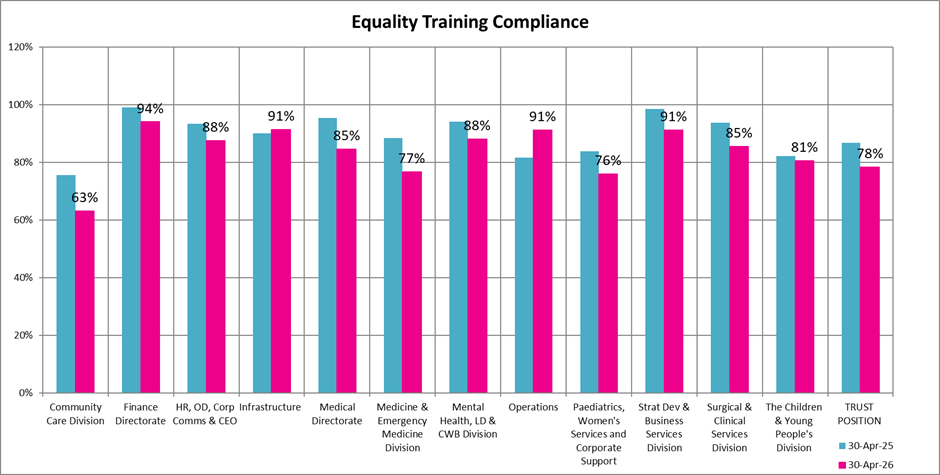
During 2025-2026 the following numbers of staff have attended or accessed training.
- Equality and Human Rights e-Learning – 4081
- Dissemination of Equality Training Manual – 345
- Disability Equality Training Video – 1480
25. Please provide any examples of relevant training shown to have worked well, in that participants have achieved the necessary skills and knowledge to achieve the stated objectives:
Please provide any examples of relevant training shown to have worked well, in that participants have achieved the necessary skills and knowledge to achieve the stated objectives:
During the 2025/26 reporting period, the Equality Unit continued to provide comprehensive advice and support to Trust staff and project leads across a broad range of service areas. This included guidance on equality screening processes and the effective integration of Section 75 considerations into service planning and delivery. The Unit also supported staff in understanding, identifying and mitigating potential equality impacts, thereby contributing to more robust decision-making and the promotion of equality of opportunity across the Trust. Ongoing engagement with Directorates ensured that statutory equality and good relations duties were clearly understood and consistently embedded within operational practice.
As part of the Encompass implementation, the Trust delivered targeted training to staff focused on the accurate recording of patient information, including equality monitoring data.
In addition, access to the Cultural Competence Framework via Learn HSCNI has supported staff in enhancing their awareness, confidence, and skills in delivering inclusive and culturally responsive services. This training has contributed to a greater understanding of diversity and the practical application of culturally competent approaches in day-to-day practice.
The British Sign Language (BSL) taster course and Community Sighted Guidance training have supported staff to develop practical skills and increased confidence in communicating with and supporting individuals with sensory impairments, supporting the Trust’s commitment to equality of opportunity and inclusive service delivery.
Public Access to Information and Services (Model Equality Scheme Chapter 6)
26. Please list any examples of where monitoring during 2025-26, across all functions, has resulted in action and improvement in relation to access to information and services:
The Trust continually reviews the information provided in alternative formats and continues to extend its library of translated material throughout the reporting period. These resources are available on Staffnet for staff and the Trust’s public website for service users. Guidance and information leaflets are available on the Trust website in a range of different languages.
The Trust is committed to ensuring everyone has equal access to information about services in a format they can understand. Interpreting services are provided on request to support effective communication for patients, clients and staff when accessing or delivering services.
The Trust monitors the use of interpreting services to ensure that information is available in the main languages. This approach also supports the provision of the most appropriate form of interpreting for each appointment. Telephone interpreting is routinely used for simple, straightforward and short appointments. Face to face interpreting is provided for more complex or sensitive appointments.
During the reporting period, the top 20 languages supported in the Northern Trust area were as follows (by number of bookings):
- Polish – 4904
- Arabic – 2175
- Romanian – 2026
- Slovak – 784
- Portuguese – 622
- Czech – 541
- Lithuanian – 483
- Bulgarian – 469
- Tetum – 439
- Russian – 350
- Cantonese – 315
- Ukrainian – 307
- Mandarin – 291
- Somali – 283
- Hungarian – 281
- Urdu – 110
- Bengali – 90
- Farsi (Iran) – 86
- Tigrinya – 84
- Latvian – 80
Interpreters are provided and funded regionally through the Northern Ireland Health and Social Care Interpreting Service (NIHSCIS). Interpreters are professionally trained and adhere to a Terms of Engagement. Interpreters are bound by confidentiality and provide their services on a 24/7 basis.
During 2025/26 the NIHSCIS:
- Processed 15,389 requests
- Achieved 92.9% provision rate
- 28 new Interpreters were trained/registered between the 1st of April 2025 and the 31st of March 2026 – languages include: Amharic, Arabic, Bulgarian, Chinese Mandarin, Farsi, French, Spanish, Hungarian, Latvian, Pashto, Polish, Portuguese, Romanian, Russian Slovak, Somali, Spanish and Ukrainian.
- Top 5 NHSCT Languages: Polish, Arabic, Romanian, Slovak and Portuguese
Complaints (Model Equality Scheme Chapter 8)
27. How many complaints in relation to the Equality Scheme have been received during 2025-26
No complaints.
Section 3: Looking Forward
28. Please indicate when the Equality Scheme is due for review:
Next review of the Equality Scheme is due in 2028/29.
29. Are there areas of the Equality Scheme arrangements (screening/consultation/training) your organisation anticipates will be focused upon in the next reporting period?
All HSC Trusts will be continuing with actions from the regional 5-year Equality Action Plan and Disability Action Plan (2024-2029). The upcoming reporting period will centre on progressing the adoption and implementation of the Good Relations Strategy.
The Identity and Language (Northern Ireland) Act 2022 may have implications for the Trust. It is expected that additional information will become available during 2026/27 to support preparation for any required changes.
30. In relation to the advice and services that the Commission offers, what equality and good relations priorities are anticipated over the next reporting period?
- Employment
- Goods, facilities and services
- Legislative changes
- Organisational changes/ new functions
Part B – Section 49A of the Disability Discrimination Act 1995 (as amended) and Disability Action Plans
1. Number of action measures for this reporting period that have been:
- Fully achieved – 1
- Partially achieved – 20
- Not achieved – 1
2. Please outline below details on all actions that have been fully achieved in the reporting period.
We will work with disabled people and representative groups to enhance the profile and accessibility of the regional Disability Action Plan to ensure that the legislation and disabled people’s rights are easier to understand.
Disability Action Plan, including easy to understand and signed versions on Trust website and shared with Disability Consultation Panel and consultees. We continue to deliver a range of supporting measures, including mandatory equality and human rights training, increased staff awareness of interpreting services and neurodiversity, improved accessible communication resources, the provision of assistive technologies, and enhanced opportunities for involvement through service user networks and engagement forums. These achievements have contributed to improved accessibility, inclusion, communication and participation for disabled people across Trust services.
2 (a). Please highlight what public life measures have been achieved to encourage disabled people to participate in public life at National, Regional and Local levels:
National Level:
No measures to highlight.
Regional Level:
- Worked collaboratively with all HSC Trusts through the Regional Disabled People’s Forum and the Regional Communication Support Service (RCSS) to promote disability equality and improve
- Outputs: Participation in regional working groups, promotion of Sign Language Week 2026, development of regional awareness materials and promotion of communication support services.
- Outcome/Impact: Increased awareness of communication support services and improved consistency of accessible service provision across Northern Ireland.
- Introduction of regionally consistent autism and neurodiversity awareness training co-produced with neurodivergent people and those with lived experience.
- Outputs: Neuro-affirming training programme available through LearnHSCNI for all staff.
- Outcomes/Impact: Improved staff understanding of neurodiversity and strengthened inclusive practice across the HSC system.
- All consultations are inclusive, targeted and accessible, using a variety of engagement methods and ensuring information is provided in alternative formats where required to ensure full participation of a wide range of disabled people.
- Outputs: Checklist developed that includes standards for the accessibility of public meeting areas, the provision of information in accessible formats, and the use of new technologies suitable for disabled people. Trusts use a variety of methods for consultation to ensure they are inclusive and information is available in alternative formats throughout the process.
- Outcomes/Impact: We will ensure that Improved opportunities for disabled people to engage with and influence policy makers.
Local Level:
- Disability Consultation Panel.
- Outputs: The Trust continues to work closely with the Disability Consultation Panel, regularly consulting with panel members to support informed decision-making and service development. The panel provides valuable lived experience and expertise on the accessibility and quality of Trust services, helping to shape service planning and delivery. This ongoing partnership approach has strengthened opportunities for disabled people to participate in decision-making and influence local health and social care services.
- Outcomes/Impact: Improved representation and participation of disabled people in Trust decision-making processes, ensuring that lived experience informed service planning, development and delivery through ongoing partnership working and co-production.
2(b). What training action measures were achieved in this reporting period?
- We will review our staff training programmes and ensure that training is co-produced, reflects lived experience and includes information on disability equality and the disability duties and promotes the Oliver McGowan Mandatory Training.
- Outputs: Ongoing disability equality training remained available to all Trust staff; co-produced disability equality training video available on the Trust intranet; six-week British Sign Language (BSL) taster course delivered by the British Deaf Association; autism and neurodiversity awareness training introduced across the HSC system via LearnHSCNI and co-produced with a neurodivergent advisory panel and people with lived experience.
- Outcome/Impact: Increased staff awareness and understanding of disability equality, communication needs and neurodiversity; improved staff confidence in communicating with Deaf service users; strengthened inclusive and accessible service delivery across the Trust.
2(c). What Positive attitudes action measures in the area of Communications were achieved in this reporting period?
- Continue to promote disability equality and the social model of disability through an inclusive approach to the use of images which reinforce positive attitudes towards disabled people and disabled staff members.
- Outputs: Continued collaborative working across HSC Trusts to promote disability equality; participation in the Regional Communication Support Service (RCSS) Working Group; ongoing promotion of disability-related initiatives through Trust communications; continued involvement of the Trust Disability Consultation Panel in influencing service planning and delivery.
- Outcomes/Impact: Increased visibility and positive representation of disabled people; greater awareness of disability equality issues; improved inclusion of lived experience in communications and service development.
- Mark and celebrate disability-related awareness days at local and regional level.
- Outputs: International Day of Persons with Disabilities 2025 promoted through staff communications, including promotion of the Reasonable Adjustment Plan; Sign Language Week 2026 promoted through staff broadcasts and external social media; development and distribution of new regional promotional posters highlighting Sign Language Interactions services.
- Outcomes/Impact: Increased staff and public awareness of disability equality, reasonable adjustments, sign language services and communication support available across health and social care.
- Enhance the profile and accessibility of the Disability Action Plan.
- Outputs: Disability Action Plan published on the Trust website, including Easy Read and Signed Video versions.
- Outcomes/Impact: Improved accessibility of information and increased understanding of disability rights and the Trust’s commitments among disabled people and stakeholders.
- Continue the rollout of the Regional Communication Support Service for people who are d/Deaf, d/Deafblind and Hard of Hearing.
- Outputs: Regional communications campaign during Sign Language Week 2026; dissemination of staff and service-user posters and QR codes; ongoing availability of communication support lanyards; recording of preferred communication methods on Encompass/Epic; promotion of interpreting and Deaf Equality training.
- Outcomes/Impact: Improved awareness and uptake of communication support services; enhanced accessibility for d/Deaf, d/Deafblind and hard of hearing people; strengthened staff understanding of communication needs.
- Ensure communication support needs of service users are captured within Encompass.
- Outputs: Sensory and communication needs clearly recorded and flagged within Encompass; communication requirements accessible to professionals across services; support provided through interpreters and accessible formats where required.
- Outcomes/Impact: Improved communication between staff and service users; better access to services through timely identification and provision of communication support.
2 (d). What action measures were achieved to ‘encourage others’ to promote the two duties:
- Continue to promote disability equality and the social model of disability through an inclusive approach to the use of images, communications and engagement activities.
- Outputs: The Trust worked collaboratively with all HSC Trusts through the Regional Communication Support Service (RCSS) working group and continued to promote disability equality initiatives through communications and engagement activities. The Disability Consultation Panel continued to provide advice and influence service development.
- Outcome/Impact: Increased awareness and understanding of disability equality among staff, stakeholders and partner organisations, helping to promote positive attitudes towards disabled people.
- Mark and celebrate disability-related awareness days at local and regional level.
- Outputs: International Day of Persons with Disabilities 2025 and Sign Language Week 2026 were promoted through staff broadcasts, social media and promotional materials. New regional posters promoting Sign Language Interactions services were developed and distributed.
- Outcome/Impact: Increased awareness of disability issues, communication support services and the importance of inclusion among staff and the wider public.
- Review staff training programmes and provide co-produced disability equality training.
- Outputs: Disability equality training remained available to staff; a co-produced disability equality training video was promoted; British Sign Language taster training and neurodiversity awareness training were delivered.
- Outcome/Impact: Improved staff knowledge and confidence in supporting disabled people, encouraging inclusive behaviours and compliance with disability duties.
- Continue rollout of the Regional Communication Support Service for people who are d/Deaf, d/Deafblind and Hard of Hearing.
- Outputs: Regional awareness campaign delivered during Sign Language Week 2026; posters, QR codes and communication support resources distributed; Deaf Equality and interpreting training promoted to staff.
- Outcome/Impact: Encouraged staff and services to recognise and respond appropriately to communication needs, promoting equality of opportunity and positive attitudes towards people with sensory disabilities.
- Deliver a Disability Masterclass for health and social care decision-makers.
- Outputs: First regional Disability Masterclass held in February 2026 involving people with lived experience, advocates, staff and regional equality representatives.
- Outcome/Impact: Increased understanding among decision-makers of the importance of involving disabled people in service design and decision-making, encouraging others to embed the disability duties within their work.
2 (e). Please outline any additional action measures that were fully achieved other than those listed in the tables above:
- Support those with neurodiversity
- Outputs: Please refer to Appendix 2 (DAP)
- Community Sighted Guide Training
- Outputs: Introductory Community Sighted Guide Training sessions delivered to staff, providing practical guidance and skills on how to safely, respectfully and effectively support people with sight loss.
- Outcomes/Impact: Increased staff confidence and skills in supporting people with sight loss, improving accessibility and inclusion.
- Communication Support Lanyard Initiative
- Outputs: 140 communication support lanyards issued to staff, patients and service users with hearing loss.
- Outcomes/Impact: Increased awareness of communication needs and helped individuals identify when additional communication support may be required.
- British Sign Language (BSL) Taster Course
- Outputs: Six-week BSL taster course delivered in partnership with the British Deaf Association.
- Outcomes/Impact: Improved staff understanding of d/Deaf culture and communication needs, supporting more inclusive and accessible services.
3. Please outline what action measures have been partly achieved as follows:
- We will continue to promote disability equality and the social model of disability through an inclusive approach to the use of images, which reinforce a positive towards disabled people and disabled staff members.
- Milestones/Outputs:
- Ongoing collaboration continues through the HSC Trusts and Regional Communication Support Service Working Group, with the Disability Consultation Panel meeting quarterly.
- The mandatory regional ‘Equality, Good Relations and Human Rights: Making a Difference‘ eLearning programme includes disability equality training, supported by an online training manual for staff.
- The Northern Trust Disability Consultation Panel also co-produced and co-delivered a disability-led Disability Equality Training video covering language, etiquette and customer care.
- Outcomes/Impacts: Increased visibility of disabled people and disabled staff, including those with hidden disability.
- Reasons not fully achieved: Action ongoing through the lifetime of the plan.
- Milestones/Outputs:
- We will mark and celebrate allocated disability-related days to raise awareness at a local and regional level.
- Milestones/Outputs:
- Awareness activities delivered to mark Sign Language Week 2026 and International Day of Persons with Disabilities. Information and promotional materials shared across the Trust. Staff and stakeholders encouraged to participate in awareness-raising initiatives.
- Promotion of International Day of Persons with Disabilities and Sign Language Week 2026; development and distribution of regional promotional materials.
- Outcomes/Impacts: Increased awareness of disability issues, communication needs and disability rights. Promoted positive attitudes towards disabled people and supported a more inclusive culture across the Trust and wider community.
- Reasons not fully achieved: This is an ongoing action within the Disability Action Plan. While a number of awareness days were marked during 2025/26, further annual disability-related awareness events and promotional activities will continue throughout the lifetime of the Action Plan.
- Milestones/Outputs:
- We will review our staff training programmes and ensure that training is co-produced, reflects lived experience and includes information on disability equality and the disability duties and promotes the Oliver McGowan Mandatory Training.
- Milestones/Outputs:
- Training available for all staff on Learn HSCNI.
- Disability Equality Training, BSL taster course and Neurodiversity Training delivered.
- Ongoing delivery of a range of HR Clinics during the year to support staff and managers.
- Outcomes/Impact: Increased staff knowledge and awareness of disability equality and accessibility.
- Reasons not fully achieved: Action ongoing through the lifetime of the plan. Training review and annual evaluation processes remain ongoing.
- Milestones/Outputs:
- We will share opportunities for involvement to ensure the voice of disabled people is heard in developments and changes to services at an early stage.
- Milestones/Outputs: Quarterly Disability Consultation Panel and Engagement Advisory Board meetings; 100 involvement opportunities promoted.
- Outcomes/Impact: Increased participation of disabled people in service planning and decision-making.
- Reasons not fully achieved: Ongoing action across the lifetime of the plan.
- We will work in partnership with relevant key organisations and individuals to identify advocacy services.
- Milestones/Outputs: Connect North Directory maintained; Community Appointment Days and local drop-in support sessions established.
- Outcomes/Impact: Improved access to support services and information for service users and carers.
- Reasons not fully achieved: Co-produced Directory of Advocacy and Support Services has not yet been fully developed and published.
- We will work with representatives from the Regional Disabled People’s Forum on disability equality issues.
- Milestones/Outputs: Equality Leads attended Regional Disabled People’s Forum meetings and continued engagement with disabled people.
- Outcomes/Impact: Strengthened regional collaboration and disability input into service development.
- Reasons not fully achieved: Annual engagement commitment remains ongoing.
- We will review the membership of our user forums and where necessary work to increase representation of disabled people and representing organisations.
- Milestones/Outputs: Continued promotion of involvement opportunities and participation on user forums and project groups.
- Outcomes/Impact: Increased representation of people with disabilities across Trust engagement structures.
- Reasons not fully achieved: Ongoing review and recruitment activity continues.
- We will ensure that all consultations are inclusive, targeted and use appropriate methods to ensure participation of a wide range of disabled people.
- Milestones/Outputs: Accessible consultation methods and venues utilised, including digital and face-to-face engagement.
- Outcomes/Impact: Reduced barriers to participation and improved opportunities to influence decision-making.
- Reasons not fully achieved: Action remains ongoing throughout the lifetime of the plan.
- We will continue the roll out of the Health and Social Care Communication Support Service for People who are d/Deaf, d/Deafblind and Hard of Hearing and improve access to Sign Video within hospitals using computers and phones accessing the Trust Wi-Fi.
- Milestones/Outputs: Regional communication campaign delivered; staff training and communication support resources promoted.
- Outcomes/Impact: Improved accessibility and communication support for people who are d/Deaf, d/Deafblind and hard of hearing.
- Reasons not fully achieved: Further regional implementation and development work continues.
- We will scope the availability of Changing Places and new facilities will be added in accordance with legislation.
- Milestones/Outputs:
- Outcomes/Impact:
- Reasons not fully achieved:
- We will co-produce guidance for staff on how to effectively engage with disabled people in decision making processes. These guidelines will provide practical information to support staff to address the barriers to meaningfully involvement.
- Milestones/Outputs: Ongoing guidance and advice provided by the Equality Unit.
- Outcomes/Impact: Improved support for inclusive engagement and participation.
- Reasons not fully achieved: Formal co-produced guidance has not yet been finalised.
- We will co-produce and hold a masterclass in each Trust area for health and social care decision makers to develop a deeper understanding of how better participation with disabled people is central to the implementation of our Disability Action Plan.
- Milestones/Outputs: First regional Disability Masterclass delivered in February 2026.
- Outcomes/Impact: Increased understanding of disability participation and inclusive decision-making.
- Reasons not fully achieved: Additional masterclasses are required to fulfil the commitment across all Trust areas.
- We will review our Staff Disability Equality Policy in line with best practice to ensure it remains fit for purpose and relevant.
- Milestones/Outputs: Policy review initiated.
- Outcomes/Impact: Areas for policy improvement identified.
- Reasons not fully achieved: Review remains outstanding pending completion of regional disability leave work.
- We will review and update our Disability Toolkit.
- Milestones/Outputs: Toolkit review underway alongside the Disability Equality Policy review.
- Outcomes/Impact: Future toolkit will align with updated policy and best practice.
- Reasons not fully achieved: Dependent on completion of the revised policy.
- We will engage with disabled staff to ensure they have a voice and influence the support we provide.
- Milestones/Outputs: Regional and local engagement activity continues.
- Outcomes/Impact: Ongoing opportunities for disabled staff to influence support arrangements.
- Reasons not fully achieved: Further engagement work is scheduled throughout the plan period.
- We will work in collaboration with relevant stakeholders to review our employability schemes and placement schemes to enhance employment opportunities.
- Milestones/Outputs: Initial planning and scoping work completed.
- Outcomes/Impact: Supports future employment and work experience opportunities for disabled people.
- Reasons not fully achieved: Detailed implementation plans remain under development.
- We will work to reduce barriers to recruitment in health and social care for disabled people.
- Milestones/Outputs: Ongoing review of accessibility and recruitment practices.
- Outcomes/Impact: Supports more accessible and inclusive recruitment processes.
- Reasons not fully achieved: Long-term action continuing throughout the lifetime of the plan.
- We will provide an alternative way for disabled applicants to apply for HSC jobs until the current HSC jobs website is replaced by the new system.
- Milestones/Outputs: Accessibility guidance produced; alternative formats and reasonable adjustments available.
- Outcomes/Impact: Improved accessibility for disabled applicants.
- Reasons not fully achieved: Current recruitment system remains in place pending replacement.
- We will continue to work with ENCOMPASS to ensure that the communication support needs of service users are captured.
- Milestones/Outputs: Communication and sensory needs recorded and flagged on Encompass.
- Outcomes/Impact: Improved person-centred communication and access to services.
- Reasons not fully achieved: Continuous development and enhancement of Encompass remains ongoing.
- We will support the involvement of disabled people and representative organisations in the roll out of ENCOMPASS.
- Milestones/Outputs: Patient Engagement Council continues to support accessibility testing and provide feedback.
- Outcomes/Impact: Disabled people continue to influence the development of digital health services.
- Reasons not fully achieved: Action remains ongoing as Encompass implementation continues.
4. Please outline what action measures have not been achieved and the reasons why.
- We will work towards Disability Positive Accreditation for all Trusts.
- Reasons: This action has not yet commenced. Action will be progressed through the Trust Equality, Diversity and Inclusion Steering Group. Target date for achievement is March 2029.
5. What monitoring tools have been put in place to evaluate the degree to which actions have been effective / develop new opportunities for action?
(a) Qualitative
Ongoing engagement and feedback mechanisms in place to capture the experiences, views and perceptions of disabled people, carers, staff and representative organisations. This includes feedback from the Disability Consultation Panel, Engagement Advisory Board, Regional Disabled People’s Forum, Patient Engagement Council, consultation exercises, stakeholder engagement activities and training evaluations.
(b) Quantitative
Routinely gather attendance figures, participation rates, training uptake, engagement activity levels and progress. For example, number of involvement opportunities offered, numbers participating in engagement activities, attendance at events and training participation levels.
6. As a result of monitoring progress against actions has your organisation either:
- made any revisions to your plan during the reporting period or
- taken any additional steps to meet the disability duties which were not outlined in your original disability action plan / any other changes?
Through ongoing monitoring and evaluation of Disability Action Plan actions, a number of opportunities were identified to strengthen implementation and further promote the achievement of the disability duties, including:
- Introduction of a regionally consistent Autism and Neurodiversity Awareness Training Programme, co-produced with neurodivergent people and individuals with lived experience and made available to all staff through LearnHSCNI
- Delivery of a British Sign Language (BSL) Taster Course for staff to improve communication skills and accessibility for Deaf service users.
- Ongoing development of plans for a Changing Places facility at Causeway Hospital, informed by engagement with the Trust Disability Consultation Panel.
- Continued expansion of opportunities for involvement through the Trust’s Disability Consultation Panel, Engagement Advisory Board and Involvement Network, ensuring that lived experience continues to inform service development and improvement.
7. Do you intend to make any further revisions to your plan in light of your organisation’s annual review of the plan? If so, please outline proposed changes?
No
Alternative formats
Annual Progress Report 2025 – 2026 (Word document, 586KB)